
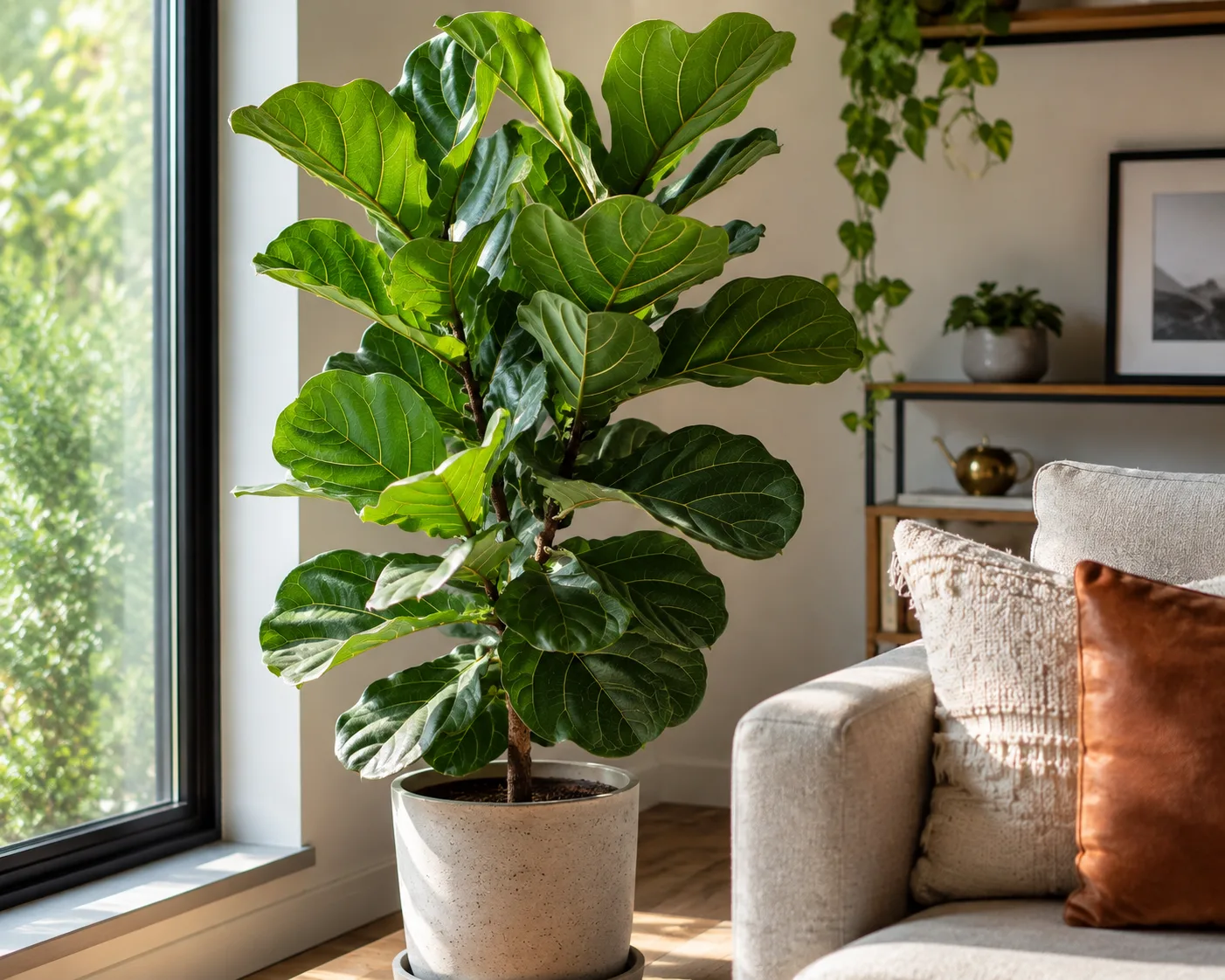
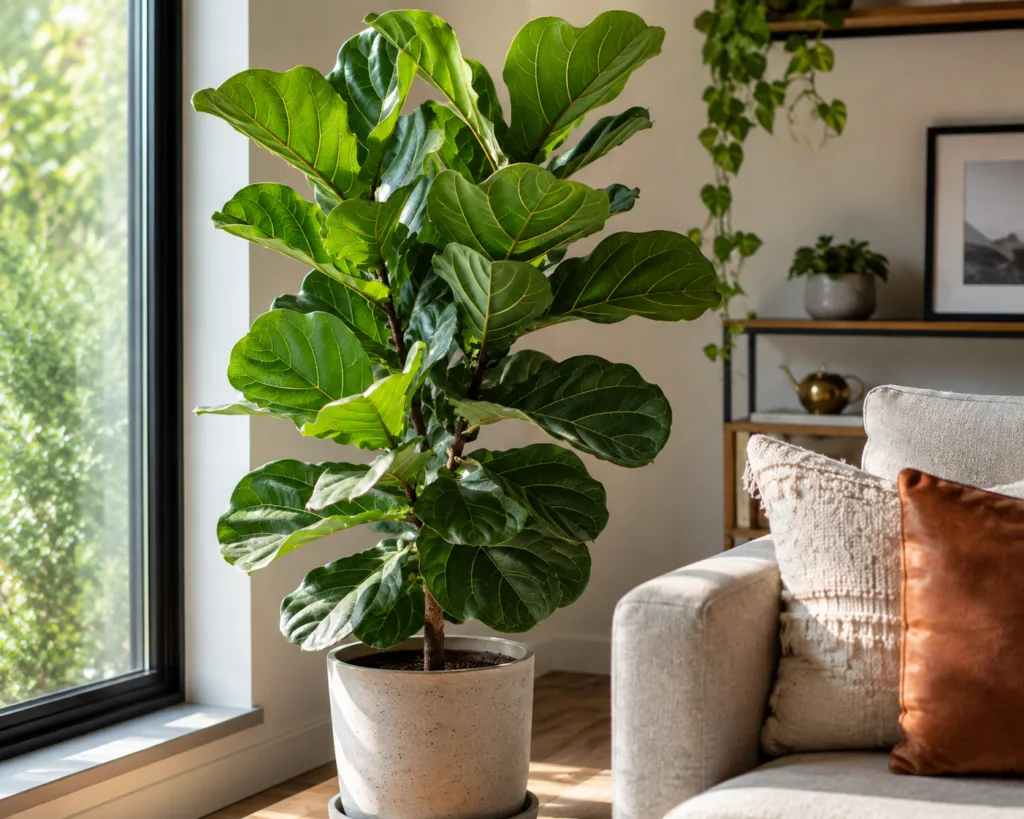
My fiddle leaf fig has already taught me patience once, dropping leaves dramatically for months after I first brought it home before finally settling in. Propagating it turned out to demand a similar kind of patience, just applied to a completely different stage of the plant’s life.
Taking the Cutting
I took a cutting with at least two to three nodes and a couple of leaves attached, cutting just below a node with clean, sharp shears. Fiddle leaf figs, like rubber plants, produce a milky latex sap when cut, which I’ve learned to expect and handle with gloves after getting a bit on my skin and dealing with mild irritation the first time I wasn’t careful.
I let the cut end sit out for about 30 minutes to let the sap stop flowing and start to seal slightly, which I’ve read helps reduce the risk of rot once the cutting goes into water or soil.
Water Propagation: Slow but Visible
My first attempt went into a jar of water, changed every few days, kept in bright indirect light. Roots took a genuinely long time to appear — close to two months before I saw the first small white roots emerging from the node area. This tested my patience more than almost any other propagation I’ve done, since there’s a real temptation to assume a cutting has failed when nothing visible happens for that long.
Soil Propagation: My Preferred Method Now
For a second cutting from the same plant, I dipped the cut end in rooting hormone and planted directly into a well-draining mix, keeping the soil consistently barely moist rather than wet. This method made it harder to track progress directly, but a new leaf finally unfurling at around the ten-week mark told me roots had established, and in hindsight, the resulting plant seemed to transition to normal growth more smoothly than the water-propagated cutting did once I eventually potted it.
The Long Wait, and Why I Almost Gave Up
Both cuttings genuinely looked unchanged for the majority of their rooting period, which made this the propagation project I was most tempted to abandon partway through. I’d recommend setting expectations accordingly if you’re trying this yourself — two to three months before you see convincing signs of success is a realistic timeline based on my own experience, not an outlier.
Choosing the Right Cutting From the Mother Plant
I had better luck with cuttings taken from slightly older, more established growth rather than the very newest, softest leaves near the top of the plant. A cutting I took from tender new growth early on rotted within a couple of weeks, while cuttings from slightly firmer, more mature stem sections have consistently held up better through the long rooting process.
Humidity Helped More Than I Expected
I placed a loose plastic bag over the soil-propagated cutting for the first several weeks, creating a mini greenhouse effect, after reading that fiddle leaf fig cuttings can be sensitive to drying out during the slow rooting process. I can’t run a direct comparison since I only tried this on one of my two cuttings, but the humidity-tented cutting did root somewhat faster than my untented water propagation attempt, which lines up with what I’ve read about this species generally wanting more consistent humidity than some of my easier plants.
What I’d Do Differently Next Time
I’d propagate multiple cuttings simultaneously rather than just one or two, given how much patience this plant demands and how real the risk of an individual cutting failing turned out to be despite my best efforts. Having a few attempts running at once would hedge against the long wait ending in disappointment rather than a rooted plant.
Frequently Asked Questions
How long does fiddle leaf fig propagation take? Based on my own attempts, expect roots to take around two months in water, with soil-propagated cuttings showing convincing new growth around the ten-week mark.
Should I use rooting hormone for fiddle leaf fig cuttings? I used it on my soil-propagated cutting and not on my water-propagated one, and the treated cutting seemed to transition to normal growth more smoothly once potted, though I didn’t run a fully controlled comparison.
Why did my fiddle leaf fig cutting rot instead of rooting? For me, this happened with a cutting taken from very tender, new growth rather than slightly more mature stem sections, which have held up much better through the long rooting process.

Gardening Writer & Plant Enthusiast
Sarah Mitchell is a passionate gardening writer dedicated to helping people bring more nature into their homes. She loves exploring indoor plants, flowers, and sustainable gardening practices, sharing simple and practical tips that make plant care easier for everyone.