
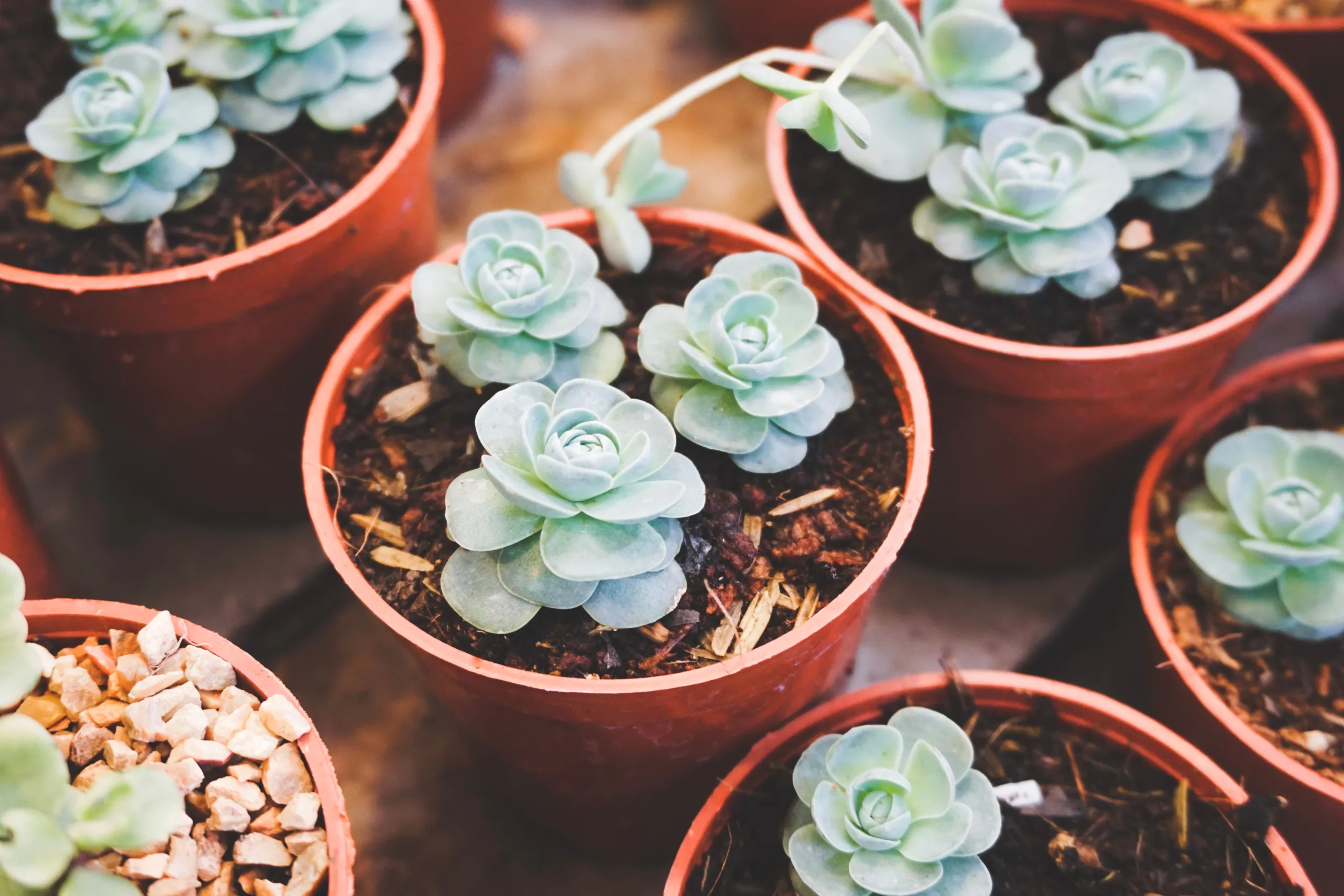
I’ve killed more succulents than any other plant category in my collection, which is a little embarrassing given their reputation for being nearly foolproof. Looking back over a few years of trial and error, the losses weren’t random — they clustered around a handful of specific mistakes, some of which I made repeatedly before actually learning. Here they are, ranked by how much damage each one has actually done to my own collection, worst first.
Mistake #1: The Decorative Pot With No Drainage Hole
This has cost me more plants than everything else on this list combined. A cute, no-hole ceramic pot feels harmless when you’re buying it, and the succulent looks fine for weeks, sometimes over a month, before the consequences show up. By the time I noticed my first casualty — a string of pearls that collapsed into mush — the damage had been building invisibly the entire time, since water had nowhere to go and just sat against the roots after every watering.
What actually fixed this for me: a blanket rule with no exceptions — every pot needs an actual drainage hole, full stop. If I love a decorative pot without one, I use it as a cachepot and keep the plant in a plain nursery pot with drainage inside it.
Mistake #2: Watering on a Schedule Instead of Checking the Soil
My second-most costly habit was watering succulents on the same weekly rhythm as my other houseplants, rather than actually checking whether the soil had dried out first. This one is sneakier than the drainage issue because it doesn’t require a specific bad decision — it’s just autopilot, and autopilot is exactly wrong for a plant type that wants to dry out completely between waterings.
What actually fixed this for me: sticking a finger into the soil before watering any succulent, every single time, rather than trusting a calendar. It sounds too simple to matter, but this single habit change did more to reduce my succulent losses than any other adjustment.
Mistake #3: Using Regular Potting Soil Instead of a Succulent Mix
I used the same all-purpose bagged potting soil for everything I owned for a long time, not realizing how much moisture it retains compared to what succulents actually want. Even with correct watering timing, a dense mix held onto water far longer around the roots than a proper succulent blend would have, which contributed to at least two losses I originally blamed entirely on overwatering frequency rather than the soil itself.
What actually fixed this for me: switching to a dedicated succulent and cactus mix, heavy on perlite and pumice, for every succulent in my collection. This alone let me get away with slightly less-than-perfect watering discipline without paying for it in root rot.
Mistake #4: Assuming All Succulents Want the Same Light
I lost a Haworthia — one of the more shade-tolerant succulents — by putting it in the same bright, sun-drenched spot that my echeverias loved. It developed scorched, bleached patches within about a week and never fully recovered. I made the same mistake in reverse with an echeveria I kept in a dimmer spot meant for lower-light plants, which didn’t die but became leggy and stretched, losing the tight, compact rosette shape that made it appealing in the first place.
What actually fixed this for me: treating “succulent” as a category with real internal variation rather than a single set of light rules, and actually researching each specific type before assuming a one-size-fits-all placement.
Mistake #5: Panic-Watering a Stressed Plant
When a succulent has looked unhappy — shriveled, dull, generally sad — my instinct early on was almost always to water it, assuming thirst was the problem. This has backfired more than once, since some of my “sad” succulents were actually showing early overwatering stress, not underwatering, and adding more water made things distinctly worse rather than better.
What actually fixed this for me: always checking the soil directly before responding to a stressed-looking plant, rather than defaulting to water as the automatic fix. A shriveled, thin leaf paired with completely dry soil means thirst. A soft, translucent leaf paired with damp soil means the opposite problem entirely.
Mistake #6: Buying Without Checking for Pests First
This one cost me less in individual plants but more in spread — a mealybug infestation I brought home on a new echeveria eventually showed up on two other succulents I hadn’t quarantined it away from. None of them died from it, but it took weeks of repeated treatment across multiple plants to fully clear up what could have been contained to one plant with more caution upfront.
What actually fixed this for me: actually inspecting new succulents closely before bringing them near my existing collection, and keeping new arrivals separate for a couple of weeks regardless of how healthy they look on the shelf.
The Pattern Across All Six Mistakes
Looking at this list together, almost every mistake traces back to the same root cause: treating succulents like they need less attention rather than a different kind of attention. “Low-maintenance” got translated in my head to “doesn’t matter much what I do,” when the reality is these plants have a narrower, more specific set of preferences that are easy to violate exactly because they look so forgiving in the short term. The damage from getting it wrong just shows up weeks later instead of immediately, which is part of what made these mistakes so easy to repeat before I actually connected the cause to the eventual effect.
A Quick-Start Checklist Based on What I’ve Learned
Before buying your first succulent: confirm the pot has drainage, buy or mix an actual succulent soil rather than reusing generic potting soil, and check the specific plant’s light preference rather than assuming all succulents want maximum sun. After bringing it home: check the soil before every watering rather than following a fixed schedule, and inspect closely for pests before it joins any other plants you already own. These five habits alone would have prevented the overwhelming majority of losses in my own succulent collection.
Gardening Writer & Plant Enthusiast
Sarah Mitchell is a passionate gardening writer dedicated to helping people bring more nature into their homes. She loves exploring indoor plants, flowers, and sustainable gardening practices, sharing simple and practical tips that make plant care easier for everyone.