
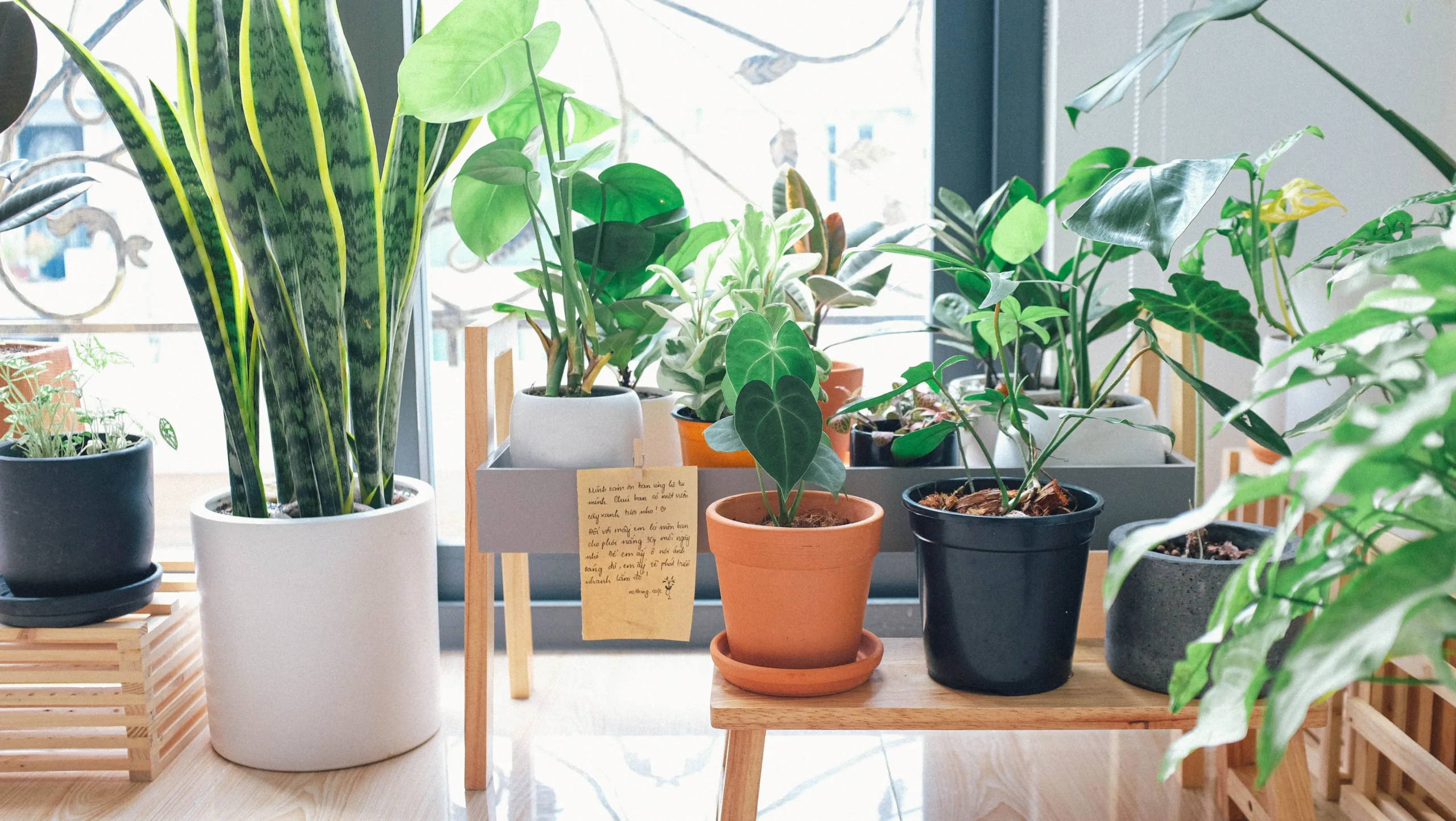
I’ve grown eight of the ten plants that show up on basically every “air purifying plants” list, and I want to be upfront about something before getting into them: I’ve since looked into the NASA Clean Air Study that these lists all cite, and it was conducted in sealed chambers, not homes with normal airflow, using far more plants per square foot than anyone realistically keeps. I don’t think a couple of houseplants in a room with a door and windows are meaningfully filtering your air the way these lists imply. I’m not going to relitigate that here in depth since I’ve covered it more fully elsewhere — I mention it because I think it’s more honest to evaluate these ten plants on what they’ve actually been like to grow, rather than repeating air-purification claims I no longer find convincing.
So here’s my honest take on all ten, based on what’s actually made them worth keeping.
The Ones I Already Grow and Would Recommend for Other Reasons
Spider plant, snake plant, and pothos are all genuinely excellent low-maintenance choices, and I’ve written in detail about my experience with each. Their real value, in my experience, has nothing to do with air quality and everything to do with being nearly impossible to kill while still looking good.
Peace lily is the pickiest of the bunch I’d put in this “already covered” group — genuinely lovely, but more demanding of consistent light and water quality than its reputation on these lists suggests.
Aloe vera earns its spot for a completely different reason than air purification — the actual, practical use of harvesting the gel has made it one of the more genuinely useful plants I own, regardless of what it may or may not be doing to the air.
Rubber plant and dracaena have both been solid, attractive foliage plants in my experience, worth growing for their architectural presence in a room more than any air quality claim.
The Three I Hadn’t Grown Before Researching This List
Bamboo palm was new to me, and I picked one up specifically to round out this comparison. It’s grown well in a spot with bright indirect light, and I’ve genuinely appreciated how much fuller and more lush it looks compared to a lot of my other foliage plants — it reads as more of a “statement” plant than something like a pothos. It has wanted more consistent moisture than most of my collection, closer to what I do for my calathea, and I’ve had one round of spider mites show up during a dry winter stretch, resolved with increased humidity and neem oil. I wouldn’t call it low-maintenance, but it’s been a rewarding plant independent of any air quality claim.
Boston fern was the plant I was most nervous about, given ferns’ reputation for being fussy about humidity. It’s lived up to that reputation somewhat — I keep mine in my bathroom, where the humidity from regular showers has kept it looking far better than an attempt I made on an open shelf elsewhere, which dried out and dropped fronds within a couple of weeks. If you don’t have a naturally humid spot or aren’t willing to run a humidifier, I’d actually steer a beginner away from this one despite how often it shows up on easy “air purifying” lists.
Areca palm has been the most demanding of the three new additions, wanting consistently moist (not soggy) soil and bright indirect light, with visible stress — browning frond tips — showing up during a stretch where I let it dry out more than it wanted. It’s a genuinely attractive, larger statement plant, but I’d put it toward the more attention-demanding end of this whole list rather than the low-effort image these roundups often suggest.
Ranking All Ten by What I’d Actually Recommend
If I’m ranking purely on my own experience with how rewarding each has been relative to the effort required, independent of air-purification claims: snake plant and pothos sit at the top for effort-to-reward ratio. Spider plant and dracaena are close behind. Rubber plant and aloe vera earn their spots for reasons unrelated to air quality — aesthetics and practical use, respectively. Peace lily, bamboo palm, and Boston fern occupy the middle, genuinely nice plants that ask for more consistent attention than the “easy air purifier” framing suggests. Areca palm sits at the bottom of my own ranking, not because it’s a bad plant, but because it’s been the most demanding of the ten relative to what I’d expect from something marketed primarily on convenience.
What I’d Actually Tell Someone Building a Plant Collection Around This List
Pick from this list based on your actual home conditions and how much attention you want to give, not based on which ones supposedly filter the most formaldehyde. A bathroom with good humidity makes Boston fern a genuinely good choice; the same fern in a dry living room will likely struggle regardless of any air-purifying reputation. A bright, consistently attended-to spot makes areca palm rewarding; a neglected corner will show stress quickly. The plants that have worked best for me across this whole list are the ones that matched my actual living conditions and habits, not the ones ranked highest on someone else’s chemical-filtering chart.
A Genuine Benefit I Do Believe In
None of this means I think these plants are pointless — I keep all ten of them, or variations of them, and enjoy having them around. I just think the actual benefit is more about the room feeling more alive and calming, and for me personally, tending to them being a genuinely enjoyable small ritual, rather than a measurable improvement in the air I’m breathing. That’s a real reason to grow them. It just doesn’t need an inflated science claim attached to justify it.

Gardening Writer & Plant Enthusiast
Sarah Mitchell is a passionate gardening writer dedicated to helping people bring more nature into their homes. She loves exploring indoor plants, flowers, and sustainable gardening practices, sharing simple and practical tips that make plant care easier for everyone.