
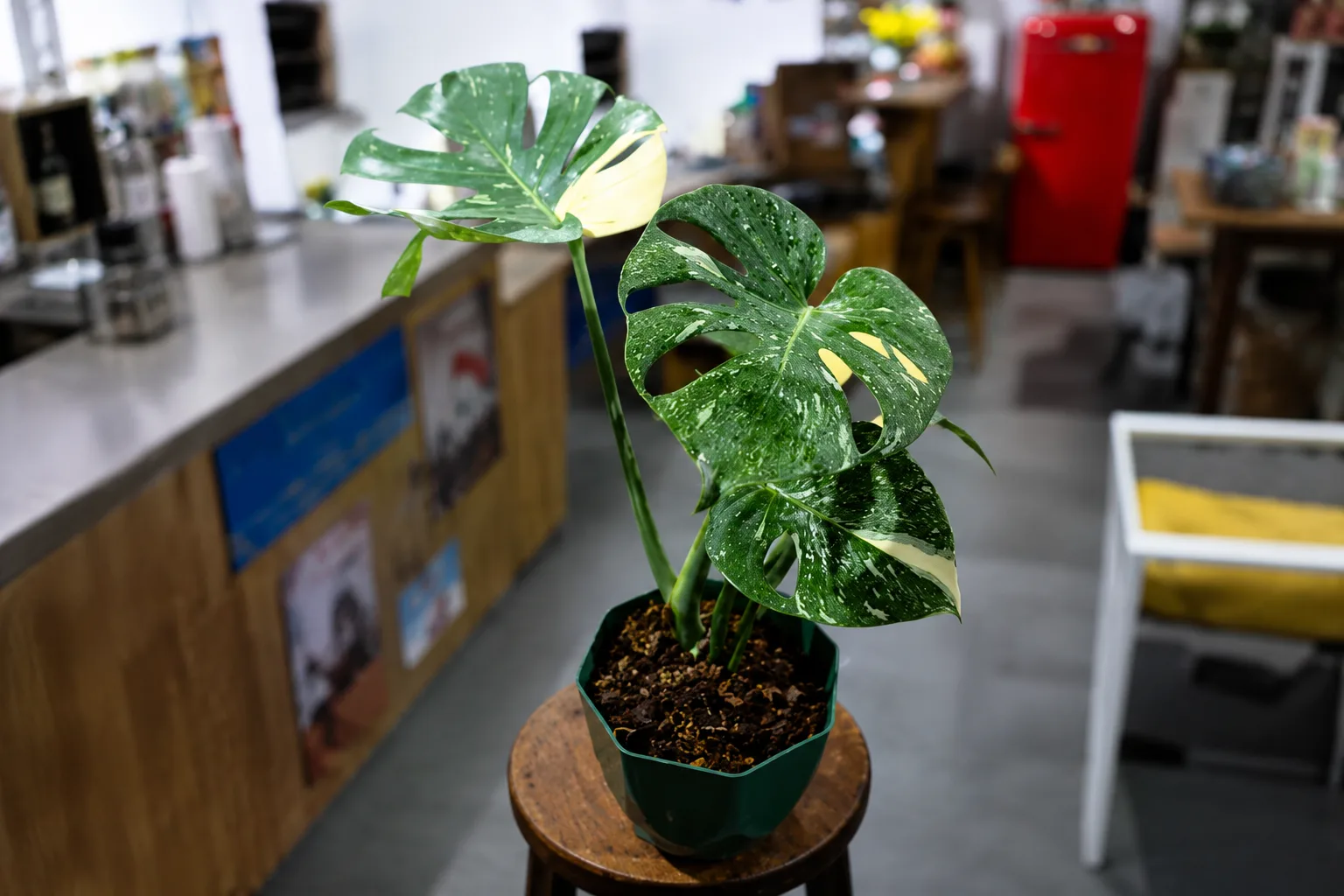
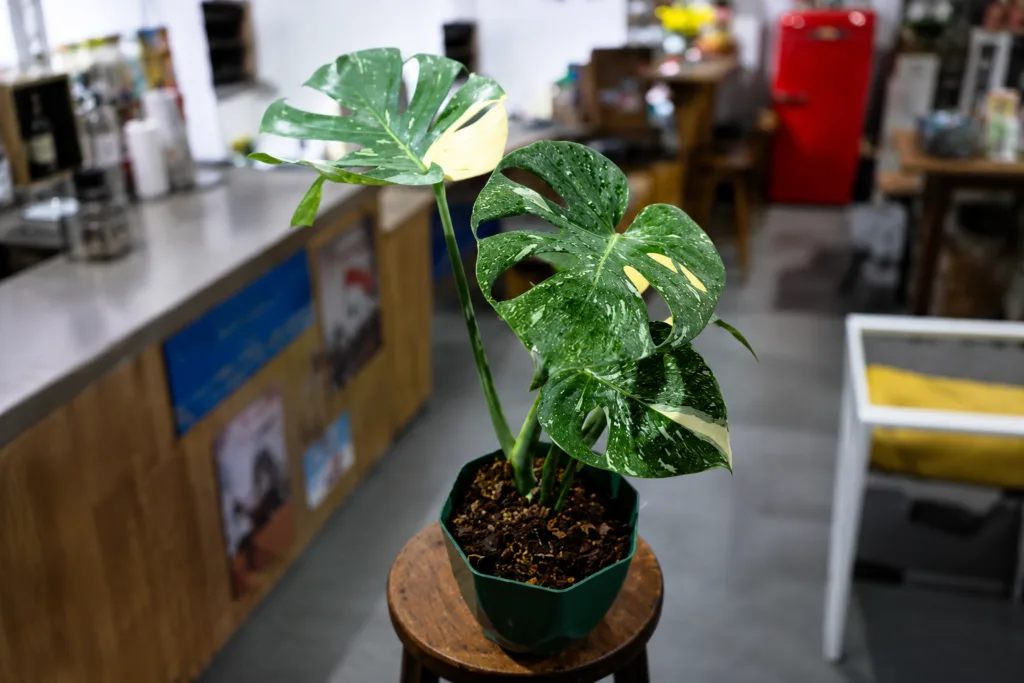
I bought my first Monstera deliciosa three years ago as a six-inch cutting in a plastic cup, already rooted, from someone selling plants out of their apartment. It felt almost wasteful not to try propagating it myself once it got big enough, so over the following two years I tried water propagation, soil propagation, and eventually talked myself into attempting air layering, mostly out of curiosity about whether it was as fussy as everyone made it sound.
This is what actually happened with each method, including the one that surprised me by being easier than expected, and the mistake that cost me a cutting I was genuinely upset about losing.
Understanding What You’re Actually Cutting
Before touching a Monstera with scissors, it’s worth knowing what makes a viable cutting, because this is where I went wrong on my very first attempt. A Monstera cutting needs a node — the small bump on the stem where a leaf and often an aerial root emerge. That node is where roots will actually form. I once took a cutting that had a beautiful leaf but no node included, thinking the leaf itself was what mattered, and it just sat in water for two months doing absolutely nothing before I gave up and tossed it.
If your Monstera has aerial roots — those brownish, finger-like roots growing from the stem above the soil — a cutting that includes one tends to root noticeably faster. I’ve had cuttings with an existing aerial root show new roots in as little as two weeks, compared to four or more weeks for a node without one.
Method 1: Water Propagation
This was my first real attempt and it’s still the method I’d recommend to anyone trying Monstera propagation for the first time, mainly because of how satisfying it is to actually watch happen. I cut just below a node using clean scissors, submerged the node in a glass of water, and kept a leaf or two above the waterline.
I change the water roughly once a week, sometimes closer to five days if it looks cloudy sooner. Within about three weeks I usually see the first small white bumps forming, and by five to six weeks the roots are typically an inch or two long with some branching, which is when I move them to soil.
The one mistake I made here that I’d genuinely warn people about: I left a well-rooted cutting in water for almost four months once, just because I hadn’t gotten around to potting it. When I finally put it in soil, it struggled noticeably, lost a leaf, and took weeks to perk back up. Water roots and soil roots function a bit differently, and the longer a cutting sits in water past the point of being ready, the harder that transition seems to be.
Method 2: Soil Propagation
After a few rounds of water propagation, I started planting cuttings directly into a well-draining mix, partly to skip that transition shock entirely. I dip the node in rooting hormone — not essential, but I noticed slightly faster and more consistent results when I used it compared to a batch I did without — and bury the node about an inch deep in a mix with extra perlite for drainage.
The hard part is that you can’t see anything happening underground, which used to make me anxious enough that I’d gently tug on the cutting every week or two to check for resistance. I don’t do this anymore, since a friend who’s been growing Monsteras far longer than me pointed out it can disturb roots that are just starting to form. Now I just wait for a new leaf to unfurl, which for me has typically shown up somewhere between weeks 5 and 8, as a much more reliable sign that rooting has actually happened.
Method 3: Air Layering
This is the method I put off trying for over a year because it sounded intimidating, and it turned out to be far less complicated than I expected — just slower. Air layering roots a cutting while it’s still attached to the mother plant, which in theory reduces the risk of losing it entirely compared to a fully separated cutting.
I picked a node with a visible aerial root on a mature vine, and instead of cutting it off first, I wrapped a generous handful of damp sphagnum moss around that section of stem and secured it with plastic wrap, checking every few days to make sure the moss stayed moist but not soaking. Roots became visible through the plastic wrap after about six weeks, though I let it go closer to eight weeks before I felt comfortable making the final cut and potting the section on its own.
The upside I didn’t fully appreciate going in: because the cutting stayed attached to the mother plant the entire time it was rooting, there was zero risk of losing it to rot the way a fully separated cutting can fail. If you have a large, established Monstera with an easily accessible node, I’d actually now recommend this over water propagation for anyone nervous about losing a cutting.
The Method Comparison, Based on What Actually Happened
Water propagation gave me the most satisfying, visible process, but the highest risk during the eventual transition to soil. Soil propagation skipped that transition entirely, and in my experience produced hardier plants once established, at the cost of not being able to see what’s going on. Air layering had by far the lowest risk of total failure since the cutting never fully separates from its support system until roots already exist, but it was also the slowest of the three and only works if you have easy access to a mature node on the plant.
If I’m propagating just to give a small rooted piece to a friend quickly, I still use water. If I’m growing a plant for my own collection, I go straight to soil now. If I have a large enough mother plant and I’m not in a hurry, air layering has become my favorite simply because I’ve never lost a cutting to it.
Timing Actually Made a Difference
I’ve taken cuttings in every season at this point. Spring and summer cuttings consistently rooted within my usual 3-6 week range across all three methods. A batch I started in December took noticeably longer — closer to 8-9 weeks for water propagation — and one soil cutting from that same winter batch never rooted at all. If you have the flexibility to wait, spring through late summer has been the clear winner in my own results.
Signs Something Has Gone Wrong
A few things I’ve learned to watch for, mostly from cuttings I lost:
- The cut end or node turns dark and soft. In my experience this has always meant rot, usually from a leaf sitting in the water or soil staying too wet for too long. I’ve never managed to save one once this happened.
- No visible progress after 8+ weeks. At this point I check whether the cutting actually includes a proper node, since a missing node has been the cause every single time I’ve had a total failure.
- Yellowing, dropping leaves on a soil cutting. For me, this has almost always pointed to overwatering rather than underwatering, even though it’s tempting to add more water when a new plant looks stressed.
Caring for a Newly Rooted Monstera
Once a cutting has rooted, whether from water, soil, or air layering, I keep it in bright, indirect light and hold off on fertilizer for the first month, waiting until I see a clear new leaf before feeding it, diluted to half strength. As the plant grows, I’ve found that giving it a moss pole to climb, even while it’s still fairly small, encourages larger leaves with more fenestrations than letting it sprawl without support — something I wish I’d started doing earlier with my own plant.
Frequently Asked Questions
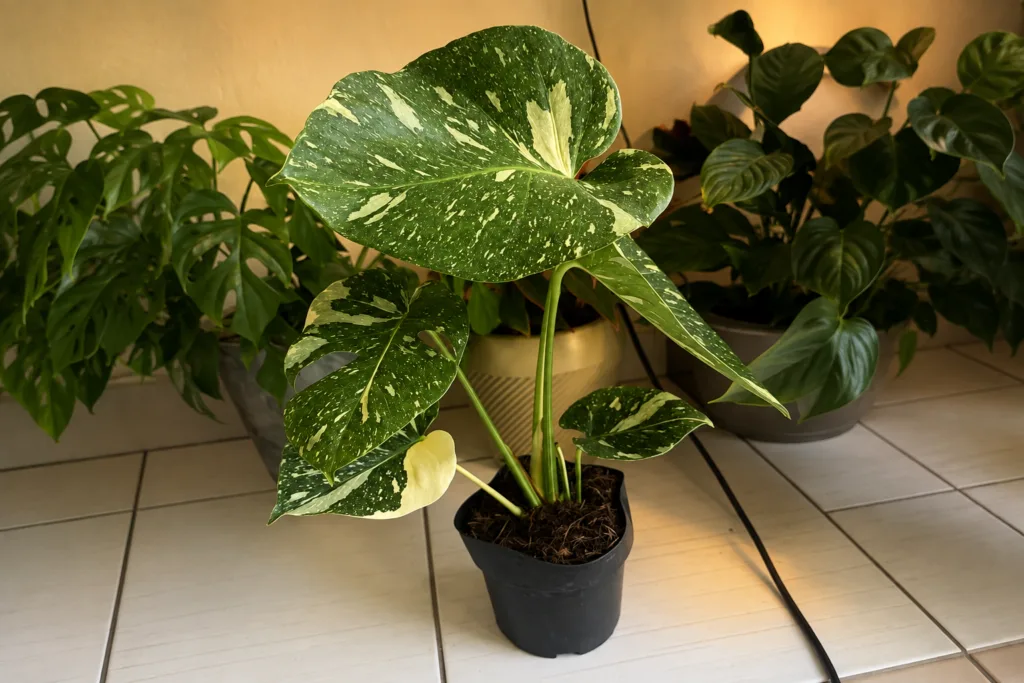
How long does Monstera propagation take? In my experience, water propagation shows initial roots within about 3 weeks and is usually ready to pot by 5-6 weeks. Soil propagation is harder to track directly, but new leaf growth around weeks 5-8 has been my most reliable sign of successful rooting.
Do I need a node for Monstera propagation to work? Yes. Every failed cutting I’ve had traced back to a missing node — a leaf alone, without a node, won’t root.
Which method has the highest success rate? Air layering has been the most reliable for me personally, since the cutting stays attached to the mother plant while it roots, removing most of the risk of losing it to rot.
Is rooting hormone necessary for Monstera cuttings? No, but I’ve noticed slightly faster, more consistent rooting when I used it on soil cuttings compared to cuttings I propagated without it.

Gardening Writer & Plant Enthusiast
Sarah Mitchell is a passionate gardening writer dedicated to helping people bring more nature into their homes. She loves exploring indoor plants, flowers, and sustainable gardening practices, sharing simple and practical tips that make plant care easier for everyone.