
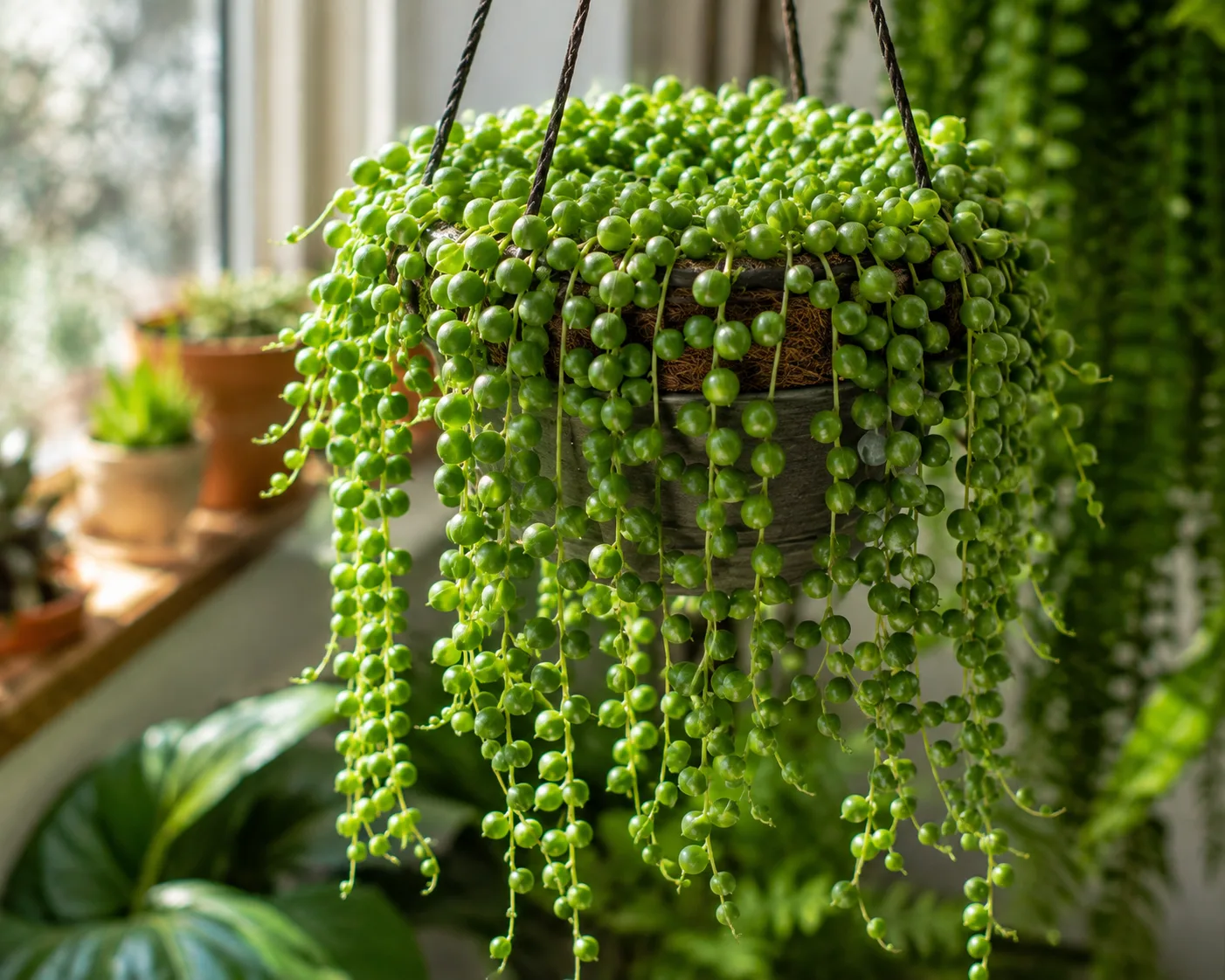
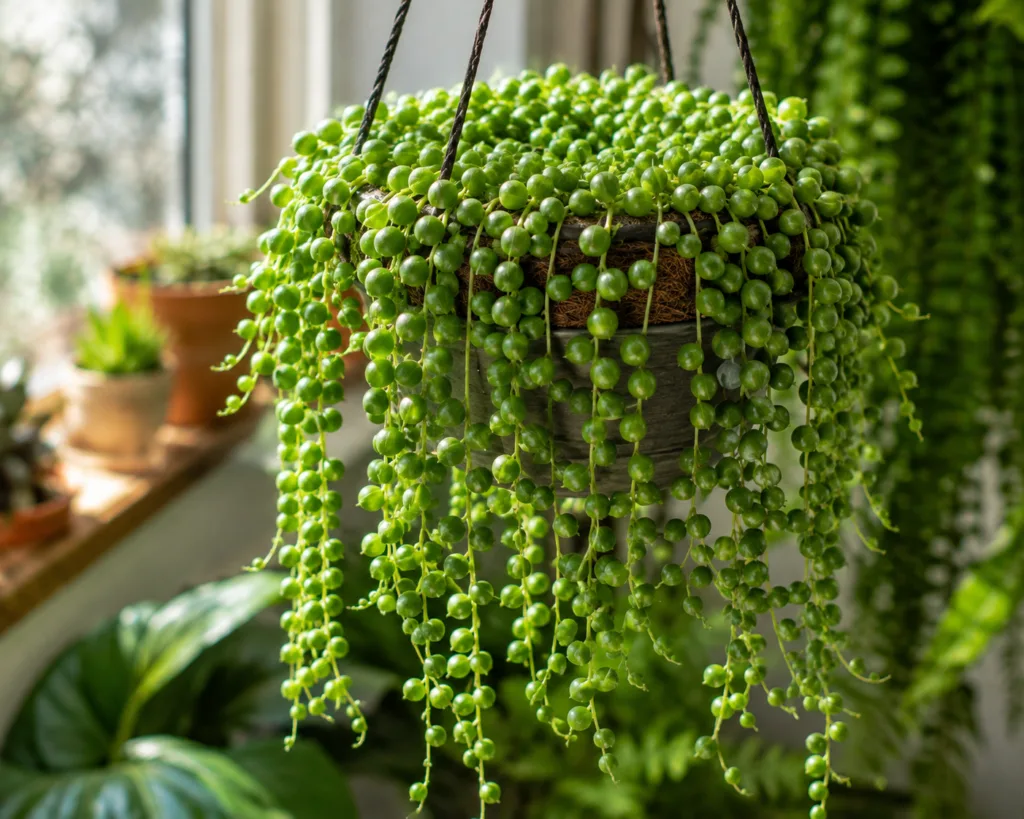
After losing my first string of pearls entirely to a drainage mistake, I was genuinely nervous the first time I tried propagating cuttings from my second, more successful plant. That nervousness turned out to be unnecessary — this has become one of the more forgiving propagations in my collection, once I got the basic technique right.
The Method That’s Worked Almost Every Time
I cut healthy strands with a good number of pearls attached, let the cut ends sit out for about a day to callus slightly, then laid the strands directly on top of moist, well-draining succulent soil rather than burying them. Within about three weeks, small roots typically start forming from the strand where it contacts the soil, and new growth follows within another couple of weeks after that.
I don’t bury the cuttings, which was a change from how I’d propagated some other succulents. Laying the strand flat, with the pearls resting gently on the soil surface, has consistently outperformed any attempt I made at burying a cut end vertically the way I would with a leggier plant.
The Mistake That Caused My Only Real Failures
My early failures all traced back to skipping the callusing step and placing fresh cuttings directly onto soil I’d just watered. The combination of a fresh, unhealed cut and damp soil led to rot at the cut point before any rooting could happen. Letting cuttings dry out and callus for about 24 hours, then placing them on soil that’s moist but not freshly watered, has eliminated this problem entirely for me since.
Water Propagation: Possible, But Not My Preference
I’ve tried rooting strands in a shallow dish of water, and it does work, but I’ve found the resulting roots more fragile when transferring to soil compared to strands rooted directly in soil from the start. Given how easily the soil method has worked, I don’t see much reason to use water propagation for this particular plant, though it’s a reasonable option if you want to visually monitor root development the way you might with a pothos cutting.
How Many Pearls a Cutting Needs
I’ve had success with strands as short as a few inches, containing maybe six to eight pearls, though longer strands with more pearls have rooted slightly faster and produced fuller-looking new growth sooner, likely because they have more stored water and energy to draw on during the rooting process.
Timing Matters More Than I Expected
My most reliable results have come from propagating during spring and summer. A batch I attempted in late fall sat for nearly two months without any visible root development before I gave up, while spring attempts have consistently shown roots within three weeks. I don’t bother propagating this plant outside the growing season anymore.
Caring for Newly Rooted Cuttings
Once I see roots forming, I water sparingly, letting the soil dry out between waterings even more conservatively than I would for an established plant, since young roots seem more vulnerable to rot than a mature root system. I hold off on any fertilizer until I see clear new pearl growth along the strand, usually a month or so after the first roots appear.
What a Failed Cutting Looks Like
If a cutting is going to fail rather than root, I’ve noticed the pearls typically start shriveling and the strand itself softens within the first couple of weeks, well before I’d expect roots to have formed successfully. If I see this happening, I’ve learned not to wait it out — I remove the cutting and try again with a fresh one rather than hoping it recovers.
Frequently Asked Questions
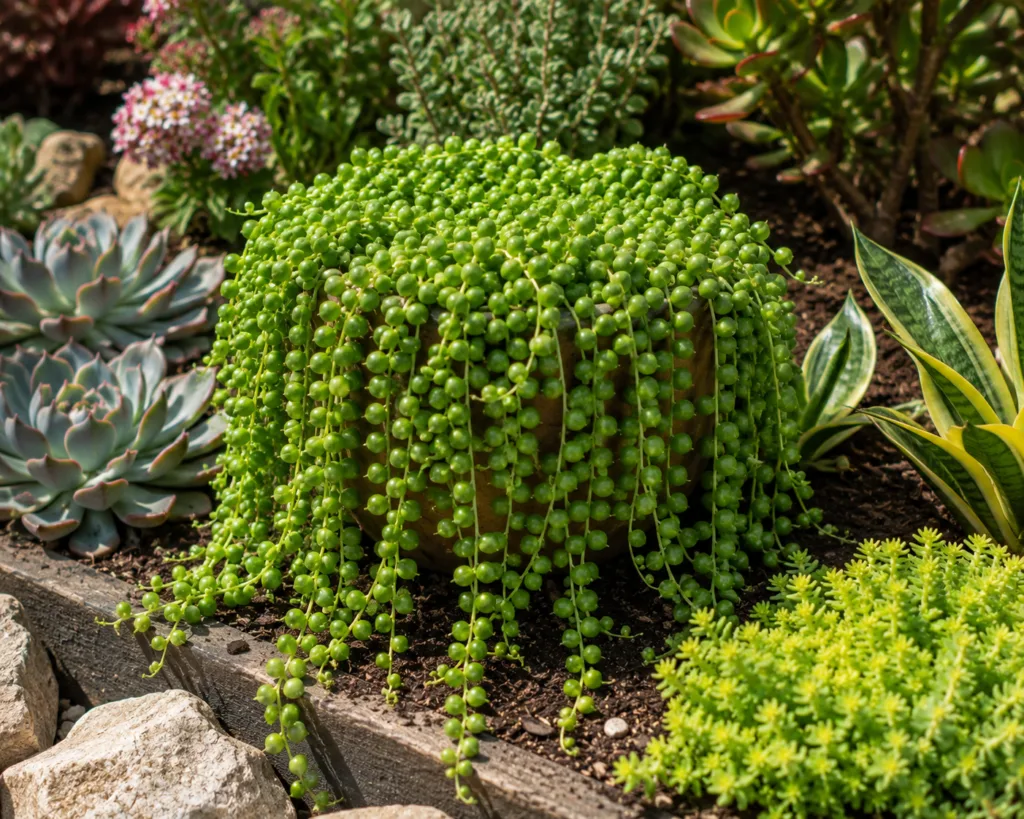
Should I bury string of pearls cuttings or lay them on top of the soil? Laying them on top has worked far better for me than burying — the pearls resting against moist soil seem to root more reliably than a buried cut end.
How long does string of pearls propagation take? In my experience, roots typically appear within about three weeks, with visible new growth following within another two to three weeks after that, during the growing season.
Can I propagate string of pearls in winter? I’ve tried and had poor results — a batch attempted in late fall sat without rooting for nearly two months. I now only propagate during spring and summer.

Gardening Writer & Plant Enthusiast
Sarah Mitchell is a passionate gardening writer dedicated to helping people bring more nature into their homes. She loves exploring indoor plants, flowers, and sustainable gardening practices, sharing simple and practical tips that make plant care easier for everyone.