
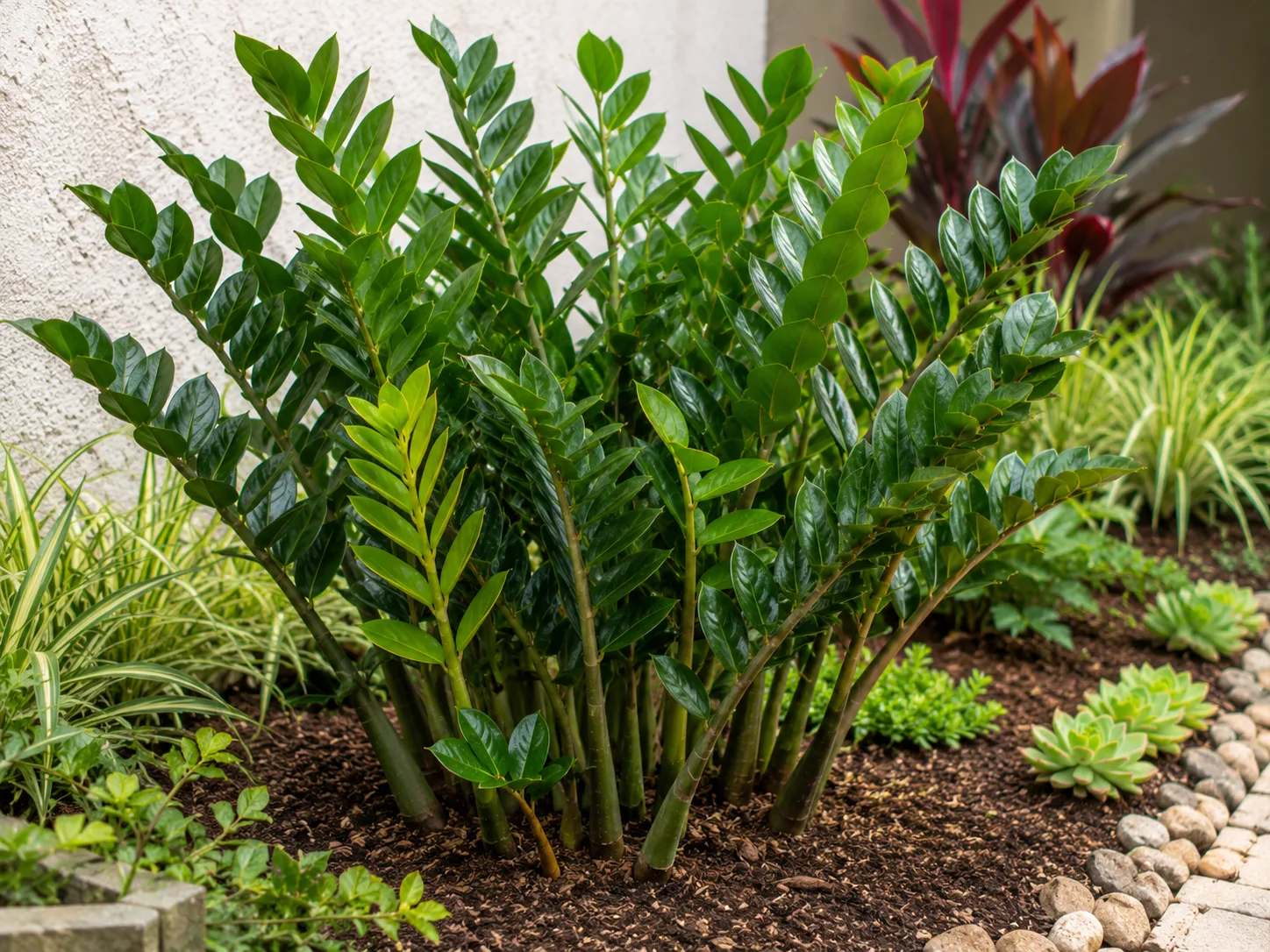
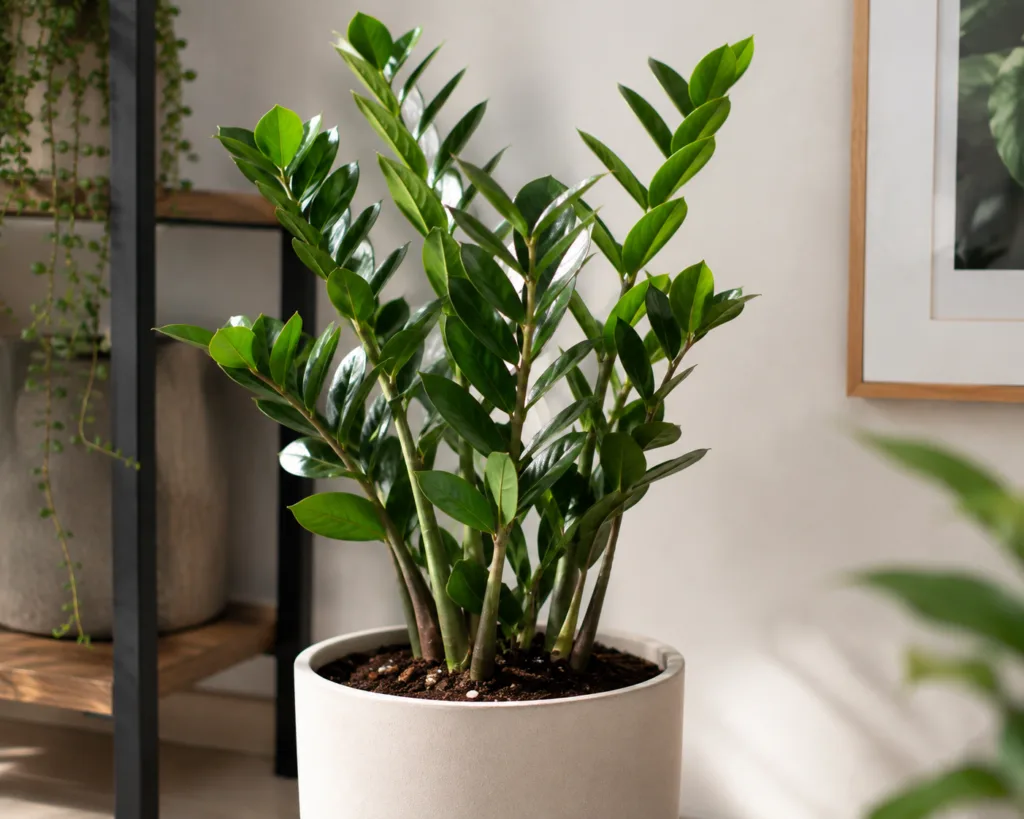
I propagated my first ZZ plant almost by accident, saving a few leaflets that snapped off during a repot rather than tossing them. That accidental batch took nearly four months to show any real growth, which sent me looking for a faster method — and division turned out to be the answer, though it came with its own tradeoffs.
Leaf Cuttings: Slow but Genuinely Easy
Individual leaflets, pressed into a well-draining mix or placed in water, will root for a ZZ plant, and this is the method most commonly described. My experience matched what’s often said about timing: root development took 6-8 weeks, and visible new growth above the soil took considerably longer than that, often not showing until close to the four-month mark I mentioned.
The upside is that this method requires almost nothing beyond a healthy leaflet and patience — no need to disturb an established plant’s root system, and leaflets are easy to come by anytime you’re handling the plant for any reason.
Stem Cuttings: A Modest Improvement
Taking a small section of stem with a few leaflets attached, rather than a single leaflet, sped things up somewhat in my experience — roots appeared within about 5-6 weeks rather than 6-8, and new growth followed within roughly two months of that rather than four. Still slow compared to most other propagation I’ve done, but a genuine improvement over single leaflets.
Division: The Method I Actually Recommend Now
Once I had a mature ZZ plant that needed repotting anyway, I tried dividing it — separating a section of the underground rhizome, along with its attached stems and roots, from the main plant. This produced an instantly established plant with zero waiting period for roots to develop, since it already had them. Within days of potting the division separately, it looked like a small but completely normal, healthy ZZ plant, rather than a bare leaflet slowly working toward eventual growth.
The tradeoff is that division requires an already mature plant you’re willing to divide, typically one that’s been repotted and has enough rhizome mass to split without stressing either resulting piece too much.
What the Rhizome Actually Looks Like
For anyone who hasn’t unpotted a mature ZZ plant before, the rhizome is a thick, potato-like structure underground, quite different from what the leafy top growth might suggest. When I divided mine, I used a clean knife to separate a section that already had its own stems growing from it, making sure each half retained a reasonable portion of rhizome and root material.
Why I Don’t Bother With Leaf Cuttings Anymore
Given how much faster division has been whenever I’ve had a mature plant available to split, I’ve mostly stopped doing individual leaf cuttings except when I happen to have a spare leaflet from routine handling and don’t mind the long wait. If you’re propagating specifically to get a new plant relatively quickly, and you have access to an established ZZ plant that could use repotting anyway, division has been the clear winner in my own comparison.
Common Mistakes I Made Early On
I overwatered several of my early leaf cuttings, treating them like they needed the same moisture as a rooting pothos cutting. ZZ plant cuttings, in my experience, do better with soil kept on the drier side, closer to how I’d treat the mature plant, rather than consistently moist. I lost at least two leaflets to rot before adjusting this.
Frequently Asked Questions
Which propagation method is fastest for ZZ plants? Division, by a wide margin, in my experience — an already-rooted rhizome section skips the weeks-to-months of waiting that leaf or stem cuttings require.
Do ZZ plant cuttings need rooting hormone? I’ve never used it and had success without it, though I can’t rule out that it might speed things up slightly based on what’s worked for other plants in my collection.
How do I know when to divide a ZZ plant? I waited until mine was clearly root-bound and needed repotting anyway, which gave me enough rhizome mass to split without leaving either section too small to thrive on its own.

Gardening Writer & Plant Enthusiast
Sarah Mitchell is a passionate gardening writer dedicated to helping people bring more nature into their homes. She loves exploring indoor plants, flowers, and sustainable gardening practices, sharing simple and practical tips that make plant care easier for everyone.