
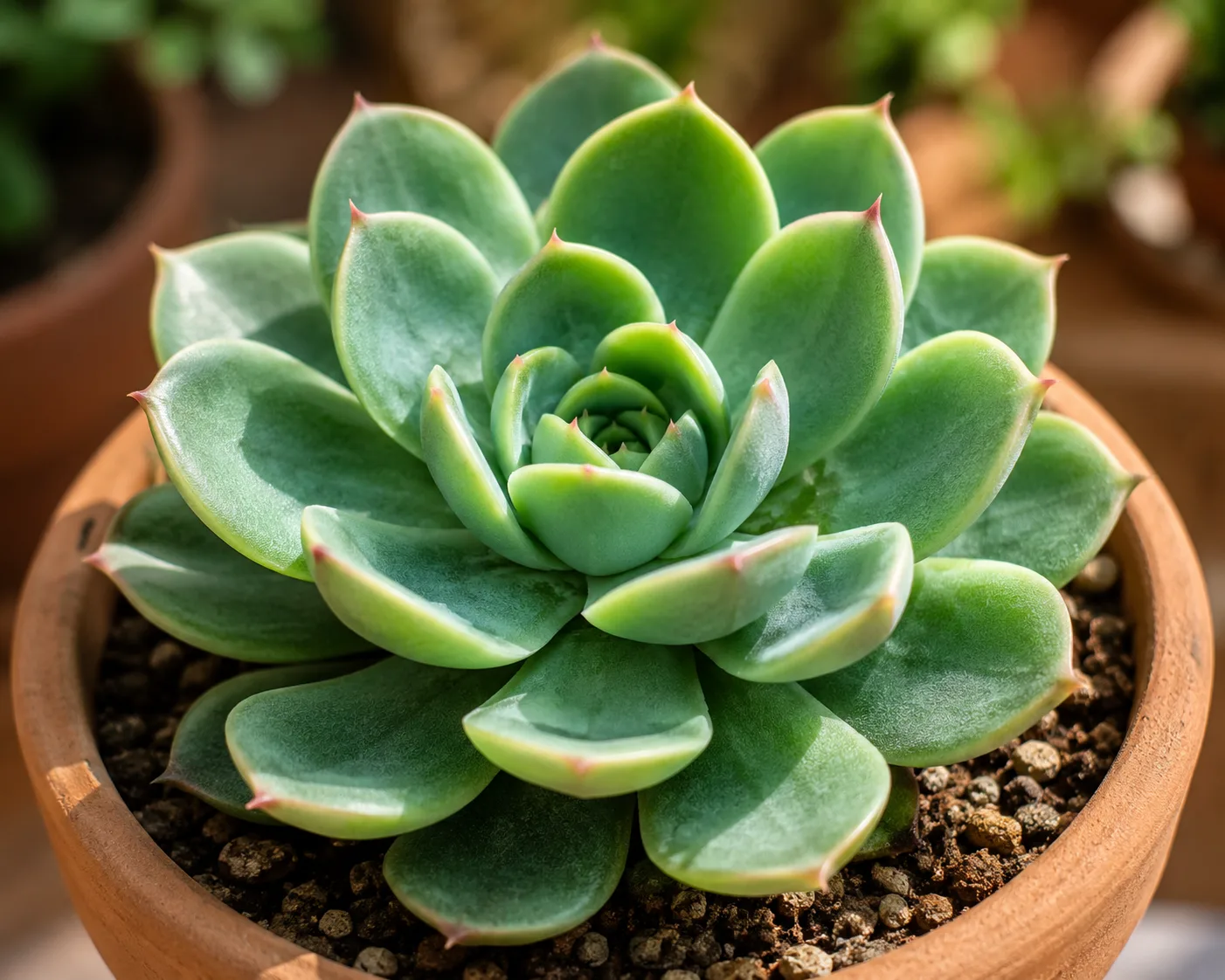
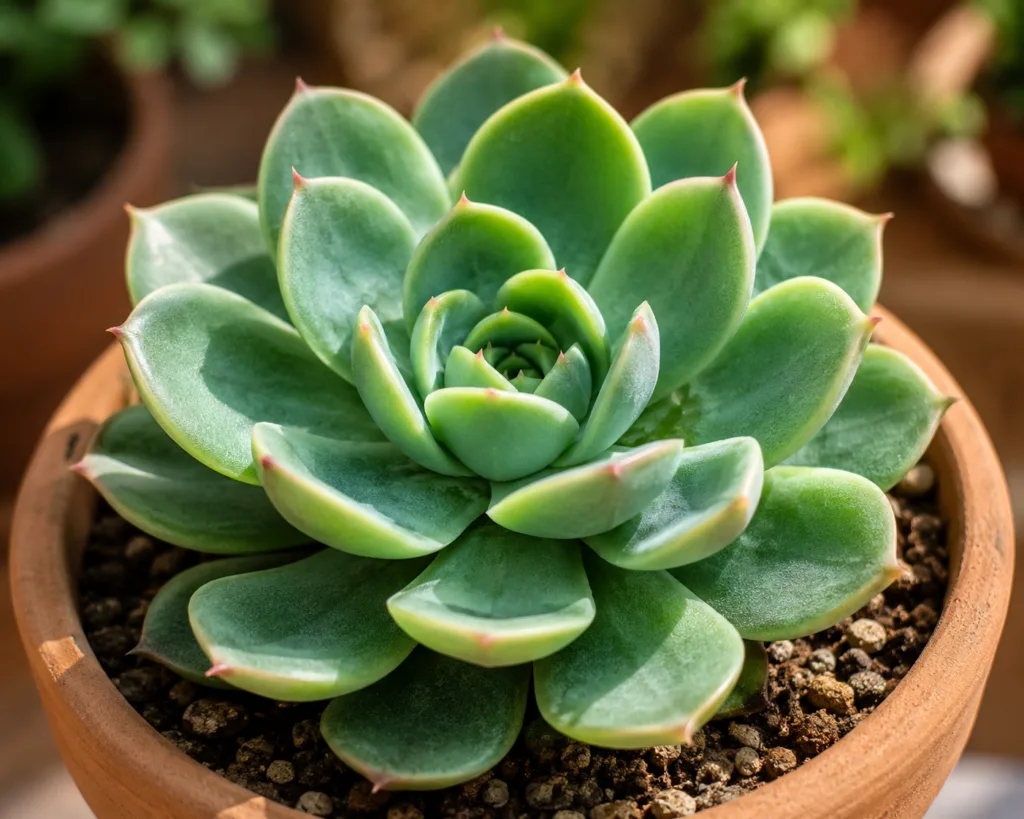
Succulent leaf propagation gets talked about as nearly foolproof, and while it genuinely is easier than a lot of other propagation methods, my actual success rate across dozens of attempts with my Echeveria collection has been closer to 60-70% rather than the near-100% some sources imply. Here’s what’s actually made the difference between a leaf that roots and one that just shrivels.
How I Remove the Leaf Matters More Than I Initially Thought
My earliest attempts involved just plucking leaves that had fallen off on their own or pulling ones that looked loose. My success rate improved noticeably once I started deliberately twisting healthy leaves gently from the stem, aiming to get the entire leaf base intact without leaving any part of it still attached to the mother plant. A leaf that breaks partway, leaving a small piece of its base behind, has almost never successfully rooted for me — it needs that complete base to actually regenerate a new plant.
The Callusing Step Isn’t Optional
Every leaf I’ve tried to propagate without letting it callus first — laying it directly on soil right after removal — has failed to root. Letting the leaf sit out, cut end up, in a spot with indirect light for about three to five days lets the wound seal over, which has been the single biggest factor separating my successes from my failures.
Placement: On Top, Not Buried
I lay callused leaves on top of well-draining succulent soil, resting the cut base against the surface, rather than burying any part of the leaf. Roots typically emerge from the base within two to three weeks, followed by a tiny new rosette forming a few weeks after that, drawing energy from the original leaf as it does.
The Honest Failure Rate
Out of a batch of twenty Echeveria leaves I propagated at once, keeping careful track for the sake of being accurate here, twelve successfully rooted and produced new plantlets, six shriveled without rooting at all, and two rooted but never produced a visible new rosette before the original leaf fully withered. That’s a 60% full-success rate, which is genuinely good but well short of the near-perfect odds some propagation guides imply.
What Separated the Successes From the Failures
Looking back at which leaves succeeded versus failed, the successful ones were almost all plump, healthy leaves taken from lower on the plant, with an intact base and no visible damage. The leaves that failed were more often thinner, slightly damaged during removal, or taken from higher up the plant where leaves tend to be younger and, in my experience, somewhat less reliable for this method than more established lower leaves.
Watering During the Rooting Period
I mist the soil very lightly every few days rather than watering directly, since the leaf itself has no roots yet to actually take up water from a normal watering. Once I see roots and the beginning of a new rosette, I transition to light, infrequent watering of the soil itself, similar to how I’d treat an established succulent, just even more conservatively during this vulnerable early stage.
When to Separate the New Plant From the Original Leaf
The original leaf gradually shrivels and dries up as the new plantlet grows and becomes self-sufficient, usually over a period of one to two months after the rosette first appears. I leave the shriveled leaf attached until it comes away easily on its own rather than pulling it off early, since I’ve read — and my own results support — that the leaf continues providing some energy to the new plant until it’s fully depleted.
Does This Work for All Succulents?
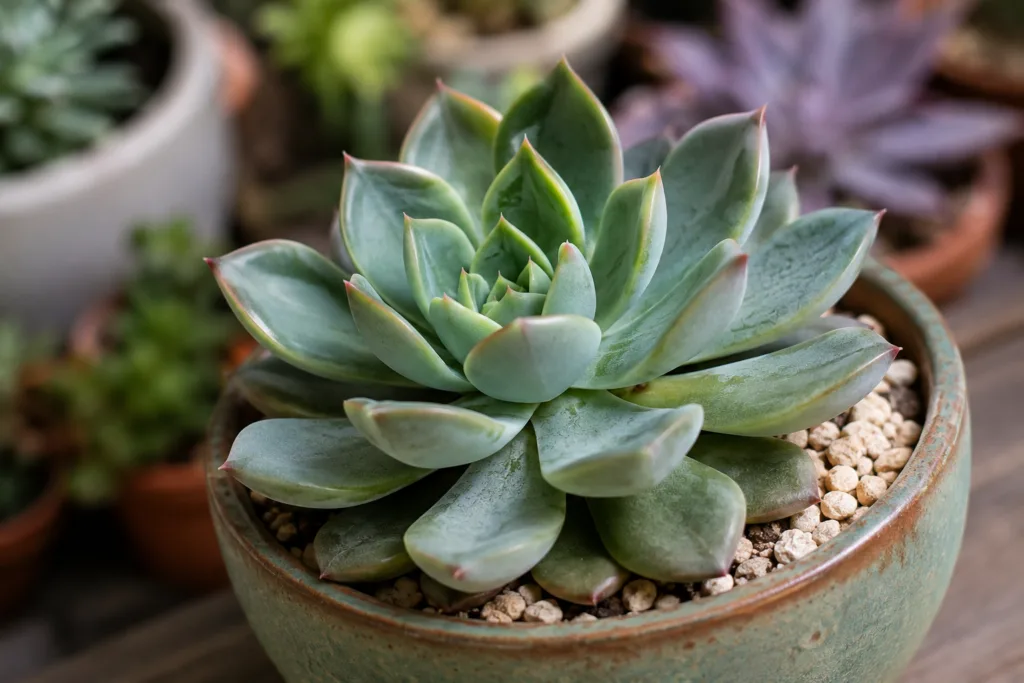
I’ve had my best, most consistent results with Echeveria specifically. A few attempts with jade plant leaves, which I’ve covered in more detail separately, showed a notably lower success rate and slower timeline in a direct comparison against stem cuttings from the same plant. Not every succulent leaf propagates equally well, and I’d recommend checking whether leaf propagation is genuinely well-suited to your specific plant before assuming uniform success across every succulent you own.
Frequently Asked Questions
What percentage of succulent leaf cuttings actually root successfully? Based on my own tracked results with Echeveria specifically, roughly 60% produced a fully successful new plant, with some additional leaves rooting but failing to produce a visible new rosette.
Why did my succulent leaf shrivel instead of rooting? In my experience, this most often happened with leaves that broke rather than came away cleanly from the stem, leaving part of the base behind, or leaves that were placed on soil before fully callusing.
Do all succulents propagate well from leaf cuttings? Not equally, in my experience — Echeveria has worked reliably for me, while other succulents like jade plant have shown a lower success rate from leaves compared to stem cuttings.

Gardening Writer & Plant Enthusiast
Sarah Mitchell is a passionate gardening writer dedicated to helping people bring more nature into their homes. She loves exploring indoor plants, flowers, and sustainable gardening practices, sharing simple and practical tips that make plant care easier for everyone.