
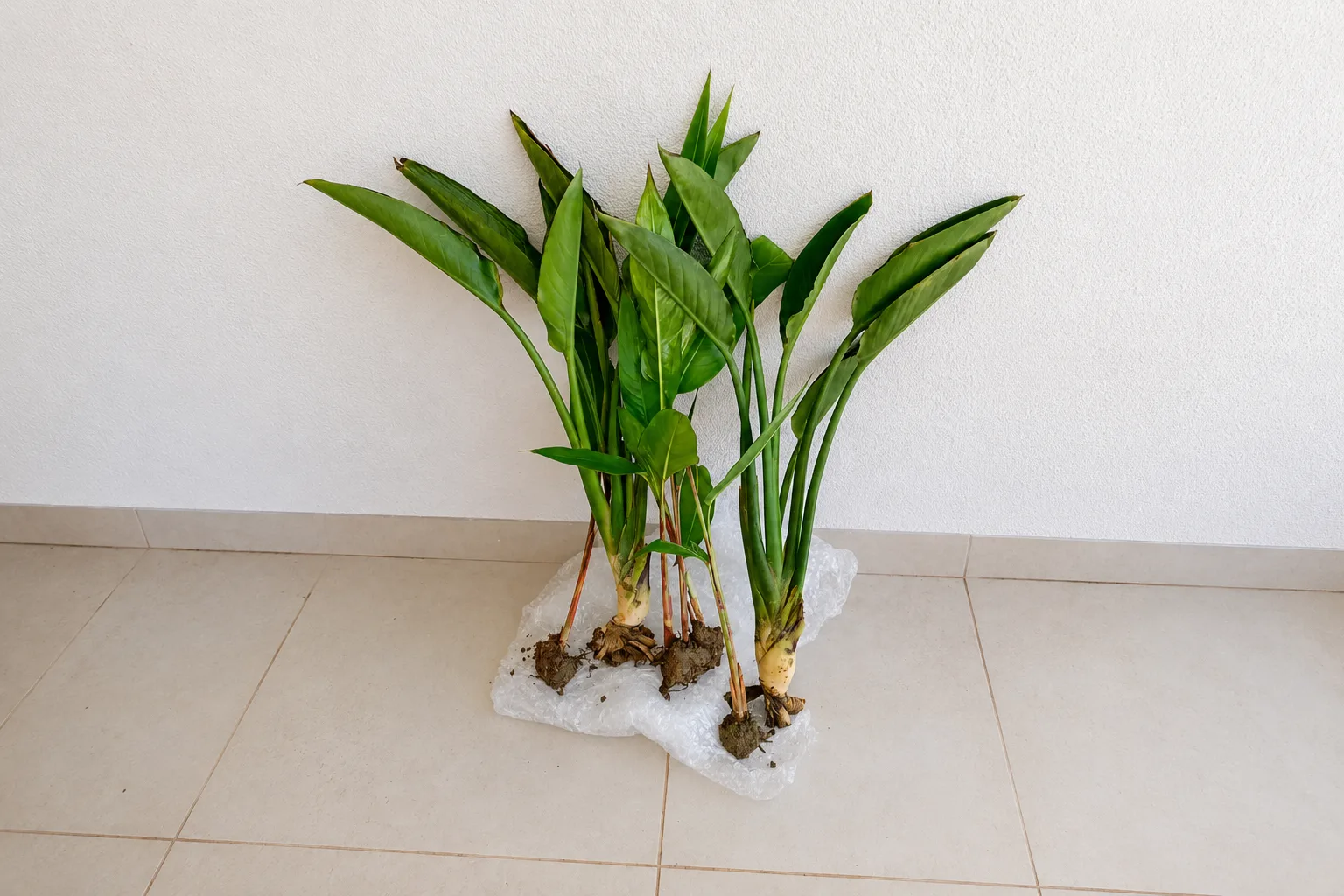
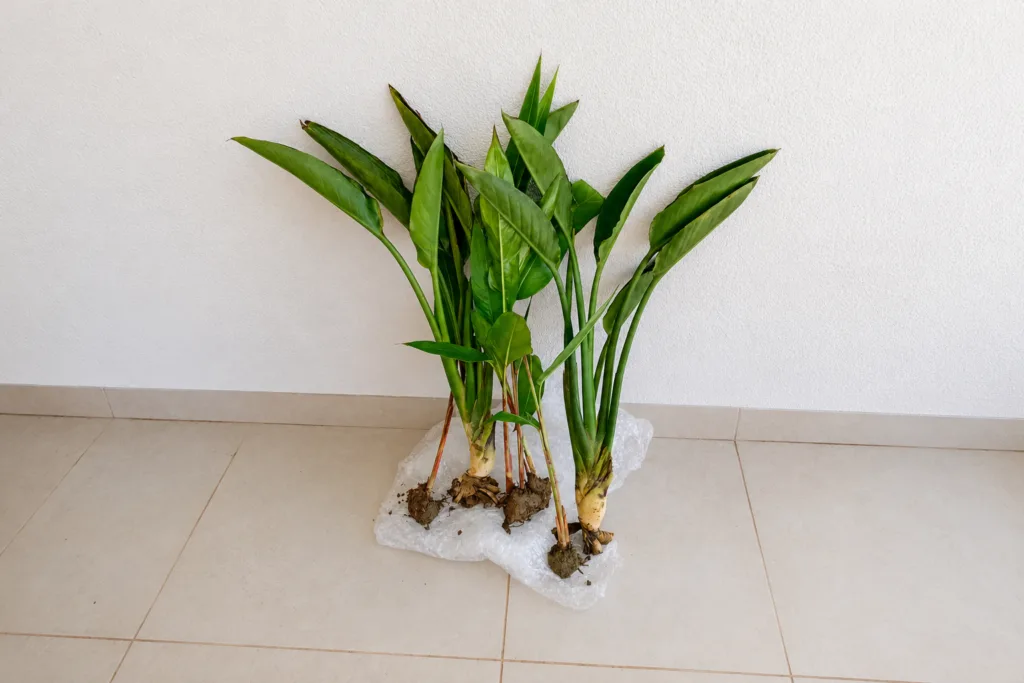
I’ve had my bird of paradise plant for four years, and it didn’t produce a single flower until year three. For a long time I assumed blooming indoors just wasn’t realistic for this plant, based on some vague sense that it was more of a “grow it for the leaves” situation inside a home. It turns out I was partly right and partly just not giving it what it actually needed, and once I made a few specific changes, it bloomed for the first time and has bloomed twice more since.
This is what real bird of paradise plant care has looked like for me, including the years where I got it wrong and what finally changed.
Why Mine Didn’t Bloom for Two Years
The plant grew steadily during those first two years — new paddle-shaped leaves unfurling reliably every few months, healthy glossy foliage, nothing that looked like a problem. But no flowers. I spent a while assuming this was just how the plant behaved indoors until I started paying closer attention to how much actual direct light it was getting.
My bird of paradise was sitting a few feet back from a bright window, getting what I’d have called “plenty of light” at the time, but it turns out that’s a meaningfully different situation from the direct sun this plant actually wants for blooming. I moved it directly in front of a south-facing window where it now gets several hours of unfiltered direct sun each day, and within about eight months of that change, my first flower spathe appeared. It’s genuinely one of the clearest cause-and-effect lessons I’ve learned with any houseplant — the leaves were fine with indirect light, but flowering needed real direct sun.
Watering: A Bigger Plant Needed a Bigger Adjustment Than I Expected
As my bird of paradise has grown from a modest three-foot plant to something closer to six feet tall now, I’ve had to recalibrate my watering more than once. What worked for the smaller plant left the larger one looking visibly thirsty faster than I expected, with leaves that developed a slightly duller look and started curling along the edges before I connected it to needing more frequent watering as the plant’s overall size and root mass increased.
I now water thoroughly, letting the top inch or two of soil dry out between waterings, roughly once a week during the growing season and stretching that out during the slower winter months. The plant has been fairly communicative about getting this wrong in either direction — overwatering has shown up as yellowing lower leaves and a general limpness, while underwatering shows up faster, as those curling, slightly duller leaf edges I mentioned.
The Leaf Splitting That Worried Me Before I Understood It
New leaves on my bird of paradise regularly split into thin sections along their length as they mature, especially the larger, more established leaves. The first time I noticed this happening, I assumed something was wrong — maybe a pest, maybe physical damage — and spent a while inspecting the plant for signs of an actual problem before realizing this is simply normal, expected behavior for the plant, similar to what happens with a mature Monstera. The splits are thought to help the large leaves handle wind without tearing in the plant’s native environment, and mine has consistently split its larger leaves as they’ve matured without any negative effect on the plant’s overall health.
Repotting a Plant That Outgrew Its Space Faster Than I Planned For
I underestimated how quickly this plant would need a bigger pot. I repotted it once in its first year, thinking that would hold it for a while, but by the following year it had visibly outgrown that pot again, with roots circling densely at the bottom and the plant looking noticeably top-heavy whenever I moved it. Since then I’ve settled into checking roughly once a year during spring, moving up a pot size whenever I see roots at the drainage holes or the plant becomes difficult to keep upright without the pot tipping.
I use a well-draining mix with extra perlite worked in, and I’ve made a point of choosing pots with real weight to them now, since my bird of paradise has genuinely tipped over a lightweight plastic pot once as the top growth got heavier than the base could stabilize.
Fertilizing: Where More Actually Did Help, Within Reason
Unlike some of my other plants where I’ve had to pull back on fertilizing after overdoing it, my bird of paradise has responded well to fairly regular feeding during the growing season — a balanced liquid fertilizer roughly every 2-4 weeks from spring through early fall. I’ve noticed a fairly direct relationship between consistent fertilizing and both leaf size and, since it started blooming, how many flower spathes appear in a season. I do stop completely over winter, since growth slows dramatically regardless of feeding during that period.
Common Problems I’ve Actually Run Into
Yellowing lower leaves — this has consistently meant overwatering for me, usually resolved by holding off on the next watering longer than my instinct suggested and double-checking that the pot’s drainage is actually working.
Brown, crispy leaf edges — low humidity has been the culprit in my case, particularly during winter with the heat running. I don’t maintain especially high humidity for this plant generally, but a stretch of very dry indoor air during one winter caused noticeable edge browning that improved once I started running a humidifier nearby.
Spider mites — I’ve dealt with a mild infestation once, during that same dry winter stretch, noticed as fine stippling and faint webbing on the undersides of a few leaves. Increasing humidity and treating with diluted neem oil over about three weeks resolved it.
No blooms despite healthy growth — in my experience, this has been almost entirely a light issue. My plant grew well for two years on indirect light alone, but genuine direct sun was what actually triggered flowering.
What I’d Do Differently If I Started Over
I’d put this plant in the brightest, most direct-sun spot I had available from day one, rather than assuming “bright indirect light” was enough because the leaves looked healthy. I’d also plan for a bigger pot upgrade sooner than felt necessary, since this plant’s growth rate outpaced my expectations more than once. The biggest overall lesson has been that healthy-looking foliage doesn’t necessarily mean the plant is getting everything it wants — it took actual flowers, or the lack of them, to reveal that mine needed more direct sun than I’d been giving it.
Frequently Asked Questions
Why won’t my bird of paradise bloom? Based on my own experience, insufficient direct sunlight was the cause. My plant grew healthy foliage for two years on indirect light alone before I moved it to a spot with real direct sun, and it bloomed for the first time about eight months later.
Is it normal for bird of paradise leaves to split? Yes — this surprised me the first time I saw it, but splitting along the leaf as it matures is normal behavior for this plant, not a sign of damage or disease.
How often should I water a bird of paradise? I water mine roughly once a week during the growing season, letting the top inch or two of soil dry out between waterings, and less frequently in winter as growth slows.
How much light does a bird of paradise actually need to bloom? In my experience, several hours of direct, unfiltered sunlight made the difference between healthy leaves with no flowers and a plant that actually blooms. Indirect light alone kept mine alive and growing but never triggered flowering.
Gardening Writer & Plant Enthusiast
Sarah Mitchell is a passionate gardening writer dedicated to helping people bring more nature into their homes. She loves exploring indoor plants, flowers, and sustainable gardening practices, sharing simple and practical tips that make plant care easier for everyone.