
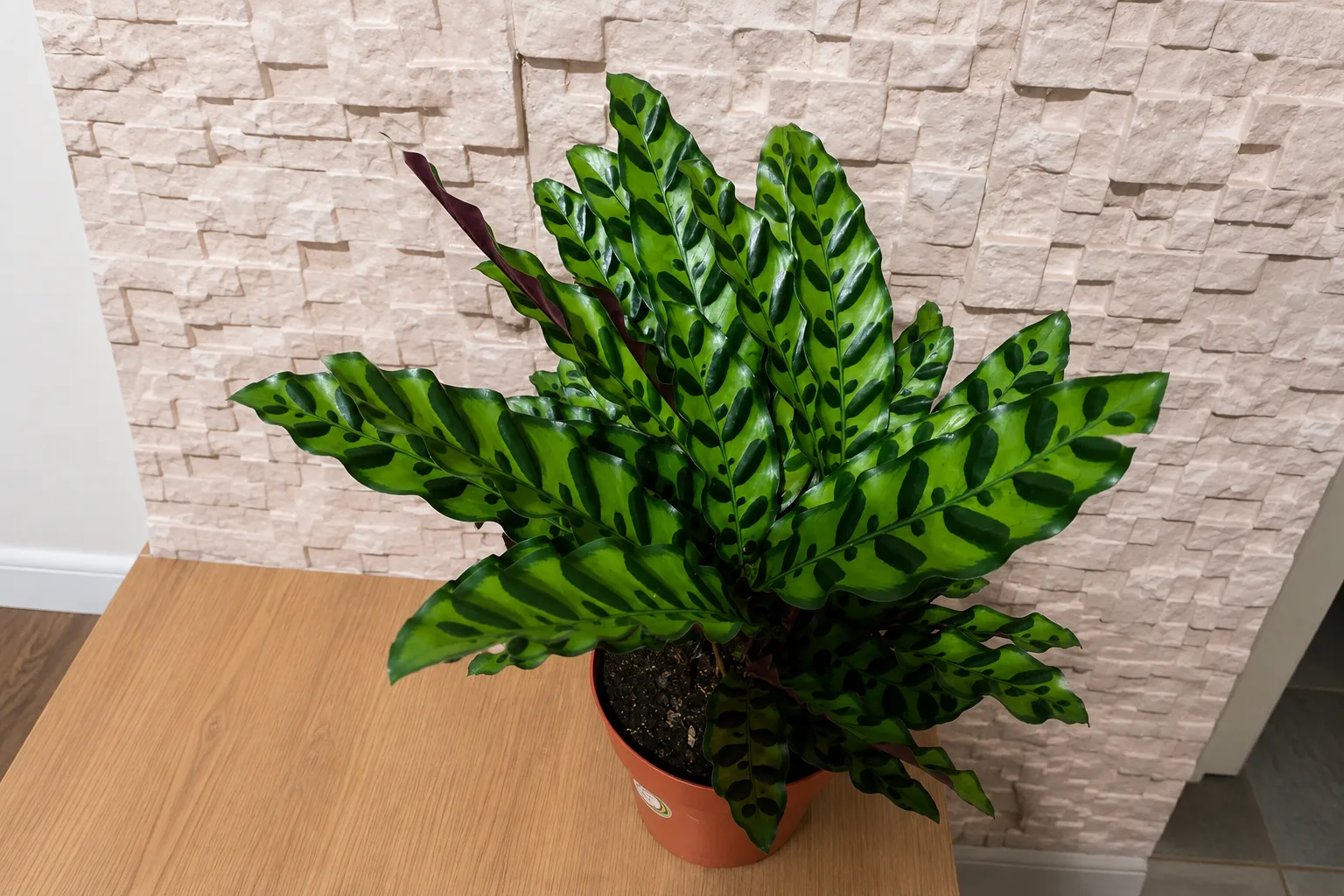
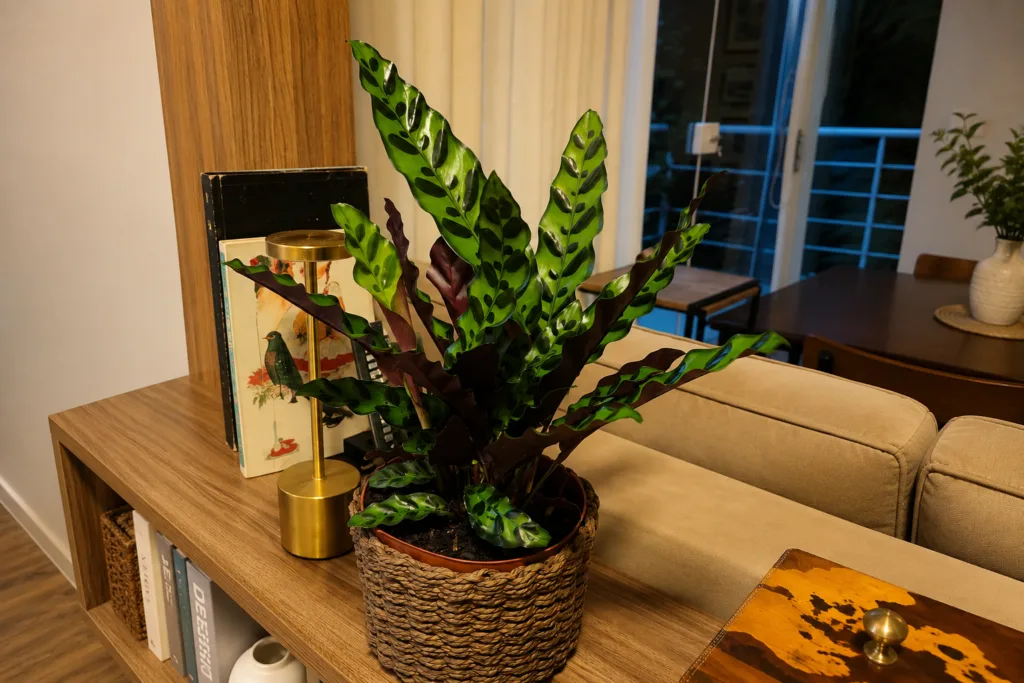
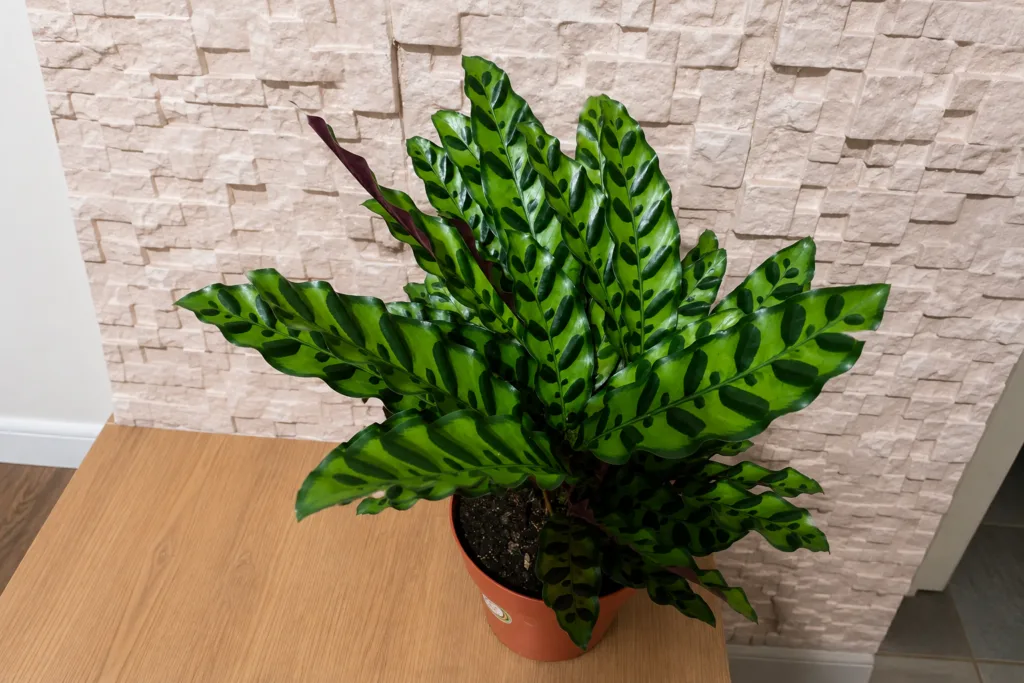
I bought my prayer plant labeled simply “Maranta” at a plant sale table, and for the first several months I genuinely thought I’d bought a small Calathea, since the leaf patterns looked similar enough at a glance and I hadn’t done my homework. It wasn’t until I noticed my plant’s leaves folding up dramatically every evening, more like closing hands than the subtler shift I’d read about in Calatheas, that I looked closer and realized I actually had a Maranta leuconeura, a related but genuinely different plant with its own quirks.
That early mix-up ended up shaping a lot of my early mistakes, since I was following some care advice meant for a slightly different plant. Here’s what I’ve actually learned specific to prayer plant care once I sorted out what I was working with.
The Leggy Growth That Told Me I Had the Light Wrong
My biggest early mistake was placing the plant on a shelf that got very little light, assuming its tolerance for shade meant it wanted genuinely low light rather than filtered brightness. Over a few months, the stems stretched out noticeably, with longer gaps between leaves and a generally sparse, reaching look rather than the fuller, more compact growth I’d seen in photos.
Moving it closer to an east-facing window, where it gets bright but indirect light for most of the morning, fixed this within a couple of months — new growth came in with much shorter gaps between leaves and a fuller overall shape. I’ve since learned to watch the spacing between new leaves as an indicator: tight spacing means the light is about right, and any noticeable stretching means it’s time to move the plant somewhere brighter.
Getting Watering Right Took Watching the Leaf Movement
One thing I didn’t expect: the leaf movement itself became a genuinely useful signal for my watering routine, beyond just being a neat party trick. When the soil starts getting dry, I noticed my prayer plant’s leaves seem to fold up a little more tightly and a bit earlier in the evening than usual, sometimes staying partially folded even during daylight hours if it’s gone too long without water. Once I started paying attention to that pattern alongside the usual finger-in-the-soil check, I’ve caught dry spells before the leaves showed any actual crisping or curling damage.
I keep the soil evenly moist, watering roughly once a week during spring and summer and stretching that to every 10-12 days in the cooler months, checking the top inch of soil before each watering rather than sticking to a strict schedule. Letting it go fully dry has caused visible leaf curling for me in the past, which recovered within a couple of days of a thorough watering but wasn’t something I wanted to repeat.
Humidity: Grouping Plants Worked Better Than I Expected
I was hesitant to buy a humidifier just for one plant, so I tried grouping my prayer plant with two other humidity-loving plants on the same shelf first, mostly as a cheaper experiment before committing to more equipment. It actually worked better than I anticipated — the cluster of plants together seemed to raise the humidity enough in that specific corner of the room that I never ended up needing the humidifier I’d been planning to buy. I do occasionally set a small tray of water with pebbles underneath the pot during particularly dry winter stretches, which seems to give an additional boost during the driest months.
Propagation: The Easiest Success I’ve Had With Any Houseplant
If there’s one part of prayer plant care that’s been unambiguously simple, it’s propagation. I cut a stem section with at least two nodes and a few leaves, placed it in a glass of filtered water with one node submerged, and had visible roots within about three weeks — genuinely one of the fastest rooting times I’ve experienced with any plant cutting. Once the roots reached a couple of inches, I moved it into a well-draining potting mix, and it barely showed any transition stress, unlike some other cuttings I’ve moved from water to soil.
I’ve since propagated four more cuttings from the same mother plant, mostly during routine pruning sessions, and every single one has rooted successfully within roughly the same three-to-four-week window, which has made this feel like one of the more reliably beginner-friendly plants I own for anyone wanting to try propagation for the first time.
Pruning: A Habit I Started Later Than I Should Have
I didn’t prune my prayer plant much for the first year, mostly out of the same uncertainty I’ve had with other plants about what actually needed cutting. Once the leggy growth from that early low-light period became more obvious, I started trimming back the longest, sparsest stems, which encouraged new growth from lower down and gave the plant a noticeably fuller, more compact shape within a couple of months. Now I prune lightly every few months during the growing season, both to maintain shape and to keep a steady supply of cuttings for propagation.
The One Pest Issue I’ve Actually Dealt With
Spider mites showed up once during a dry winter stretch, first noticeable as tiny reddish-brown specks and a faint webbing tucked into the underside of a few leaves. I isolated the plant right away, increased humidity by moving it closer to my grouped plant cluster, and treated with diluted neem oil every 5-7 days for about three weeks, which cleared the infestation without any lasting leaf damage.
Confirming It’s Safe Around My Cat
I have a cat who occasionally nibbles on houseplant leaves despite my best efforts to discourage it, so pet safety mattered to me when choosing plants. After a call to my vet’s office to confirm what I’d read, I was told that Maranta leuconeura is generally considered non-toxic to cats and dogs, which was one of the deciding factors in why I kept this plant on an accessible shelf rather than somewhere out of reach, unlike a couple of my other houseplants that I’ve had to relocate specifically because of pet safety concerns.
Signs I’ve Learned to Watch For
- Longer gaps between leaves and a stretched, reaching look — insufficient light, in my experience, resolved by moving to a brighter but still indirect spot.
- Leaves folding tightly even during the day — my own early warning sign that the soil is drying out faster than usual, worth checking before the leaves actually curl or crisp.
- Brown, crispy tips on new leaves — low humidity has been the main culprit for me, improved noticeably once I grouped this plant with others rather than keeping it isolated.
- Fine webbing or reddish specks on leaf undersides — my one spider mite experience, which showed up specifically during a dry stretch and resolved with increased humidity and neem oil.
What I’d Tell Someone Buying Their First Prayer Plant
Double-check what you’re actually buying if it’s labeled loosely as “prayer plant” or sold near Calatheas, since the care overlaps significantly but isn’t identical — I spent months following slightly mismatched advice before sorting that out. Beyond that, this has been one of the more rewarding plants I own, mostly because the leaf movement genuinely does double as a useful daily signal for how it’s doing, not just a nice thing to watch.
Frequently Asked Questions
Why is my prayer plant leggy? Based on my own experience, this points to insufficient light. Moving my plant to brighter, indirect light shortened the gaps between new leaves within a couple of months.
How can I tell if my prayer plant needs water? Beyond checking the soil, I’ve found the leaf movement itself is a useful clue — mine folds up tighter and earlier than usual when the soil is starting to dry out.
Is a prayer plant the same as a Calathea? No, though they’re closely related and often confused, as I found out firsthand. Care is similar but not identical, so it’s worth confirming exactly which plant you have.
Are prayer plants toxic to pets? Based on what I confirmed with my own vet, Maranta leuconeura is generally considered non-toxic to cats and dogs, which is part of why I keep mine on an accessible shelf.

Gardening Writer & Plant Enthusiast
Sarah Mitchell is a passionate gardening writer dedicated to helping people bring more nature into their homes. She loves exploring indoor plants, flowers, and sustainable gardening practices, sharing simple and practical tips that make plant care easier for everyone.