
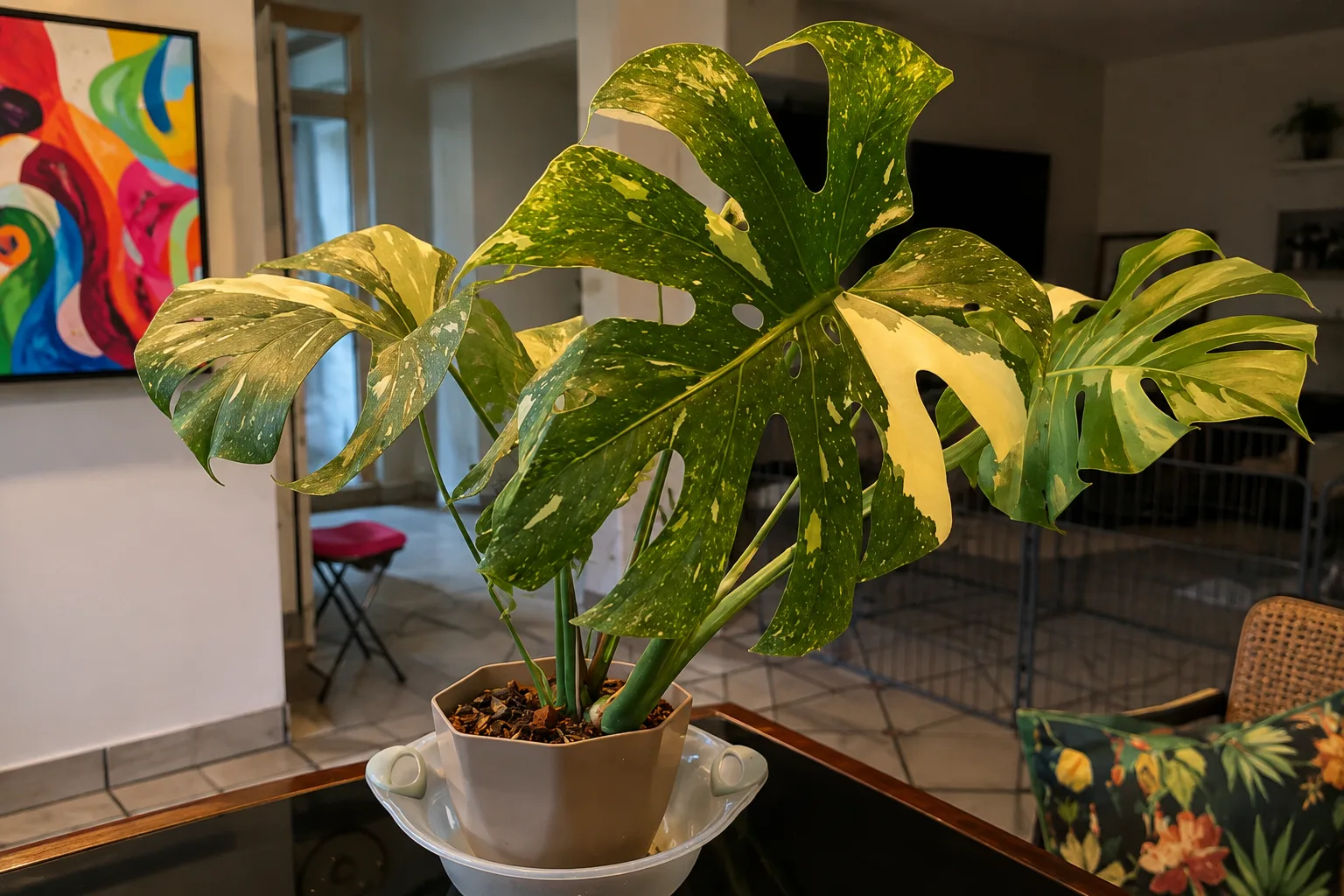
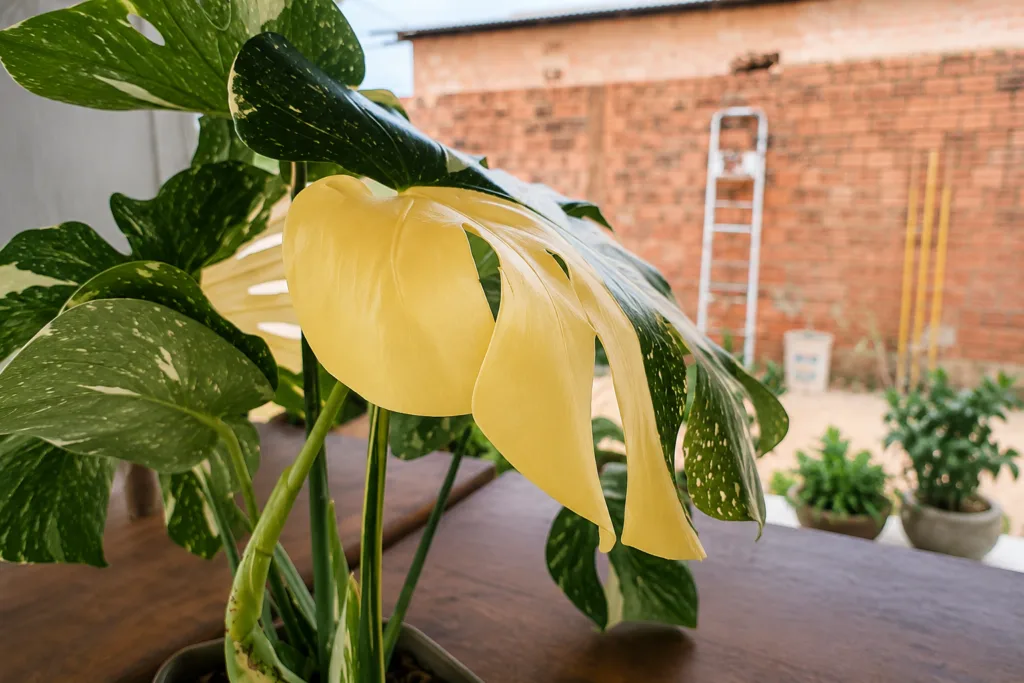
The first time a leaf on my Monstera turned yellow, I panicked and did the worst possible thing: I changed three variables at once. I watered it, moved it to a brighter spot, and added fertilizer, all within the same week, hoping one of them would fix it. Looking back, that made it nearly impossible to figure out what had actually caused the problem, since I couldn’t tell which change, if any, was responsible for the leaf eventually dropping.
Since then I’ve had yellow leaves show up on my Monstera collection for several genuinely different reasons, and I’ve gotten much better at figuring out which one I’m actually dealing with before reacting. Here’s what I’ve learned to look for, case by case.
Why Changing Everything at Once Made My First Case Worse
That first yellow leaf never recovered, and I lost it a couple of weeks later. I don’t think any single thing I did was necessarily wrong, but doing all three at once meant I never learned what had actually caused it, so I had no better information going into the next time it happened. Now, when I see a yellow leaf, I force myself to check one thing at a time before making any changes, which has made an enormous difference in actually solving the problem instead of just guessing.
Case One: Overwatering, Confirmed by the Soil, Not the Leaf
The most common cause I’ve dealt with has been overwatering, and the way I’ve learned to confirm it is by checking the soil rather than trying to diagnose from the leaf alone, since a yellow leaf looks similar whether the plant has too much water or too little. When I press a finger into the soil and it’s still damp several inches down, days after the last watering, that’s told me overwatering is the likely cause almost every time.
The fix that’s worked for me has been straightforward but requires patience: stop watering entirely until the soil dries out properly, and if the plant doesn’t respond within a couple of weeks, check the roots directly for the darker, mushy texture that signals rot has already started. I caught one case early enough that simply adjusting my watering schedule solved it without needing to repot. A second, more advanced case needed an actual repot with rotted roots trimmed away before new growth resumed.
Case Two: Underwatering, Confirmed by How the Leaf Feels
I initially assumed yellow leaves always meant too much water, since that’s the more commonly cited cause. But one of my Monsteras developed a yellowing leaf during a stretch where I’d genuinely been neglecting it, letting the soil go bone dry for what turned out to be nearly three weeks. In this case, the yellowing leaf also felt slightly crispy and thin at the edges rather than soft, which I’ve since learned to use as a distinguishing signal — an overwatered yellow leaf has tended to feel soft or even slightly mushy in my experience, while an underwatered one feels dry and papery.
Resuming a normal watering schedule brought new growth back to healthy green within a few weeks, though the already-yellowed leaf itself never recovered and eventually needed pruning off.
Case Three: A Genuinely Old Leaf Doing What Old Leaves Do
Not every yellow leaf has meant a problem. My oldest Monstera has, on three separate occasions now, dropped one of its lowest, oldest leaves after that leaf gradually yellowed over a couple of weeks, while every other part of the plant continued putting out healthy new growth without any other symptoms. I panicked over the first instance before I connected the dots — this seems to just be normal aging, where the plant redirects resources away from an older leaf as newer growth takes priority.
The distinguishing factor for me has been that this type of yellowing is isolated to a single old leaf at a time, progresses gradually, and doesn’t come with any other stress signals like drooping or additional yellow leaves appearing elsewhere on the plant. If it’s just one lower leaf and everything else looks fine, I’ve learned not to overreact.
Case Four: A Light Problem I Almost Missed
One of my Monsteras spent several months in a spot that, in hindsight, was genuinely too dim, and several leaves gradually yellowed over that period, starting with a pale, washed-out look before fully yellowing, rather than the more sudden yellowing I’d seen with watering issues. I initially assumed a nutrient problem, since the yellowing pattern looked somewhat similar to what I’d read about deficiencies, and it took me longer than it should have to consider light as the actual cause.
Moving the plant to a spot with brighter, indirect light stopped the progression within a few weeks, though the already-yellowed leaves didn’t recover and eventually got pruned. New leaves that emerged afterward came in a healthy, vibrant green without any of the pale washed-out quality I’d seen before.
Case Five: The One Time It Was Actually Pests
I’ve only had pests cause yellowing once, and it took me longer to identify than any of the other causes because the yellowing itself looked fairly unremarkable at first — general, mild yellowing across a couple of leaves rather than anything dramatic. It wasn’t until I flipped a leaf over and noticed fine webbing tucked into the underside that I connected it to spider mites, which I’ve since learned commonly cause this kind of subtle yellowing alongside the more obvious stippling damage.
Isolating the plant and treating with diluted neem oil over about three weeks resolved the infestation, and the yellowing stopped progressing to new growth once the mites were under control.
How I Actually Work Through Diagnosing a Yellow Leaf Now
Rather than reacting immediately, I’ve settled into a rough order of checks based on which causes have actually turned out to be true for me over time:
First, I check the soil moisture, since overwatering has been the most frequent cause in my experience. If the soil is soggy several inches down, I stop watering and monitor. If the soil is bone dry and the leaf feels crispy rather than soft, I resume normal watering.
If the soil moisture seems appropriate, I check whether it’s a single old, lower leaf yellowing gradually while everything else looks healthy — if so, I’ve learned to treat this as normal aging rather than a problem to fix.
If multiple leaves are yellowing with a pale, washed-out quality rather than sudden yellowing, I reconsider the plant’s light situation before assuming a nutrient deficiency.
Finally, if none of the above seems to fit, I flip the leaves over and check closely for pests, since a mild infestation has been easy for me to overlook when the yellowing itself looked unremarkable.
What I’d Tell Someone Seeing Their First Yellow Leaf
Resist the urge to change multiple things at once, even though it’s tempting when you’re worried. Check the soil first, since that’s ruled in or out the most common cause for me nearly every time, and only move on to light or pests once watering is confirmed to not be the issue. A single change, given a couple of weeks to show results, has taught me far more than reacting with everything at once ever did.
Frequently Asked Questions
Is one yellow leaf on my Monstera normal? In my experience, yes, if it’s an isolated older leaf near the base yellowing gradually while the rest of the plant looks healthy. This has happened repeatedly on my oldest Monstera without any other symptoms.
How can I tell if yellow leaves mean overwatering or underwatering? Based on my own cases, checking the soil directly has been the most reliable method — soggy soil several inches down points to overwatering, while soil that’s completely dry alongside a crispy, papery-feeling yellow leaf has pointed to underwatering for me.
Can low light cause yellow leaves on a Monstera? Yes, in my experience this showed up as a pale, washed-out look before fully yellowing, spread across multiple leaves over a period of months, rather than the more sudden yellowing I’ve seen from watering issues.
Should I remove yellow leaves from my Monstera? Once a leaf has fully yellowed for me, it hasn’t recovered its green color, so I’ve generally pruned it off with clean scissors once I’ve addressed the underlying cause, to redirect the plant’s energy toward new growth.

Gardening Writer & Plant Enthusiast
Sarah Mitchell is a passionate gardening writer dedicated to helping people bring more nature into their homes. She loves exploring indoor plants, flowers, and sustainable gardening practices, sharing simple and practical tips that make plant care easier for everyone.