
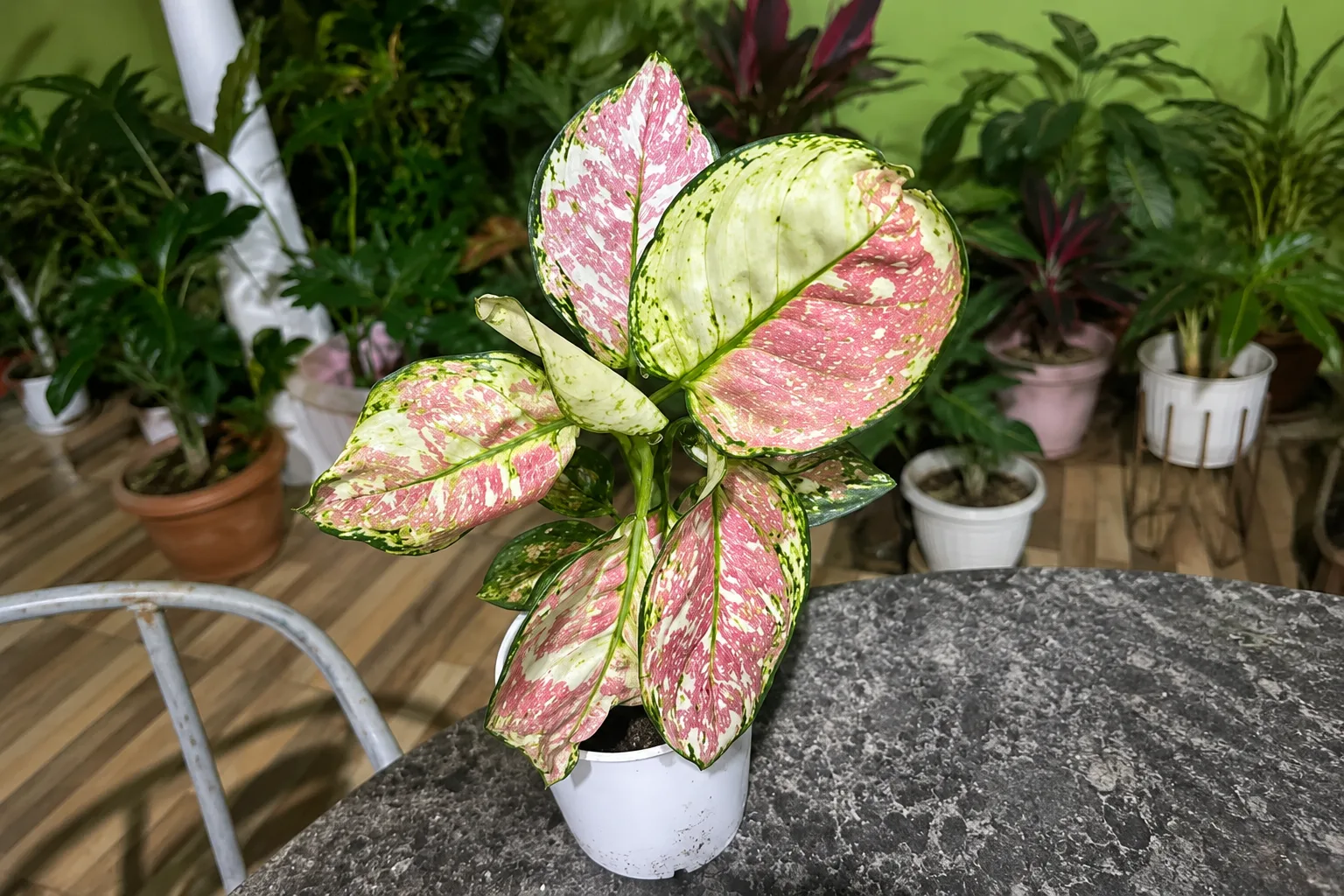
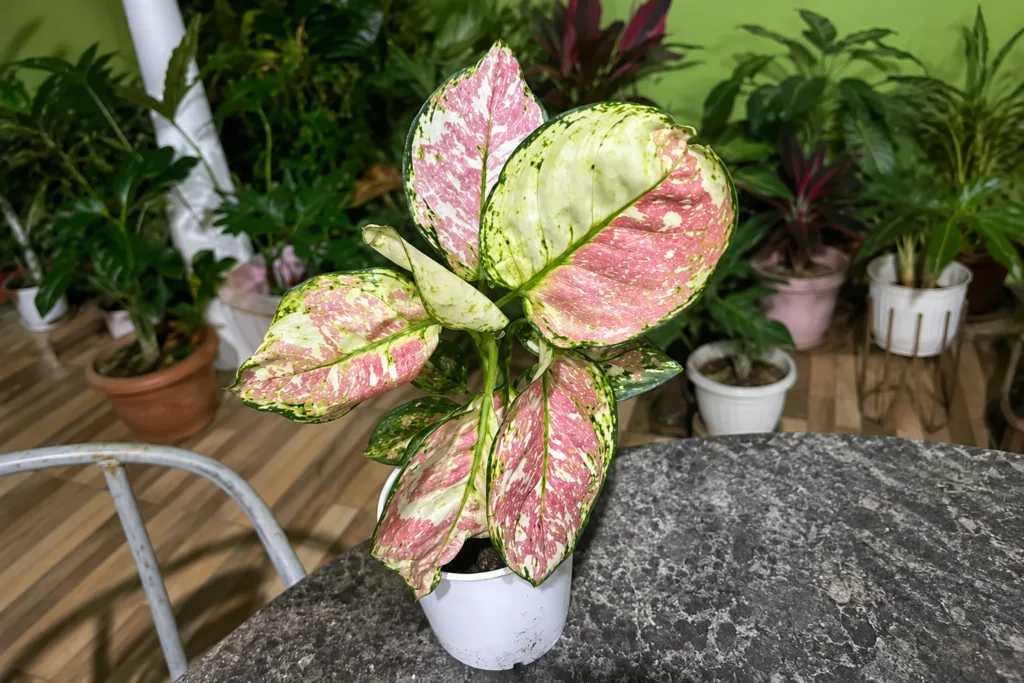
I bought my Chinese Evergreen specifically because every plant shop employee I asked recommended it as “impossible to mess up.” That reputation turned out to be mostly true, but I still managed to stall its growth for the better part of a year through a watering habit I genuinely thought was correct. Once I fixed it, the difference in new leaf size and color was dramatic enough that I felt a little embarrassed I hadn’t questioned my routine sooner.
This is what actual Chinese Evergreen care has looked like for me over the past two years, mistakes included.
The Watering Habit That Held My Plant Back
I’d read that Aglaonema likes consistently moist soil, and I took that instruction more literally than I should have — watering a little bit every few days to keep the top of the soil perpetually damp, thinking I was following the advice correctly. In hindsight, I was never letting the soil dry out at all, even at the top inch, which is different from what “consistently moist” actually means for this plant.
The plant didn’t die or show dramatic distress, which is part of why it took me so long to catch the problem — Chinese Evergreen is forgiving enough to survive under conditions that aren’t ideal for a long time. What I did notice, slowly, was that new leaves were coming in smaller than the older ones, and growth had basically stalled for months. Once I switched to letting the top inch or two of soil dry out between waterings, rather than keeping it damp constantly, new growth picked back up within a few weeks, with leaves noticeably larger and more vibrant than what I’d been getting before.
Light: The Balance I Had to Find by Trial and Error
My Chinese Evergreen currently sits about four feet back from an east-facing window, which took some experimentation to land on. I first tried it directly on the windowsill, and within a couple of weeks a few leaves developed pale, bleached patches from more direct light than I realized that spot actually got during certain hours of the day. Moving it back solved the scorching, but I also tried it in a genuinely dim corner of my bedroom for a few months out of curiosity about its low-light tolerance, and while it survived without dying, the newer leaves lost a lot of the pink and silver variegation that had made me want the plant in the first place, coming in mostly plain green instead.
Bright, indirect light a few feet from a window has been the sweet spot for keeping both healthy growth and vibrant patterning on the leaves, at least for my particular variety.
Humidity: A Factor I Underestimated
I didn’t think much about humidity for the first several months, and my plant did fine, technically. It wasn’t until I started running a small humidifier nearby during a particularly dry winter, mostly for my own comfort rather than the plant’s, that I noticed the newest leaves coming in noticeably larger and glossier than what I’d been seeing before. I don’t think humidity is strictly necessary for this plant to survive based on my own experience, but it does seem to affect how good the growth actually looks.
Soil and Fertilizing
I use a standard potting mix amended with extra perlite, roughly one part perlite to three parts potting soil, which has kept drainage fast enough that I’ve never dealt with standing water even during my overwatering phase. During spring and summer I fertilize with a balanced liquid fertilizer diluted to half strength, roughly once a month, and stop entirely once growth slows down in fall.
The one time I fertilized through the winter out of impatience, thinking more nutrients would speed up growth even in the dormant season, I didn’t see any benefit — growth stayed slow regardless, which lines up with what I’ve since read about the plant’s metabolism naturally slowing during that time. I don’t bother anymore.
Pests I’ve Actually Dealt With
Mealybugs showed up on my plant once, tucked into the crease where a leaf met the stem — small white cottony clusters that I initially mistook for something else entirely, similar to a mix-up I’ve had with mealybugs on other plants in my collection. Dabbing them directly with a cotton swab dipped in rubbing alcohol cleared them up over about two weeks of repeated checks, since a single treatment never seems to catch every hidden cluster on the first try.
I’ve also had a mild spider mite issue once during a particularly dry stretch, noticed mainly from a fine stippling on a couple of leaves rather than obvious webbing. Increasing humidity around the plant and a round of diluted neem oil resolved it within a few weeks.
The Time I Nearly Lost It to Root Rot
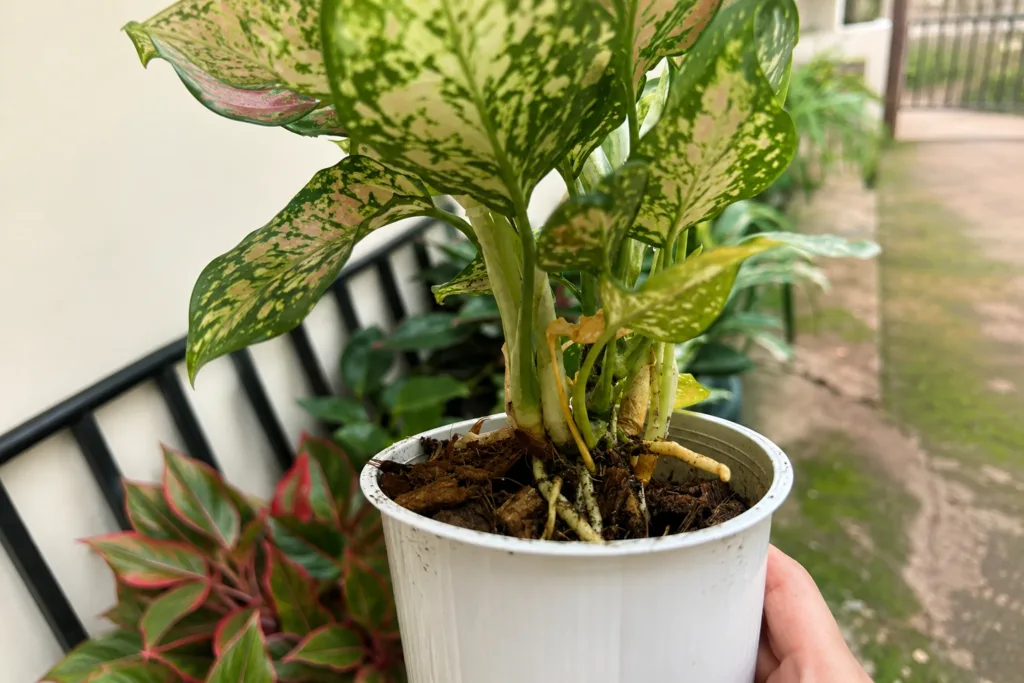
My closest call with this plant came after that extended period of overwatering I mentioned, compounded by a pot that, in hindsight, didn’t have quite as much drainage as I’d assumed. I noticed the base of a couple of stems had gone soft, and a few lower leaves had turned yellow and slightly mushy. I pulled the plant out of its pot, found several roots that were dark and clearly rotted, and trimmed them away with clean scissors before repotting into fresh, well-draining soil in a pot I confirmed actually had a proper drainage hole this time.
It took about a month of noticeably slower growth to recover, but new leaves eventually came in healthy, and I haven’t had a repeat issue since fixing both the watering habit and the pot itself.
Propagating My Own Plant
Once my Chinese Evergreen had grown multiple stems from the base, I propagated it two different ways to compare. Dividing the plant during a repot — separating a section that already had its own stem and root mass — gave me an instantly established new plant with essentially zero adjustment period. A stem cutting I took separately, placed in water, took closer to a month to show roots and another few weeks after that before I felt comfortable potting it into soil.
Both methods worked, but if you already have a mature, multi-stemmed plant that needs repotting anyway, division has been the far less fussy option in my experience, compared to waiting out a cutting from scratch.
A Warning I Wish I’d Taken More Seriously Sooner
I have a cat, and it wasn’t until after I’d already had the plant for a few months that I read Chinese Evergreen contains calcium oxalate crystals that can cause mouth and throat irritation if chewed on. My cat has never shown interest in it, but I moved it to a higher shelf out of caution anyway once I found this out, and I’d genuinely recommend checking this before bringing one home if you have pets that tend to chew on houseplants.
Frequently Asked Questions
Why is my Chinese Evergreen not growing? In my own case, this came down to overwatering — keeping the soil constantly damp rather than letting the top inch dry out between waterings. Adjusting that habit brought growth back within a few weeks.
Why is my Chinese Evergreen losing its variegation? Based on what happened with mine, insufficient light was the cause. New leaves came in mostly plain green during a stretch in a dim corner, and moving it to brighter indirect light restored more colorful new growth.
Is Chinese Evergreen toxic to pets? Yes — it contains calcium oxalate crystals that can irritate a pet’s mouth and throat if chewed. I keep mine on a shelf out of reach of my cat as a precaution.
How do I revive an overwatered Chinese Evergreen? From my own experience recovering a plant from root rot: stop watering immediately, remove it from the pot, trim away any dark or mushy roots, and repot into fresh, well-draining soil in a pot with an actual drainage hole.

Gardening Writer & Plant Enthusiast
Sarah Mitchell is a passionate gardening writer dedicated to helping people bring more nature into their homes. She loves exploring indoor plants, flowers, and sustainable gardening practices, sharing simple and practical tips that make plant care easier for everyone.