
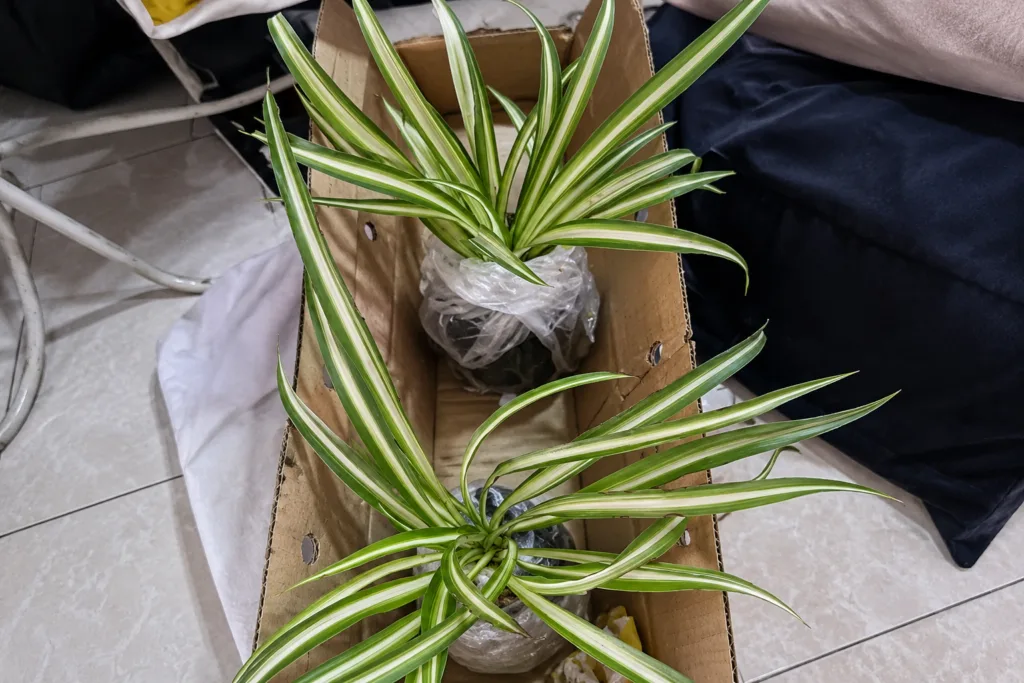
My spider plant was a hand-me-down from my mom, already several years old, with plantlets dangling off it in every direction like it was trying to take over the whole room. I inherited it along with a warning: “it’s basically impossible to kill, don’t worry about it too much.” For the first year, I mostly ignored that advice and worried anyway, especially about the brown tips that kept showing up on nearly every leaf no matter what I did. It took me embarrassingly long to figure out the actual cause, and once I did, spider plant care went from a source of low-grade anxiety to genuinely one of the easiest parts of my plant routine.
The Brown Tips Mystery
For months, I assumed the brown, crispy tips on my spider plant’s leaves meant I was underwatering or that the air was too dry. I misted it daily, I upped my watering frequency, and the brown tips kept showing up on new growth anyway, which honestly made no sense to me at the time — I was doing more, not less, and the problem wasn’t improving.
The actual cause, it turned out, was my tap water. Spider plants are known to be sensitive to the fluoride and salts commonly found in tap water, and once I switched to using filtered water left out overnight to let chlorine dissipate, new leaves started coming in clean, without the crispy brown edges I’d gotten so used to seeing. I still have some tip browning on the oldest growth, which I’ve come to accept as somewhat normal for a mature plant, but it stopped being the default outcome for every new leaf.
Watering: Less Precise Than I Expected
Compared to some of my fussier plants, spider plant care around watering has been refreshingly forgiving. I water thoroughly when the top inch or two of soil feels dry, which in my apartment tends to be roughly once a week in summer and every 10-14 days in winter, though I’ve genuinely forgotten to water it for closer to three weeks a few times without any serious consequences. The fleshy roots seem to hold onto enough water to buffer against my inconsistency in a way that a lot of my other plants simply don’t.
Where I have run into trouble is the opposite direction — overwatering, particularly during a stretch where I was still watering on a strict weekly schedule regardless of how the soil actually felt. A few of the older leaves started yellowing and looked slightly limp before I connected it to overwatering rather than a nutrient issue, which was actually my first guess. Once I started checking the soil before watering instead of following a fixed calendar, the yellowing stopped.
Light: More Flexible Than I Assumed, But Not Infinite
I moved my spider plant three times across different apartments, and it’s ended up in everything from a bright east-facing windowsill to a fairly dim corner of a hallway with almost no direct light at all. It survived in the dim corner, which matches its reputation for tolerating low light, but I noticed the difference clearly once I moved it back to brighter, indirect light — the leaves came in noticeably more vibrant, and it started producing plantlets again after going almost eight months without a single new one in the darker spot.
That’s been my biggest lesson on light: spider plants will survive in low light, but if you actually want the trailing plantlets that make this plant so distinctive, bright indirect light seems to matter a lot more than the “low-maintenance” reputation suggests.
Propagating the Plantlets
This is genuinely the easiest propagation I’ve done with any houseplant. Once a plantlet on one of the long stems has a few small root nubs already visible — you can usually see tiny bumps or short white roots forming right at the base — I snip it off with clean scissors and either pot it directly into fresh soil or root it in a glass of water first, which I mostly do just because I like watching the roots develop.
Both methods have worked reliably for me, though I’ve noticed water-rooted plantlets seem to need a bit of an adjustment period after being potted, similar to what I’ve seen with other plants moved from water to soil, occasionally drooping for a few days before perking back up. Direct soil propagation skips that adjustment but means I can’t see what’s happening until new growth actually appears, usually within 3-4 weeks.
I’ve now propagated close to fifteen plantlets off my original inherited plant, which has meant a lot of spider plants given away to friends who probably didn’t ask for one but seem happy to have it anyway.
Pruning: A Small Habit That’s Made a Real Difference
I didn’t prune much at all for the first year, mostly out of uncertainty about what actually needed cutting. Once I started regularly snipping off the brown, crispy tips and any fully yellowed leaves, the plant’s overall appearance improved noticeably, even though the underlying causes I described above were what actually stopped new damage from occurring. Pruning didn’t fix the root problem, but it kept the plant looking healthy while I figured that problem out.
I’ve also periodically trimmed back some of the long plantlet-bearing stems when the plant started looking overcrowded and a little chaotic, which encourages slightly more compact, controlled growth rather than stems trailing in every direction at once.
Why It Stopped Producing Plantlets For a While
Beyond the low-light stretch I mentioned, I’ve noticed my spider plant tends to stop producing new plantlets whenever it’s become root bound in its pot for too long. The most recent example: it went nearly six months without a single new plantlet, and once I finally repotted it into a slightly larger container with fresh soil, new plantlet stems started appearing again within about a month. In hindsight, the plant had clearly outgrown its pot well before I got around to addressing it.
Signs I’ve Learned to Watch For
- Brown, crispy leaf tips on new growth — in my case, this traced directly back to tap water quality, not underwatering, once I actually tested the theory.
- Yellowing, slightly limp leaves — overwatering, based on what’s happened with my own plant, especially when I was watering on a fixed schedule rather than checking the soil first.
- No new plantlets for several months — either insufficient light or a pot the plant has outgrown, in my experience; checking both has resolved this every time it’s come up.
- Pale, less vibrant foliage on a variegated variety — usually meant not enough light, since the contrast in the variegation seemed to fade the longer it stayed in a dim spot.
What I’d Tell Someone Just Starting Out
If you’re inheriting or buying your first spider plant, I’d say don’t stress too much about a rigid watering schedule — check the soil instead of the calendar, and if you notice brown tips that won’t go away no matter what you try, consider your water source before assuming you’re doing something else wrong. It’s genuinely one of the most forgiving plants I’ve cared for, but the handful of quirks it does have, like the tap water sensitivity, aren’t always obvious until you’ve made the same mistake I did for months on end.

Frequently Asked Questions
Why does my spider plant have brown tips? In my experience, this was almost entirely caused by fluoride and salts in tap water. Switching to filtered water noticeably reduced new tip browning, though some browning on older leaves seems to be normal regardless.
How often should I water a spider plant? I water mine roughly once a week in the growing season and every 10-14 days in winter, but checking that the top inch or two of soil is dry has been a more reliable guide for me than any fixed schedule.
Why isn’t my spider plant producing plantlets? Based on what’s happened with my own plant, this has come down to either insufficient light or being root bound in its current pot. Addressing either issue restarted plantlet production within about a month each time.
Can spider plants survive in low light? Yes, mine did for nearly a year in a dim hallway corner, but growth was slower and it stopped producing plantlets almost entirely until I moved it somewhere brighter.
Gardening Writer & Plant Enthusiast
Sarah Mitchell is a passionate gardening writer dedicated to helping people bring more nature into their homes. She loves exploring indoor plants, flowers, and sustainable gardening practices, sharing simple and practical tips that make plant care easier for everyone.