
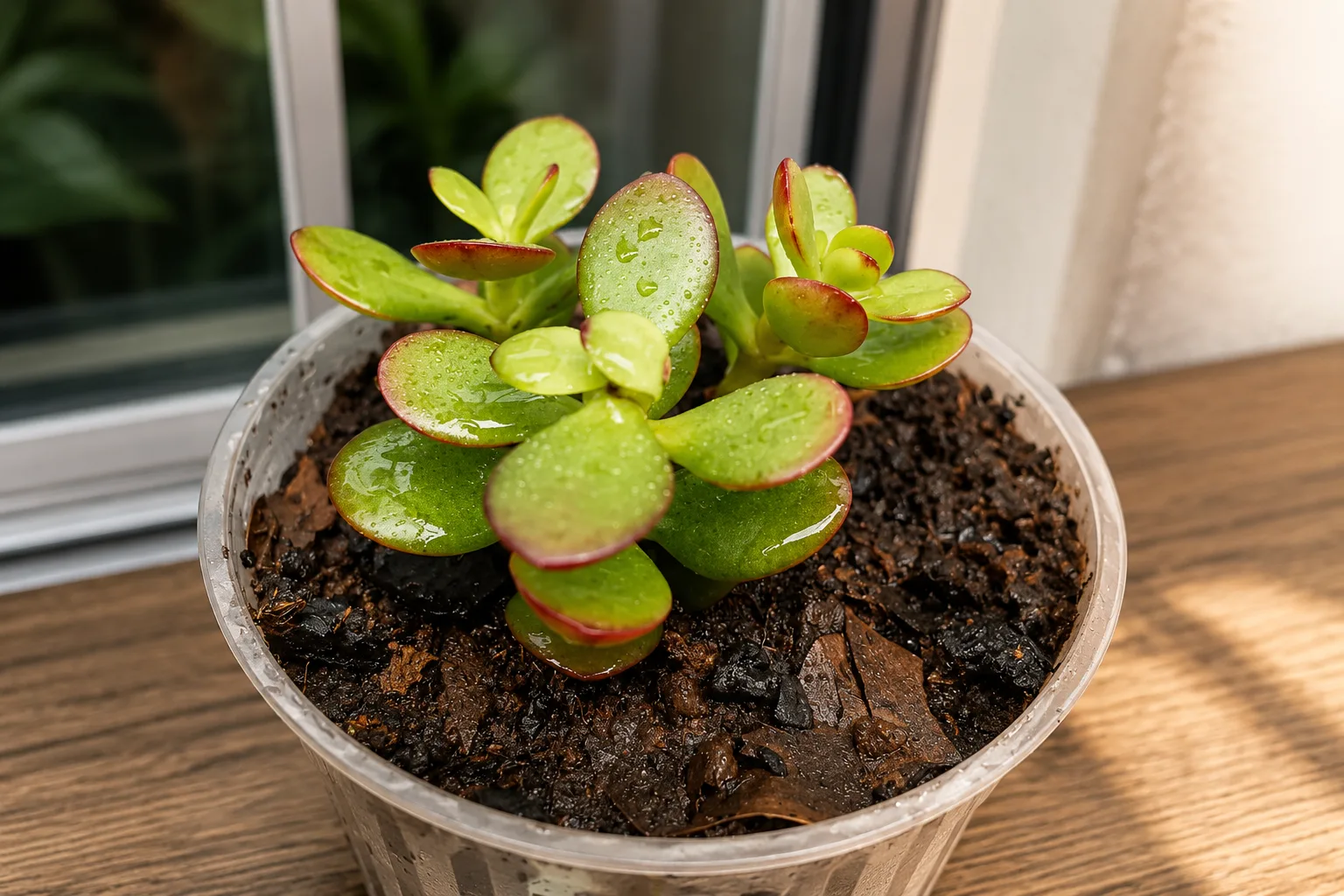
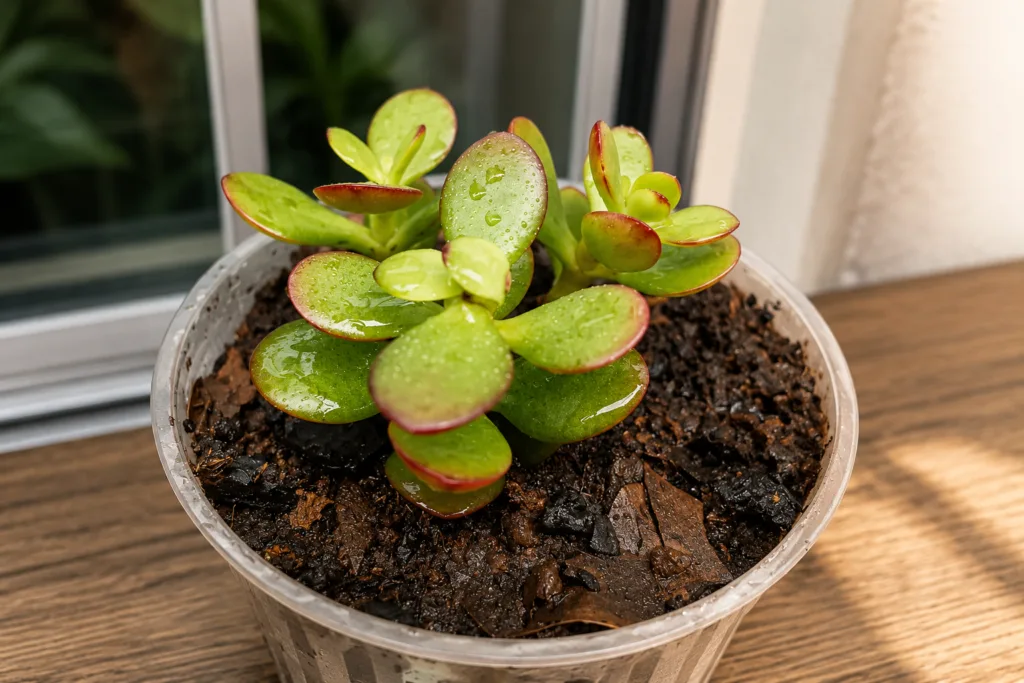
My jade plant was a housewarming gift, already a few years old and shaped like a miniature tree with a genuinely thick, woody-looking trunk. For the first year I cared for it exactly like my other succulents — water when dry, bright light, leave it alone otherwise — and it survived fine but looked increasingly shaggy and unbalanced, with long stems reaching in whatever direction had the most light. It wasn’t until I started actively pruning it with more intention, treating it a bit like a bonsai rather than just a succulent I watered occasionally, that it started looking like the sculptural little tree I’d originally been given.
Here’s what real jade plant care has looked like for me, including the parts that are genuinely different from how I treat my other succulents.
Watering: The Easy Part I Got Right From the Start
Jade plant care around watering has honestly been the least dramatic part of owning this plant. I let the soil dry out completely between waterings, checking with a finger a couple of inches down, which in my apartment works out to roughly every 2-3 weeks in the growing season and closer to monthly in winter. The thick, fleshy leaves make it fairly easy to read when the plant is thirsty — they get slightly less plump and a bit softer to the touch before any real damage shows, which has given me a reliable early warning that’s worked better than trying to remember a fixed schedule.
The one overwatering scare I’ve had came from a period right after repotting, when I watered too soon after disturbing the roots. A couple of lower leaves went soft and slightly translucent, and I caught it early enough that simply backing off watering for a few extra weeks resolved it without needing to trim any roots.
Light: Where I Actually Caused Damage
I moved my jade plant to a south-facing windowsill early on, thinking more light was unambiguously better for a plant known to enjoy bright conditions. Within about a week, several leaves developed reddish, slightly scorched patches on the side facing the window, which I initially mistook for the reddish tinge jade plants can develop naturally in bright light before I realized this particular case was actual sun damage, not the more subtle color shift I’d read about.
Pulling it back a couple of feet from the direct exposure, while still keeping it in a bright spot, solved the scorching, and I’ve since learned to introduce any bright light change to this plant more gradually than I initially did. The natural reddish tinge on the leaf edges that I originally confused with damage does show up on my plant now under strong but indirect light, and I’ve come to like it as a sign the plant is getting plenty of brightness without being scorched.
Why I Started Pruning Mine Like a Miniature Tree
This is where my jade plant care genuinely diverged from how I treat my other succulents. Because jade plants develop a real woody trunk and branching structure as they mature, unlike something low and clustering like an echeveria, I realized I could actually shape mine over time rather than just letting it grow in whatever direction it wanted.
I started pruning back the longest, leggiest stems during the growing season, cutting just above a node, which encouraged branching lower down rather than the plant just getting taller and more top-heavy. Within about a year of consistent, intentional pruning a few times each growing season, my plant went from looking scraggly and unbalanced to genuinely resembling the compact, tree-like shape I remembered from when I first got it. I let the cut ends callus for a few days before the next watering, the same way I would with a propagation cutting, to reduce the risk of rot at the fresh cut.
Propagating From the Prunings
Since I was already pruning regularly, propagation became almost a side effect rather than something I set out to do deliberately. I let the cut stem sections callus for a few days, then either laid them on top of moist succulent soil or, for a few experiments, pressed a single healthy leaf into the soil to see if it would root on its own. Both methods worked, though stem cuttings rooted and produced visible new growth noticeably faster in my experience, typically within 3-4 weeks, compared to single leaf cuttings, which took closer to two months before showing anything and had a lower overall success rate for me.
I’ve given away four separate jade plants grown from prunings at this point, which has made the whole process feel less like propagation and more like a natural byproduct of keeping the shape I want.
Repotting Less Often Than I Expected
My jade plant has needed repotting far less frequently than most of my other houseplants, roughly every three years at this point rather than annually. The signs I’ve watched for are roots visibly crowding the surface of the soil or emerging from the drainage hole, and the plant becoming noticeably top-heavy and prone to tipping as the top growth outpaces the root system’s ability to anchor it, which happened once after a particularly aggressive round of pruning that redirected growth into a few thick new branches.
I move up just one pot size at a time, using a cactus-specific mix, and I’ve learned to be more careful about watering timing after repotting specifically for this plant, given my earlier overwatering scare during that vulnerable period.
Pests I’ve Actually Dealt With
Mealybugs have been the main issue, showing up as small white cottony clusters tucked into the crevices where branches meet the main stem — spots I might not have checked as carefully if I weren’t already inspecting the plant regularly during my pruning sessions. Dabbing them directly with a cotton swab dipped in rubbing alcohol has cleared them up within a couple of weeks each time, though it’s taken repeated treatments to catch clusters hiding in less obvious spots along the branching structure.
Signs I’ve Learned to Watch For
- Leaves going soft and slightly translucent — overwatering, in my experience, especially right after a repot when the disturbed roots seem more vulnerable than usual.
- Reddish scorched patches specifically on the side facing a window — actual sun damage from too abrupt a light change, distinct from the more even, gradual reddish tinge that develops naturally under strong indirect light.
- Long, leggy stems reaching toward one direction — insufficient light or a plant that’s gone too long without pruning, in my case usually a combination of both.
- A top-heavy plant that tips easily — either it’s outgrown its pot or a round of pruning has redirected growth into fewer, thicker branches than the root system currently supports.
What I’d Tell Someone With a New Jade Plant
If yours came with any kind of shaped, tree-like structure already, don’t just treat it like a low-maintenance succulent you water occasionally and otherwise ignore — the pruning is actually where the interesting part of caring for this particular plant lives. Once I started treating mine a bit like a bonsai rather than a houseplant on autopilot, it became one of the more rewarding parts of my whole collection to maintain.
Frequently Asked Questions
How often should I water a jade plant? I water mine roughly every 2-3 weeks during the growing season and about monthly in winter, letting the soil dry out completely and checking that the leaves still feel plump before watering again.
Can jade plants get sunburned? Yes — I learned this firsthand after moving mine into direct sun too abruptly, which caused reddish, scorched patches distinct from the more even reddish tinge that develops naturally under strong indirect light.
Do I need to prune a jade plant? Not strictly, but in my experience regular pruning made a dramatic difference in keeping the plant compact and well-shaped rather than leggy and unbalanced, especially since it develops a real woody structure as it matures.
Which propagates faster, jade stem cuttings or leaf cuttings? In my own comparison, stem cuttings rooted and showed new growth within 3-4 weeks, while single leaf cuttings took closer to two months and had a lower success rate overall.

Gardening Writer & Plant Enthusiast
Sarah Mitchell is a passionate gardening writer dedicated to helping people bring more nature into their homes. She loves exploring indoor plants, flowers, and sustainable gardening practices, sharing simple and practical tips that make plant care easier for everyone.