
I own four different Monstera varieties at this point, which happened almost by accident — I kept buying “just one more” without fully registering how different they actually are from each other until I had them all in the same room. A Monstera deliciosa, an adansonii, a borsigiana, and, more recently, a much smaller and pricier Thai Constellation. Growing them side by side has taught me more about what actually distinguishes these plants than any single care guide did, mostly because I could see the differences directly instead of just reading about them.
If you’re trying to figure out which Monstera plant is actually right for your space, here’s what I’ve learned firsthand about how these varieties differ.
Monstera Deliciosa: The One Everyone Pictures
My deliciosa is the largest and most demanding of the four in terms of space. It’s the classic “Swiss cheese plant” most people picture when they hear the word Monstera, with large, deeply lobed leaves that develop those dramatic splits and holes as they mature. Mine has been growing for about four years now and currently takes up a genuinely significant corner of my living room, climbing a moss pole that’s approaching six feet.
If you have the space and want the plant that makes the biggest visual statement, this is the one. I’d caution anyone in a smaller apartment against starting here, though — I underestimated how much room mine would eventually need, and I’ve had to reposition furniture around it more than once as it’s grown.
Monstera Adansonii: The Compact, Faster Alternative
My adansonii, often called the Swiss cheese vine, was a genuinely different experience to grow. The leaves are much smaller and thinner, with more holes relative to leaf size than my deliciosa, and the whole plant has a trailing, delicate look rather than the deliciosa’s bold, architectural presence. It’s also grown noticeably faster in my experience — new leaves appeared every few weeks during the growing season, compared to the deliciosa’s slower, more occasional new leaf.
I keep mine in a hanging basket rather than training it upright, and it trails attractively over the edge without needing the kind of structural support the deliciosa demands. If you want something that feels more like a lush, fast-growing vine and less like a statement piece, this has been my favorite of the four for smaller spaces.
Monstera Borsigiana: The One That Confused Me Most
I bought my borsigiana thinking it was simply a smaller deliciosa, which is a common mix-up I’ve since learned is actually pretty widespread — the two look extremely similar, especially when young. The clearest distinguishing feature I’ve noticed as mine has matured is the geniculum, the small bend where the leaf stem meets the leaf itself, which reportedly looks a bit different between the two species, though I’ll admit I still find it hard to tell them apart with total confidence even now.
What I can say from direct comparison is that my borsigiana has grown faster and stayed more compact than my deliciosa at the same age, producing fenestrated leaves somewhat sooner in its life. If you’re buying one labeled simply “Monstera” without a specific species name, there’s a reasonable chance it’s actually a borsigiana rather than a true deliciosa, based on how often I’ve seen this mix-up mentioned by other growers.
Thai Constellation: The Variety That Tested My Patience
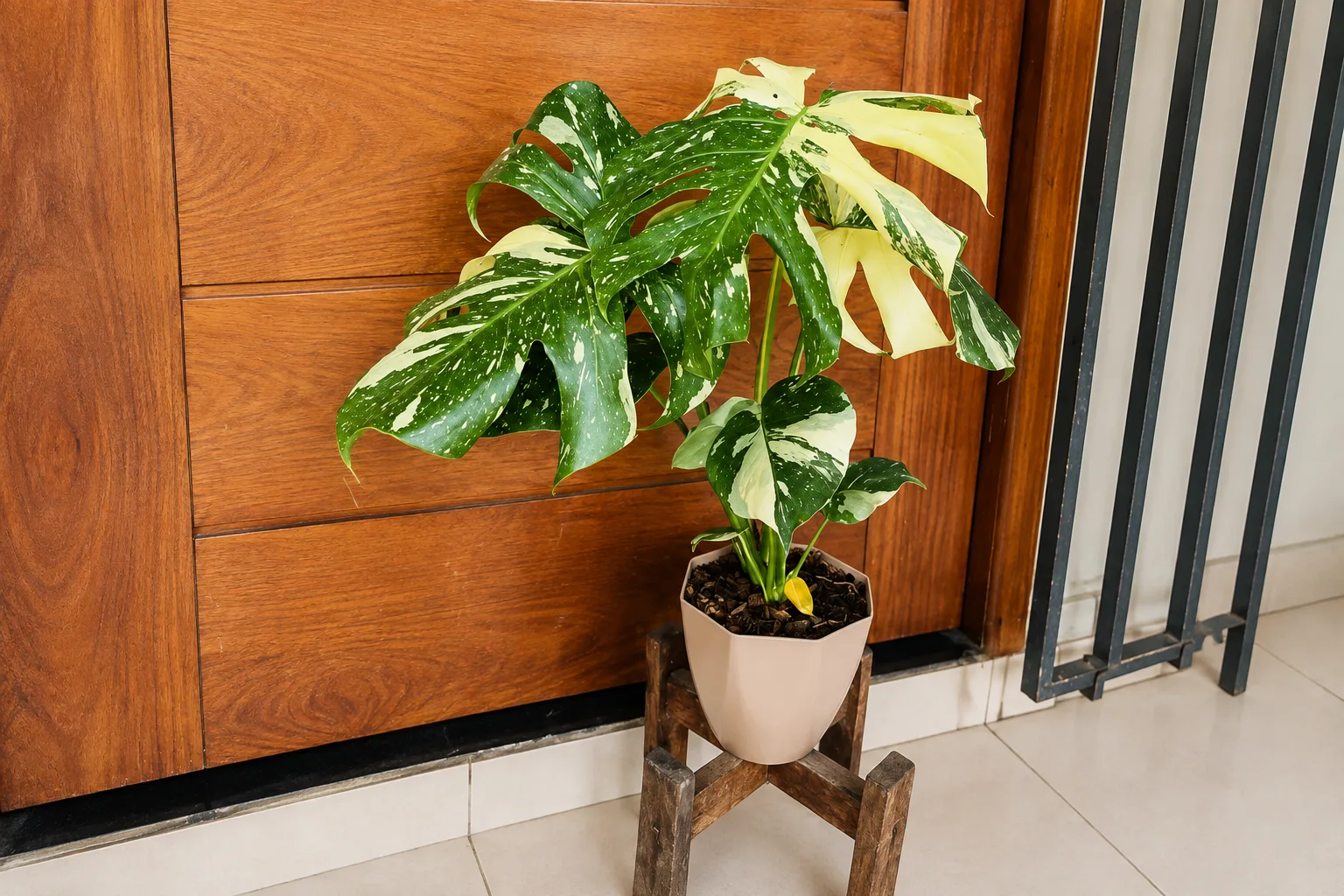
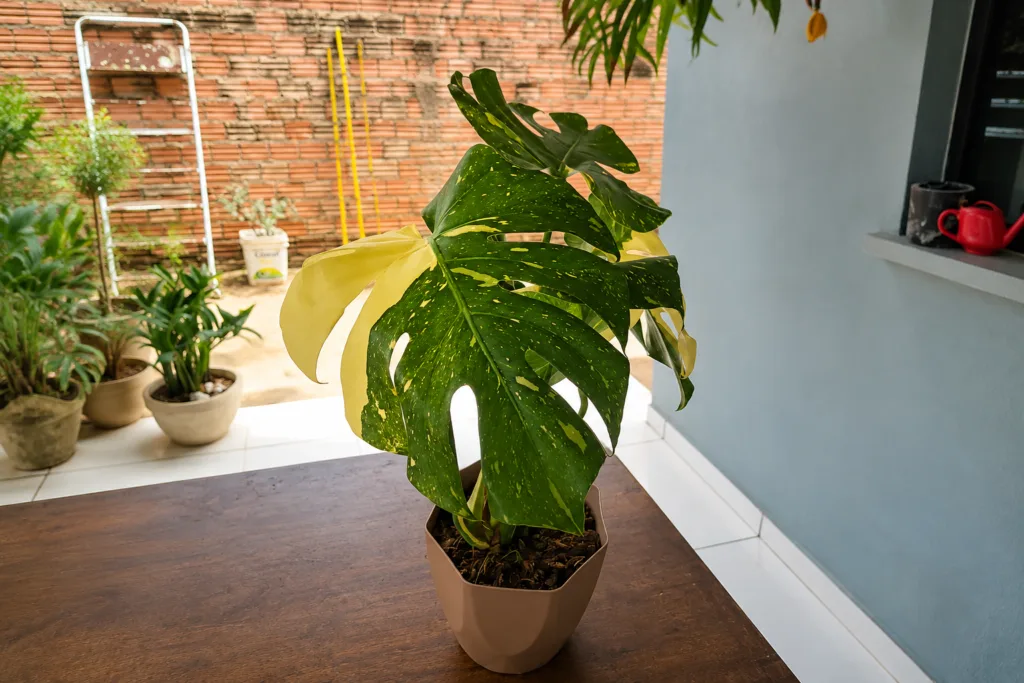
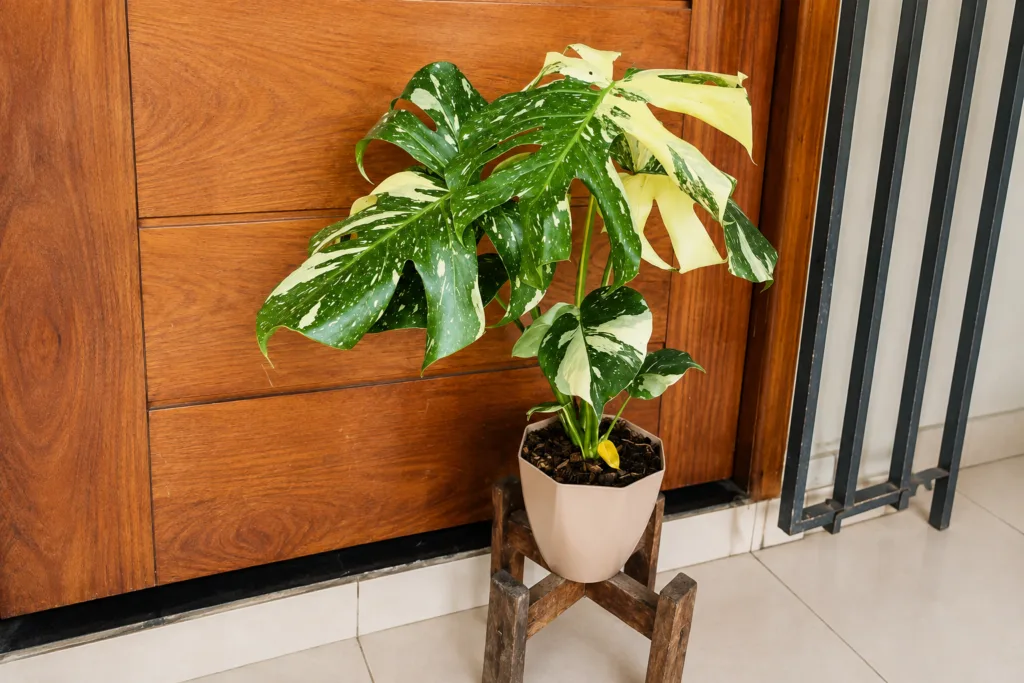
My Thai Constellation was by far the most expensive and, until quite recently, the slowest-growing of the four. The variegation — cream and white speckling scattered across otherwise green leaves — is genuinely striking, but I learned quickly that the variegated patches don’t photosynthesize the way the green portions do, which seems to be part of why this variety has grown so much slower than my other three.
I’ve had to be far more careful with light for this one specifically. My deliciosa and adansonii both tolerate a range of indirect light levels without much visible difference in growth, but my Thai Constellation showed clearly slower growth and duller coloring when I had it in a dimmer spot, and it’s needed noticeably brighter indirect light to keep both good growth and vivid variegation. I’ve also had to accept that heavily variegated new leaves, while beautiful, are more fragile and prone to browning at the white sections than a fully green leaf would be.
Comparing Actual Care Differences I’ve Noticed
Watering has been fairly similar across all four — I let the top two to three inches of soil dry out before watering thoroughly, regardless of variety. Where I’ve seen real differences is in growth rate and light sensitivity. My adansonii and borsigiana have both tolerated a wider range of light conditions without much visible complaint, while my deliciosa has shown slower fenestration in lower light specifically, and my Thai Constellation has been the most demanding of consistent, bright indirect light by a clear margin.
Humidity preferences have felt roughly similar across the group, though I’ve noticed my Thai Constellation seems to develop crispy edges on its white variegated sections faster than my other plants develop them on solid green leaves during dry winter stretches, which has made me slightly more attentive to humidity for that one specifically.
Choosing Based on My Own Experience
If space and a bold statement piece matter most, I’d point someone toward deliciosa, with the caveat that it needs real room to grow into. If a smaller space or a trailing look is the priority, adansonii has been the easiest and fastest-growing option in my collection. If budget is a bigger concern than variety, borsigiana has behaved like a slightly faster, more compact deliciosa in my experience, and it’s often priced lower, possibly because of the confusion between the two. And if striking looks matter more than easy care and you’re prepared for a genuinely slower-growing, more light-demanding plant, Thai Constellation has been worth the extra attention for me, though I wouldn’t recommend it as a first Monstera.
Frequently Asked Questions
What’s the difference between Monstera deliciosa and Monstera borsigiana? In my own experience growing both, borsigiana has grown faster and stayed more compact, producing fenestrated leaves somewhat earlier. The two are commonly confused, especially when young, and a plant labeled simply “Monstera” without a species name is often actually a borsigiana.
Is Monstera adansonii easier to care for than Monstera deliciosa? Based on growing both, adansonii has tolerated a wider range of conditions and grown faster in my space, and it doesn’t need the same amount of room or structural support that my deliciosa eventually required.
Why is my Thai Constellation growing so slowly? In my experience, this variety’s variegated sections don’t photosynthesize the way solid green leaves do, which appears to slow overall growth. Mine has also needed noticeably brighter indirect light than my other Monstera varieties to grow well and keep its variegation vivid.
Do all Monstera varieties need a moss pole? Not in my experience — my deliciosa has needed one to support its climbing habit and encourage larger leaves, but my adansonii has done well as a trailing plant in a hanging basket without any support at all.

Gardening Writer & Plant Enthusiast
Sarah Mitchell is a passionate gardening writer dedicated to helping people bring more nature into their homes. She loves exploring indoor plants, flowers, and sustainable gardening practices, sharing simple and practical tips that make plant care easier for everyone.