
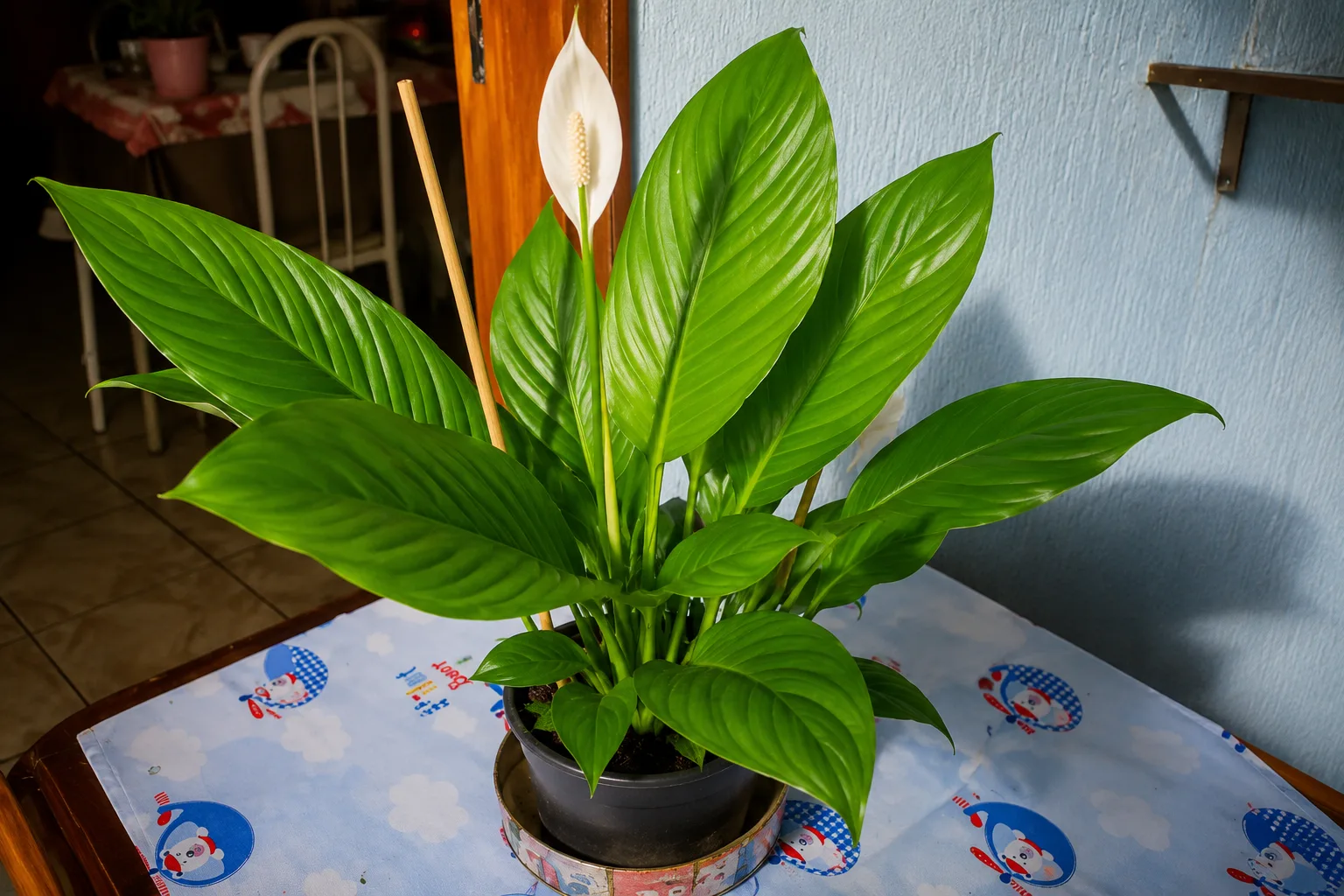
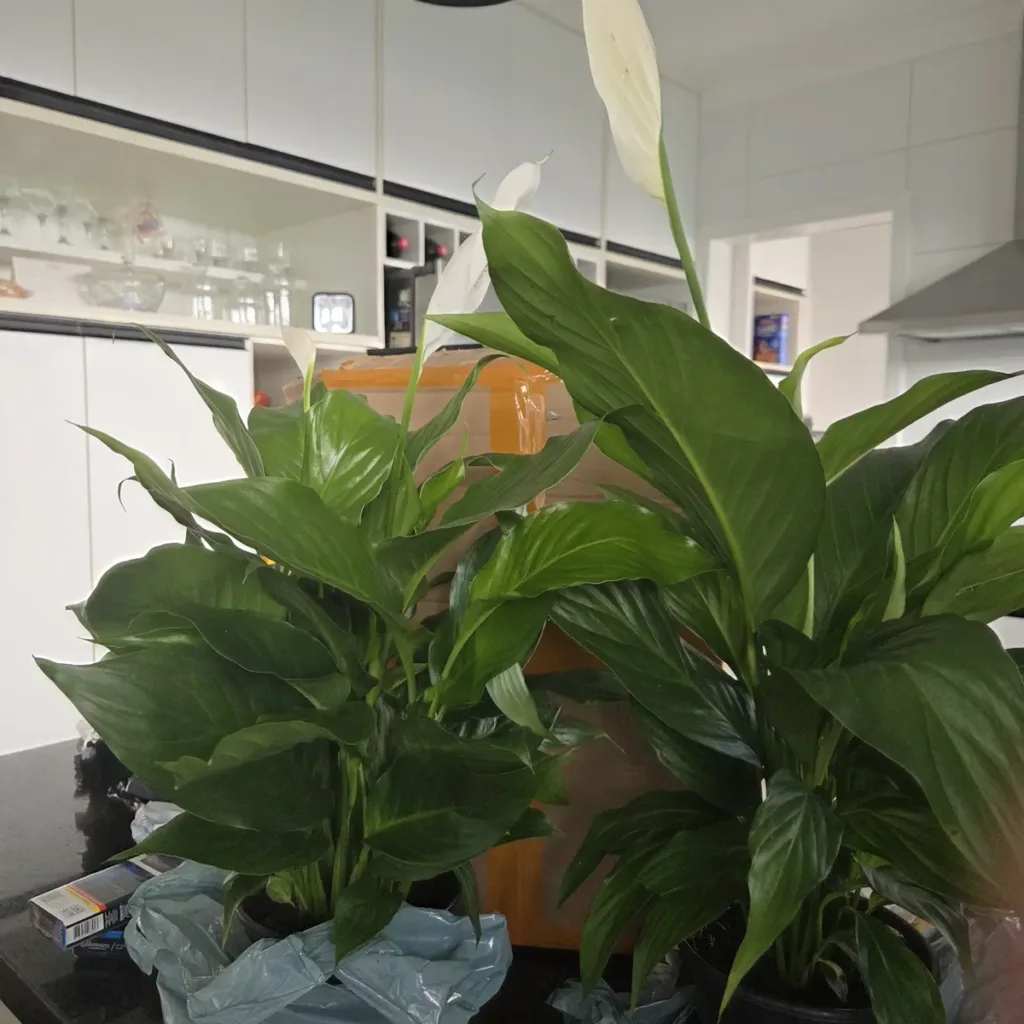
My peace lily is easily the most dramatic plant I’ve ever owned, and I mean that as a compliment. Within a day of getting thirsty, its leaves flop completely over the edge of the pot in a way that looks alarming the first time you see it. I panicked the first time it happened, convinced I’d already killed a brand new plant within its first week in my apartment. It turns out that dramatic wilting is actually the plant’s biggest gift to a nervous plant owner — it tells you exactly what it needs, loudly and unmistakably, instead of suffering quietly like some of my other houseplants.
Here’s what actual peace lily care has looked like for me over the past couple of years, including the parts where I misread its signals and the parts where I finally learned to trust them.
The Drooping That Scared Me (And Why It Stopped Being Scary)
The first time my peace lily’s leaves collapsed, I assumed the worst and gave it a thorough watering out of panic more than confidence. Within about two hours, every leaf had perked back up like nothing had happened, which was honestly one of the more satisfying plant-care experiences I’ve had. Since then, I’ve learned to actually rely on this behavior rather than fear it — when the leaves start to droop, I check the soil, and it’s almost always been dry at that point.
What I’ve had to be careful about is not treating every droop as an automatic watering cue without checking first, since a peace lily can also droop from being severely overwatered and stressed, which I found out the hard way during a stretch where I was watering too frequently. In that case, the soil was already soaked when the leaves drooped, and adding more water only made things worse. Checking the soil before responding to the drama has become a non-negotiable step for me.
Watering: Consistent, Not Constant
I keep the soil evenly moist without letting it become soggy, checking the top inch with my finger before each watering. In my apartment, this tends to work out to about once a week during spring and summer, stretching to every 10-12 days in winter as growth slows. I’ve learned that letting the soil dry out completely, past the point of the leaves just starting to droop, causes visible stress the plant seems to remember — a round of leaves that went fully limp for almost two days once took noticeably longer to fully recover their usual perkiness compared to catching the drooping earlier.
I also switched to distilled water a while back after noticing some brown leaf tips that didn’t seem to match a humidity or fertilizer explanation. The tips didn’t disappear on existing leaves, but new growth came in cleaner afterward, which was enough to convince me tap water sensitivity was at least part of the issue, even if I can’t say for certain it was the whole story.
Light: The Reason Mine Wouldn’t Bloom for Months
My peace lily went nearly five months without producing a single one of its characteristic white spathes after I first brought it home, which confused me since the plant otherwise looked healthy — good leaf color, no drooping issues, steady new growth. It was in a spot with fairly low light, which I now understand was the actual issue. Peace lilies tolerate low light for survival, but blooming seems to need noticeably more brightness than just staying alive does.
Moving it to a spot with bright, indirect light a few feet back from an east-facing window changed things within about six weeks — the first new spathe appeared, and it’s bloomed reasonably consistently since. I did test the upper limit once by leaving it briefly in a spot that got a bit of direct afternoon sun, which scorched a couple of leaf edges within days, so the balance point has been real but narrow in my experience.
Fertilizing: Where I Went Too Aggressive Early On
I fertilized too frequently when I first got this plant, feeding it every couple of weeks because I wanted to encourage faster blooming. Instead, I noticed a faint white crust developing on the soil surface and slightly yellowed tips on a few leaves, which I’ve since learned is a fairly classic sign of fertilizer salt buildup. Flushing the soil thoroughly with water and cutting back to feeding roughly every 6-8 weeks during the growing season, using a diluted balanced fertilizer, resolved it within a few weeks and hasn’t recurred since.
Repotting: Later Than I Expected It to Need
Unlike some of my faster-growing plants, my peace lily has gone almost two full years without needing to be repotted, which surprised me a bit given how much new growth it puts out each spring. The signal that finally told me it was time was the soil drying out noticeably faster than it used to, sometimes within just a few days of a thorough watering, along with a few roots visible at the drainage holes. I moved it up just one pot size rather than a dramatically larger one, since I’ve read — and now believe from experience with other plants — that too much extra soil volume tends to hold more moisture than the roots can use.
Dividing: The Easiest Propagation I’ve Done
When I finally repotted, I took the opportunity to divide the plant into two, separating the root ball into sections that each had a handful of leaves and a reasonable amount of root attached. Both divisions settled in with barely any visible stress, aside from a brief round of slightly droopier leaves for about a week, which is honestly milder than I expected given how sensitive this plant seems to watering issues generally. I gave one of the divisions to a friend, and both plants have grown steadily since, which makes division feel like a much lower-risk propagation method than starting from scratch with a cutting.
Pests and Problems I’ve Actually Dealt With
I had a mild mealybug issue once, small white cottony clusters tucked where a leaf met the stem, similar to spots I’ve had trouble with on other plants in my collection. Wiping the affected areas with a cloth dampened in diluted neem oil, repeated every few days for about two weeks, cleared it up without much trouble.
The closer call was a stretch of overwatering that led to a mild case of root rot — yellowing leaves that didn’t respond to my usual “add water and see if it perks up” test, plus a faint musty smell near the soil when I checked. I trimmed away a few dark, mushy roots and repotted into fresh soil, cutting back my watering frequency afterward. It recovered within a few weeks, but that musty smell has become something I check for now whenever a peace lily seems off in a way that doesn’t match simple thirst.
Signs I’ve Learned to Read Correctly
- Leaves drooping with dry soil underneath — thirst, resolved reliably within a couple of hours of watering.
- Leaves drooping with wet or soggy soil underneath — overwatering stress, which needs less water and better drainage, not more water.
- No blooms despite healthy-looking leaves — insufficient light, in my experience, resolved by moving to brighter indirect light rather than adjusting fertilizer.
- A faint musty odor near the soil combined with yellowing leaves — my warning sign for root rot, worth checking the roots directly rather than waiting to see if the plant recovers on its own.
What I’d Tell a First-Time Peace Lily Owner
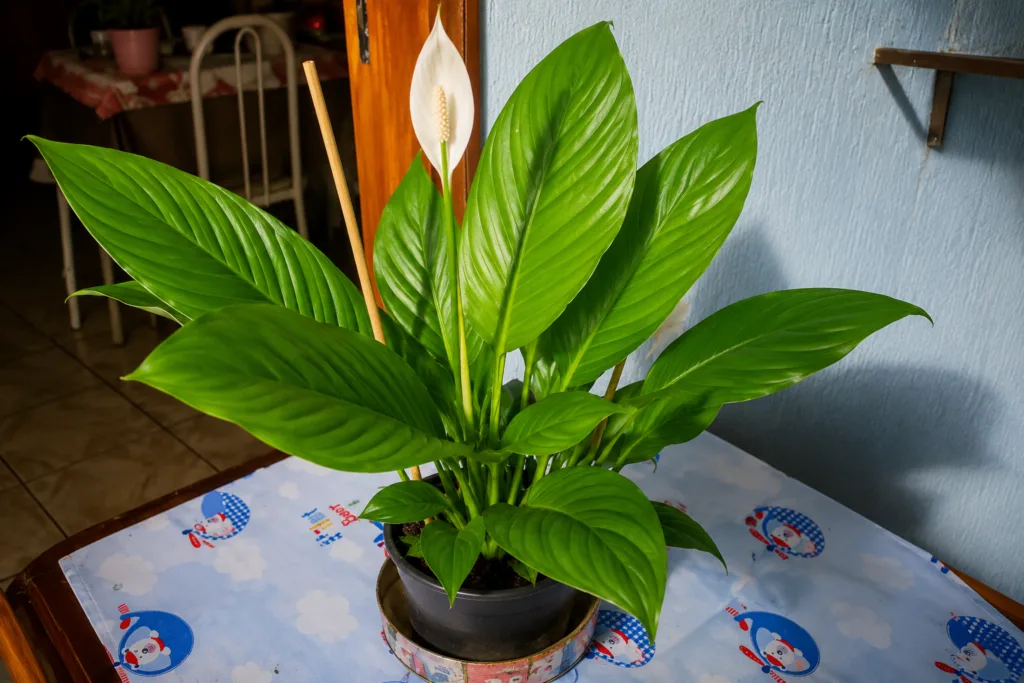
Don’t panic the first time the leaves droop dramatically — check the soil before reacting, and trust that the plant genuinely does perk back up quickly once it gets what it needs. The drama that made me nervous at first has become the thing I actually appreciate most about this plant; it tells you what’s wrong instead of leaving you to guess.
Frequently Asked Questions
Why is my peace lily drooping? In my experience, this is almost always thirst if the soil is dry, and the plant typically perks back up within a couple of hours of watering. If the soil is already wet, drooping points to overwatering instead, which needs less water rather than more.
Why won’t my peace lily bloom? Based on what happened with mine, insufficient light was the cause. Moving it to brighter, indirect light brought back blooms within about six weeks, even though the leaves had looked perfectly healthy the whole time.
How often should I water a peace lily? I water mine roughly once a week in the growing season and every 10-12 days in winter, checking that the top inch of soil is dry first rather than following a strict calendar.
Can I propagate a peace lily by division? Yes — this has been the easiest and lowest-stress propagation method in my experience, best done at the same time as repotting so you’re already handling the root ball.

Gardening Writer & Plant Enthusiast
Sarah Mitchell is a passionate gardening writer dedicated to helping people bring more nature into their homes. She loves exploring indoor plants, flowers, and sustainable gardening practices, sharing simple and practical tips that make plant care easier for everyone.