
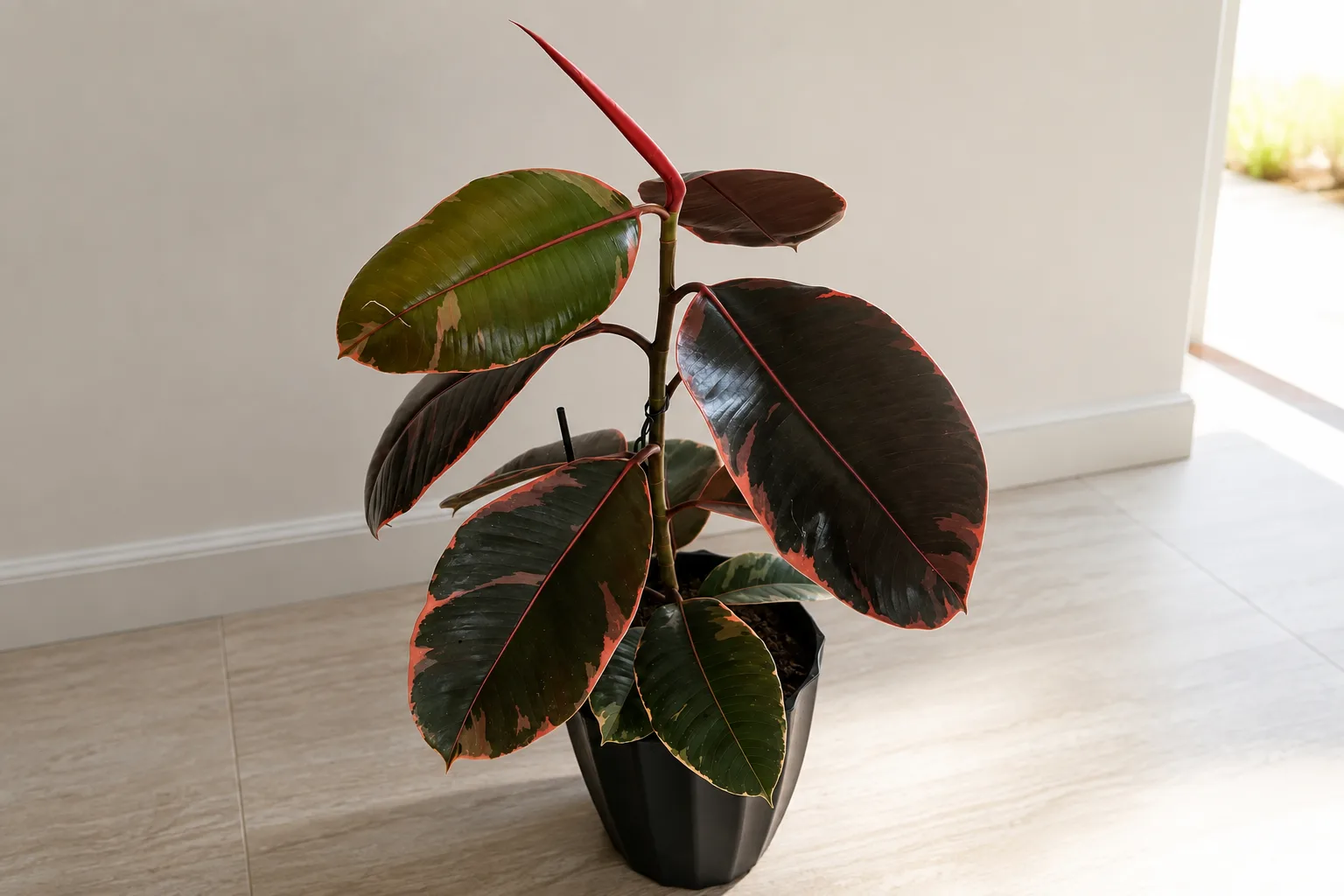
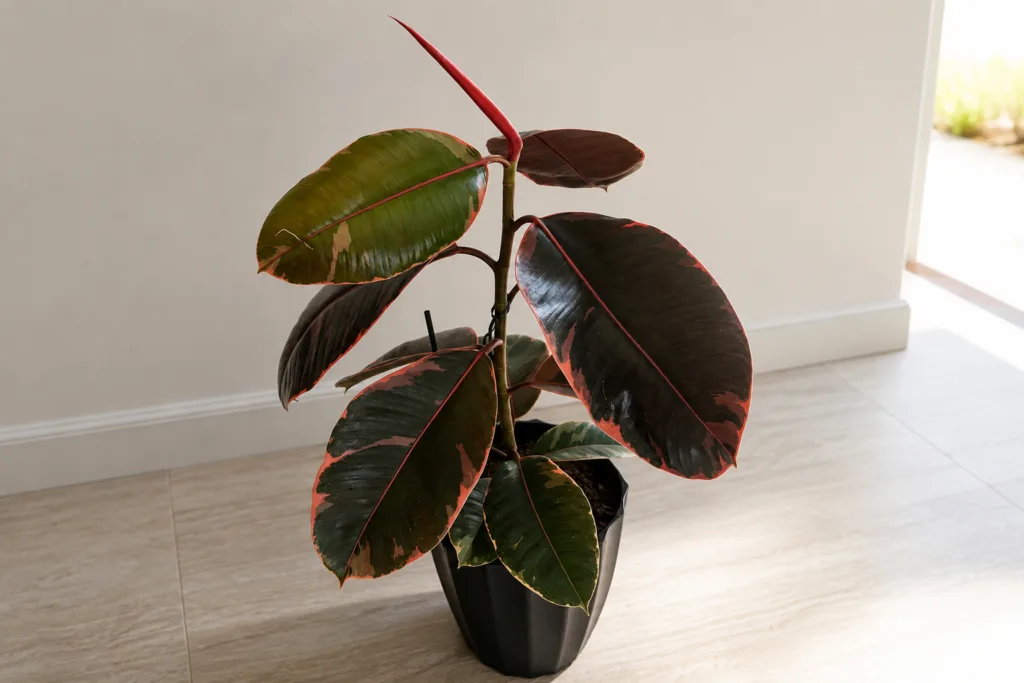
My rubber plant dropped four leaves in its first month with me, which felt alarming given how large and dramatic each glossy leaf is on this plant — losing one feels like a much bigger deal than losing a leaf from a smaller houseplant. I went through a stretch of overcorrecting, watering more, then less, then moving it around the apartment trying to find the “right” spot, before I actually slowed down and figured out what was going on.
Here’s what real rubber plant care has looked like for me, including the leaf-dropping mystery and what eventually fixed it.
Why It Kept Dropping Leaves
The leaf drop happened almost immediately after I brought the plant home, and it took me longer than it should have to consider that the move itself, not something I was actively doing wrong, might be the cause. Ficus species, including rubber plants, are known for reacting to environmental change with leaf drop, and mine had gone from a greenhouse environment to my apartment, with different light, humidity, and temperature all shifting at once.
Once I stopped making additional changes — no more moving it around, no adjusting watering out of anxiety — and just left it alone in one consistent spot for a few weeks, the leaf drop stopped on its own. New growth came in steadily after that initial adjustment period. In hindsight, my instinct to keep intervening probably extended the stress rather than helping it settle in faster.
The Sap That Surprised Me the First Time I Pruned
The first time I pruned a stem, a thick, milky white sap oozed out of the cut, which startled me since nothing had mentioned this clearly enough for me to expect it. This latex sap is where the plant gets its common name, historically used in actual rubber production, and while it’s not something I’d recommend touching directly — it can cause skin irritation, which I found out after getting a small amount on my hand and dealing with mild itching for the rest of the day — it hasn’t caused any issues for the plant itself.
I now wear gloves any time I’m pruning or taking cuttings, and I’ve learned to expect the sap rather than being caught off guard by it. It stops flowing and dries within a few minutes of a cut, forming a slight seal over the wound.
Watering: Getting a Feel for a Plant That Doesn’t Wilt Obviously
Unlike my peace lily, which drapes dramatically the moment it’s thirsty, my rubber plant has given me much subtler signals, which took some getting used to. I let the top two to three inches of soil dry out before watering, roughly every 1-2 weeks depending on the season, and I’ve learned to watch the leaves’ overall shine rather than waiting for an obvious droop — when they start looking slightly duller and less glossy than usual, that’s been my best early indicator that the plant is getting thirsty, well before any visible wilting.
Overwatering has shown up differently, with yellowing starting at the lower leaves and, in one case where I let it go on too long without adjusting, a couple of stems that felt slightly soft near the base. Trimming that a soft section and holding off on watering for an extended stretch resolved it without needing to fully repot.
Light and the Leggy Growth I Didn’t Notice Right Away
I kept my rubber plant a bit further from a window than I probably should have for the first several months, and the growth during that period came in noticeably more spread out, with longer gaps between leaves, compared to the growth after I moved it closer to brighter, indirect light. The difference wasn’t dramatic enough that I caught it immediately, but comparing photos from before and after the move made it obvious in hindsight — the leaves themselves also seemed to come in slightly larger under the brighter conditions.
I’ve kept it out of direct sun after one leaf developed a scorched, bleached patch from a brief period near unfiltered afternoon light, which confirmed that bright indirect, rather than direct, is the actual sweet spot for this plant in my experience.
Dusting the Leaves Turned Out to Matter More Than I Expected
Because the leaves are so large and glossy, dust buildup is more visually obvious on this plant than on almost anything else I own, and I didn’t think much of it until I started wiping them down with a damp cloth every couple of weeks and noticed the plant looked immediately more vibrant. I’ve also read that dust buildup can reduce how effectively the leaves photosynthesize, which would track with growth feeling slightly more sluggish during a stretch where I’d neglected this simple maintenance step for a couple of months.
Propagating: Air Layering Worked Better for Me Than Cuttings
I tried a basic stem cutting first, placing it in water after letting the cut end dry slightly to reduce sap loss, and it took nearly two months to show any root development, with an unclear success rate that left me checking on it anxiously the whole time. Air layering, where I wrapped damp sphagnum moss around a section of stem still attached to the mother plant and secured it with plastic wrap, gave me visibly better results — roots became apparent through the moss within about five weeks, and because the section stayed attached to the parent plant the entire time, there was essentially no risk of losing the cutting outright the way there was with the water propagation attempt.
Once the air-layered roots looked established, I cut below the rooted section and potted it separately, and it settled in with barely any visible stress, unlike the water-propagated cutting that took a noticeable adjustment period after finally rooting.
Pruning and Shaping
I prune during the growing season, making cuts just above a leaf node, wearing gloves for the sap. Pinching back new growth points has helped encourage a bushier shape rather than one tall, single stem, which is the direction mine wanted to grow on its own if left unpruned. If height rather than bushiness is the goal, I’ve read that removing lower leaves and side shoots redirects the plant’s energy upward instead, though I haven’t tested this myself since I’ve preferred the fuller look for my own plant.
Signs I’ve Learned to Watch For
- Sudden leaf drop shortly after bringing the plant home or moving it — in my experience, this has been a normal adjustment reaction to environmental change rather than a sign of ongoing care problems, and it resolved once I stopped making further changes.
- Leaves losing their usual glossy shine — my most reliable early sign of thirst, showing up well before any visible wilting or drooping.
- Yellowing starting at the lower leaves, combined with a soft stem base — overwatering, in my case, resolved by trimming the affected section and adjusting my watering frequency.
- Longer gaps between leaves on new growth — insufficient light, based on the clear before-and-after difference I noticed once I moved my plant closer to a bright window.
What I’d Tell Someone Bringing Home Their First Rubber Plant
Expect some leaf drop in the first few weeks and resist the urge to keep adjusting your care in response — in my experience, that reaction is more often about the move itself than something you’re actively doing wrong, and it settles once the plant has a consistent environment to adjust to. Beyond that initial adjustment period, this has been one of the more visually rewarding plants I own, especially once I started actually wiping the leaves down regularly.
Frequently Asked Questions
Why is my rubber plant dropping leaves? In my experience, this most often happened shortly after bringing the plant home or moving it to a new spot, and it resolved on its own once I stopped making further environmental changes and let it settle.
Is rubber plant sap dangerous? The milky latex sap can cause mild skin irritation, which I experienced firsthand after getting some on my hand while pruning without gloves. I wear gloves now for any pruning or propagation work.
Which propagation method works better for rubber plants, cuttings or air layering? Based on my own side-by-side attempt, air layering gave me faster, more reliable results, since the section stays attached to the parent plant while it roots, removing most of the risk of losing the cutting entirely.
How often should I clean rubber plant leaves? I wipe mine down with a damp cloth roughly every couple of weeks, which has visibly improved how vibrant and glossy the leaves look compared to stretches where I’ve neglected this step.

Gardening Writer & Plant Enthusiast
Sarah Mitchell is a passionate gardening writer dedicated to helping people bring more nature into their homes. She loves exploring indoor plants, flowers, and sustainable gardening practices, sharing simple and practical tips that make plant care easier for everyone.