
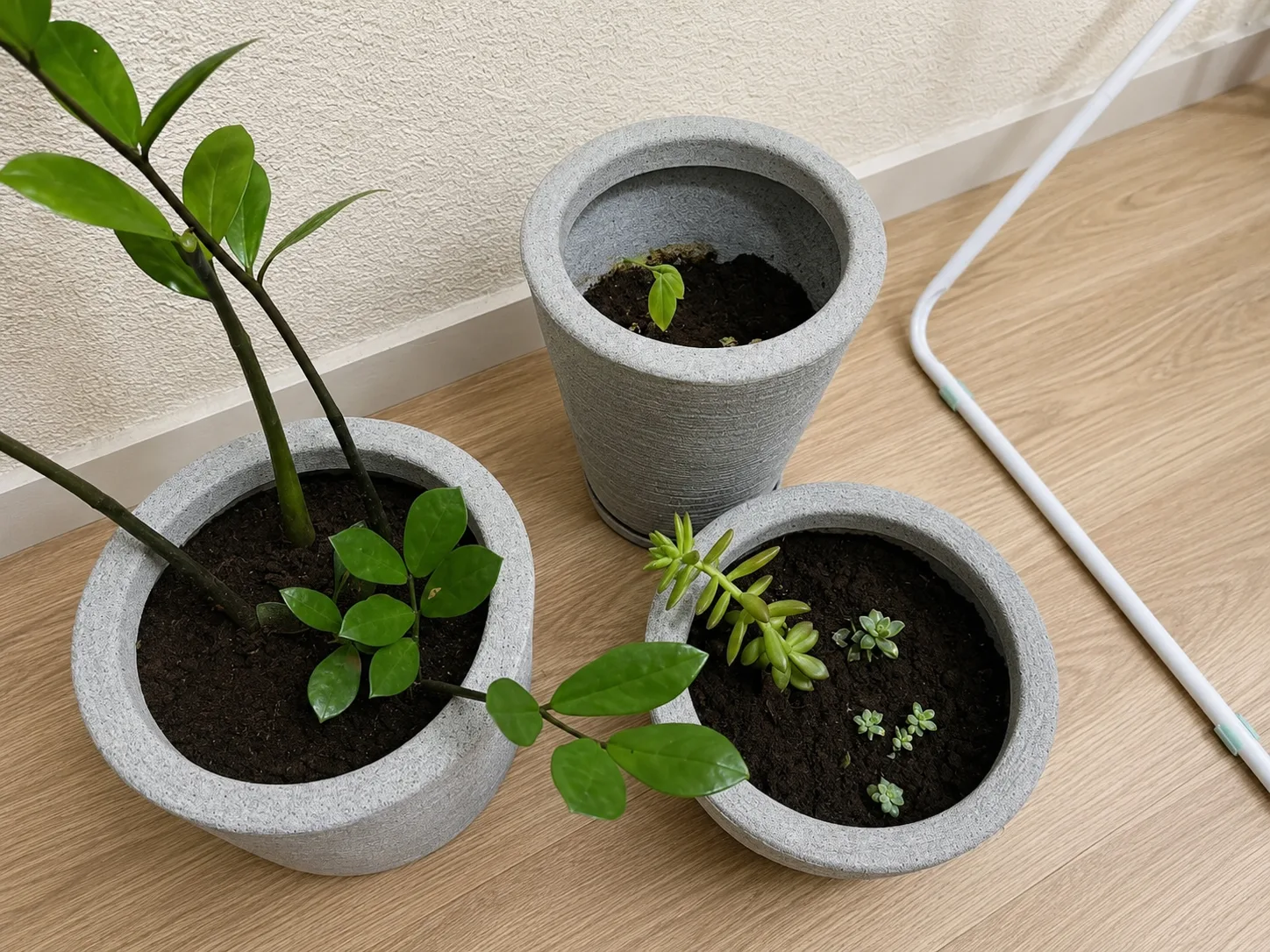
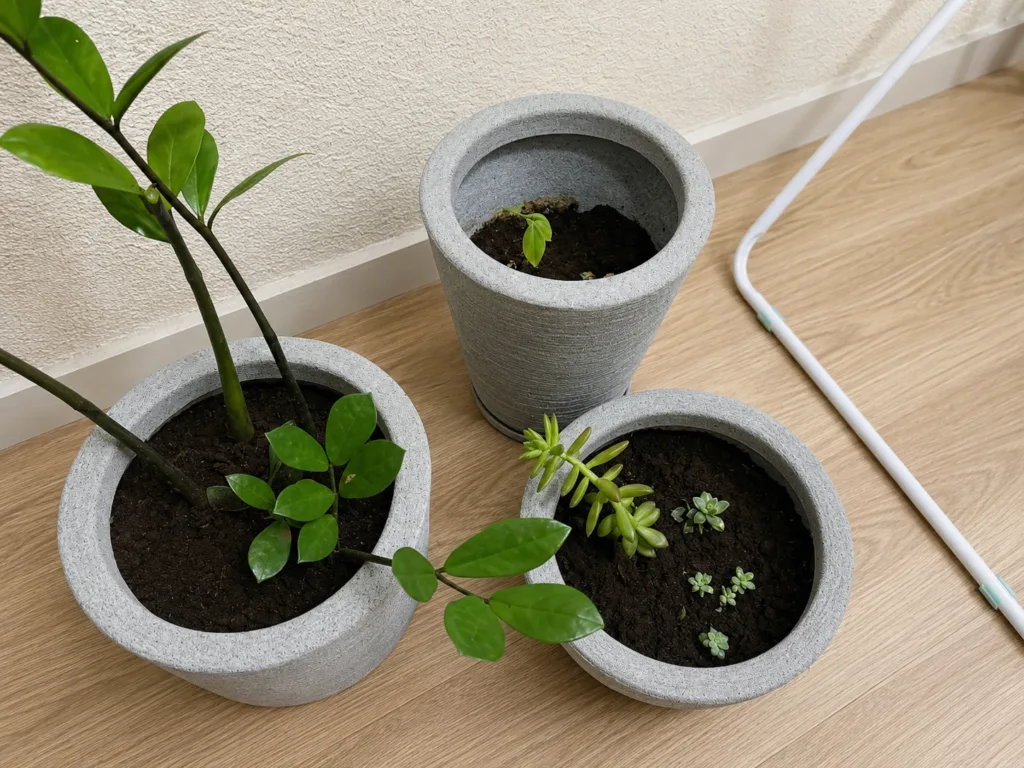
I used to buy a single bag of generic potting soil and use it for everything I owned — my pothos, my succulents, a fern, even an orchid at one particularly misguided point. It took losing that orchid, and watching several succulents struggle in soil that stayed wet for days, before I understood that “indoor plant soil” isn’t really one thing. It’s a category that covers wildly different mixes depending on what you’re actually growing, and treating it as interchangeable cost me more plants than I’d like to admit.
Here’s what I’ve learned building separate soil mixes for the different types of plants in my collection, including the mistakes that taught me why one-size-fits-all doesn’t work.
The Orchid That Taught Me the Hard Way
My orchid mistake was the clearest lesson. I potted it in the same all-purpose potting soil I used for my pothos, not realizing that orchids in the wild are largely epiphytic, growing on tree bark with roots exposed to air rather than buried in dense soil. The dense potting mix held onto moisture around the roots in a way the plant had no tolerance for, and within about two months, the roots had started rotting.
Once I repotted into an actual orchid mix — mostly chunky bark with some sphagnum moss and perlite mixed in, nothing like standard potting soil in texture or density — the difference in root health over the following months was obvious. The chunky texture lets air reach the roots in a way dense soil simply can’t, which I now understand is the entire point for a plant that doesn’t naturally grow in soil at all.
Why My Succulents Struggled in the Same Mix as Everything Else
I’ve covered succulent soil in detail in a dedicated guide, but the short version relevant here: standard potting soil holds far more moisture than succulents and cacti can tolerate, and using the same all-purpose mix across my whole collection meant my succulents were sitting in conditions closer to what my tropical plants wanted, not what they actually needed. Once I started using a dedicated fast-draining succulent mix, heavy on pumice and perlite, my succulent survival rate improved dramatically compared to when everything shared the same bag of soil.
Building a Base Mix for My Tropical Foliage Plants
For plants like my pothos, philodendron, and rubber plant, I’ve settled into a general-purpose mix that starts with a bagged potting soil as the base, then gets amended with extra perlite, roughly one part perlite to three or four parts soil, to improve drainage beyond what the bag alone provides. I’ve found that straight bagged potting soil, even good quality, tends to compact and hold water longer than I want for these plants once it’s been through a few watering cycles, and the added perlite has noticeably reduced how long the soil stays wet after a thorough watering.
For a few of my more moisture-loving plants, like a fern I’ve had mixed luck with, I lean the ratio slightly the other direction, using less perlite and sometimes adding a bit of coco coir to help the mix hold onto moisture a little longer between waterings, since this particular fern has shown clear stress — crispy, browning fronds — whenever the soil dries out too completely between waterings.
What Charcoal Actually Did for Me
I added horticultural charcoal to a mix for the first time after reading it could help with both drainage and odor control, mostly out of curiosity rather than a specific problem I was trying to solve. The plant it went into, a pothos that had previously shown some mild fungus gnat issues, seemed to have noticeably fewer gnats appearing after the switch, though I can’t say for certain whether that was the charcoal specifically or just the improved overall drainage from remixing the soil at the same time. I’ve kept using it in mixes since, mostly because it’s inexpensive and hasn’t caused any downside I’ve noticed.
The Repotting Mistake That Taught Me About Pot Size and Soil Volume
Beyond the mix itself, I learned that the amount of fresh soil relative to pot size matters almost as much as the mix’s composition. I once repotted a plant into a pot significantly larger than its root ball, thinking I was giving it plenty of room to grow into. The extra soil volume held far more moisture than the plant’s roots could actually use, and I ended up with yellowing leaves within a couple of months that traced directly back to that oversized pot rather than any problem with the soil mix itself. I’ve since stuck to sizing pots only slightly larger than the current root ball whenever I repot, regardless of which mix I’m using.
Signs I’ve Learned to Read Across My Different Mixes
- Soil staying visibly wet for more than a few days after watering — usually means too little drainage material in the mix relative to what that particular plant needs, something I’ve had to adjust more than once as I’ve learned each plant’s actual tolerance.
- Soil pulling away from the pot’s edges and drying out within a day or two — for moisture-loving plants like my fern, this has meant the mix needs more organic material to hold water longer between waterings.
- Fungus gnats appearing consistently — in my experience, this has correlated with soil that stays wet too long, whether from too little drainage material or a pot that’s simply too large for the plant.
- Roots that look mushy or dark when repotting — my clearest sign that whatever mix and pot combination I’d been using held too much moisture for that specific plant, prompting both a mix and often a pot size adjustment.
What I’d Tell Someone Starting an Indoor Plant Collection
Don’t assume one bag of soil will serve every plant you bring home, even if the label says “all-purpose.” I lost an orchid and struggled with succulents before I accepted that the actual composition of the mix — how much air and drainage material versus moisture-retentive material — needs to match what each specific plant actually wants, not just what’s convenient to buy in bulk.
Frequently Asked Questions
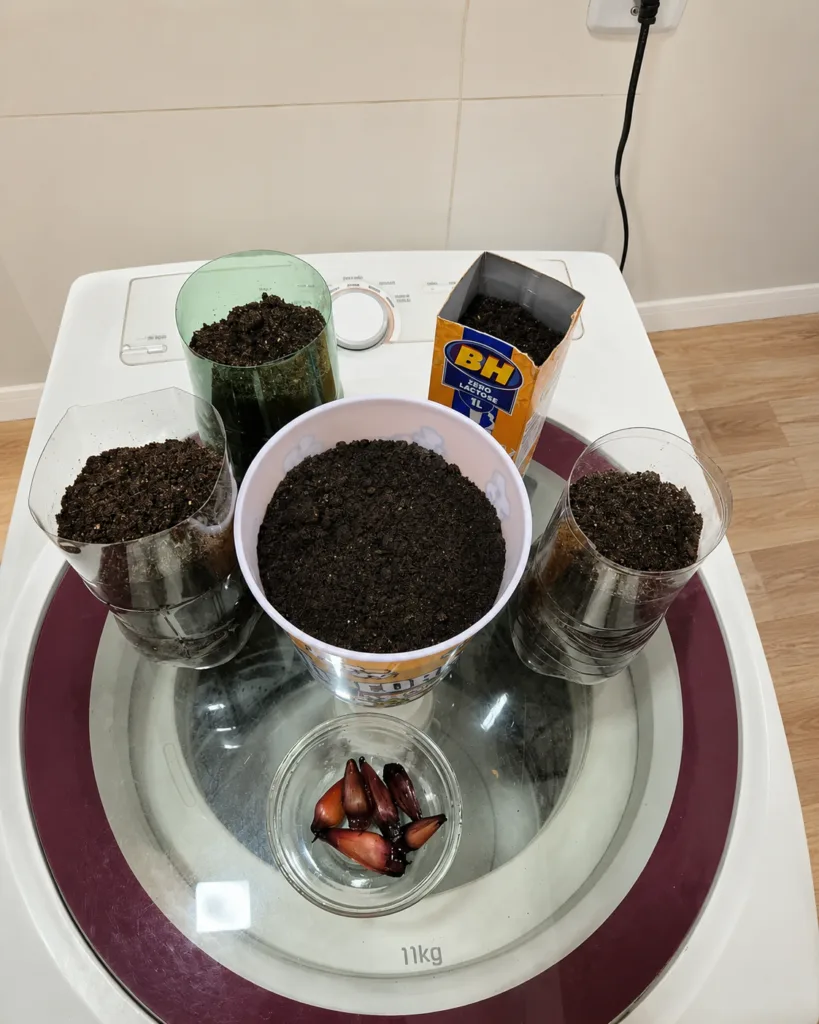
Can I use the same potting soil for all my houseplants? Based on my own experience, no — a generic all-purpose mix worked reasonably for tropical foliage plants like pothos, but caused real problems for my orchid and succulents, which both needed dramatically different drainage and structure.
What does perlite actually do in indoor plant soil? In my experience, adding perlite to a base potting mix noticeably reduced how long the soil stayed wet after watering, which has helped prevent the overwatering issues I ran into when I used straight bagged soil without amendment.
How do I know if my potting mix needs more drainage material? I check how long the soil stays visibly wet after a thorough watering. If it’s still damp several inches down after more than a few days for a plant that prefers to dry out between waterings, I’ve found that adding more perlite or pumice to the mix resolves it.
Does pot size affect how a soil mix performs? Yes, based on a mistake I made — an oversized pot held onto more moisture than my plant’s roots could use, causing yellowing leaves even though the soil mix itself wasn’t the problem. Sizing pots only slightly larger than the root ball has prevented this issue since.
Gardening Writer & Plant Enthusiast
Sarah Mitchell is a passionate gardening writer dedicated to helping people bring more nature into their homes. She loves exploring indoor plants, flowers, and sustainable gardening practices, sharing simple and practical tips that make plant care easier for everyone.