
My first attempt at snake plant propagation was an accident. I knocked a pot off a shelf, snapped off two leaves, and rather than tossing them, I stuck them in a glass of water out of guilt more than expectation. Eight weeks later, I had actual roots. That accidental success turned into something of an obsession — over the next year I propagated the same snake plant probably a dozen different times, partly to give plants away to friends and partly just to see what would happen if I changed one variable at a time.
This is what I actually learned, including the methods that worked well, the one that disappointed me, and the mistakes that cost me a few leaves along the way.
Why Snake Plants Are Such Forgiving Candidates
Before getting into methods, it’s worth understanding why snake plant propagation has such a good reputation for beginners. Sansevieria (now technically reclassified as Dracaena, though most people still call it snake plant) stores a huge amount of water and energy in its thick leaves. That reserve is what lets a cut leaf survive for weeks, sometimes months, without any roots at all while it slowly works on growing them. Most other houseplants don’t have that kind of buffer, which is why a snake plant cutting can sit around looking basically unchanged for two months and then suddenly show a small white nub of root.
Method 1: Leaf Cuttings in Water
This is the method that got me started, and it’s still my favorite for one simple reason: I can actually see what’s happening. I cut a healthy leaf near the base, sliced it into sections of roughly 3 inches each, and — this part matters — let the cut ends sit out on a paper towel for about two days before putting them in water. I skipped this step once early on out of impatience and the cutting rotted at the base within a week. Letting the cut callous over first has made the difference between success and mush every time since.
I keep the water level low enough that only the very bottom half-inch of each cutting is submerged, and I change the water every 4-5 days. In my experience, roots typically show up somewhere between 5 and 8 weeks, though one particularly slow cutting took almost 11 weeks. One thing nobody told me: the cuttings will often grow roots but take a surprisingly long time after that to actually produce a new leaf shoot. Don’t assume nothing’s happening just because the top looks the same — check the base every couple of weeks.
Method 2: Leaf Cuttings Directly in Soil
I switched to this method for a batch I was giving away, mainly because water-rooted cuttings need to be transferred to soil eventually anyway, and I got curious whether skipping that transplant shock would help. After the same two-day callousing period, I dipped the cut end in rooting hormone (I used a basic powder from a garden center) and planted about an inch deep into a well-draining succulent mix.
The results were a bit slower to confirm — since you can’t see the roots forming, I spent a lot of time gently tugging on cuttings to check for resistance, which I’d now say is a mistake, since it can disturb roots that are just starting to form. A better sign is watching for the cutting to stand firm on its own after a few weeks, or a very light, careful check instead of a full tug. Once rooted, these plants seemed to establish slightly faster than my water-propagated ones after the fact, likely because they skipped the adjustment period of moving from water roots to soil roots.
Method 3: Rhizome Division
This is the method I was most intimidated by, and it turned out to be the fastest way to get a plant that already looks mature. When I finally repotted an overgrown snake plant that had outgrown its container, I found the rhizomes underground — thick, horizontal stems connecting several individual plant clusters. I used a clean, sharp knife to separate a section that already had its own small cluster of leaves and a decent amount of root attached, then potted it directly into fresh soil.
Unlike leaf cuttings, this division already had established roots and leaves, so instead of waiting months for anything to happen, I had a plant that looked completely normal within about a week of settling in. If you have an established snake plant that needs repotting anyway, division is honestly the least fussy option — you’re just splitting an already-working plant rather than starting from almost nothing.
Method 4: Offsets (Pups)
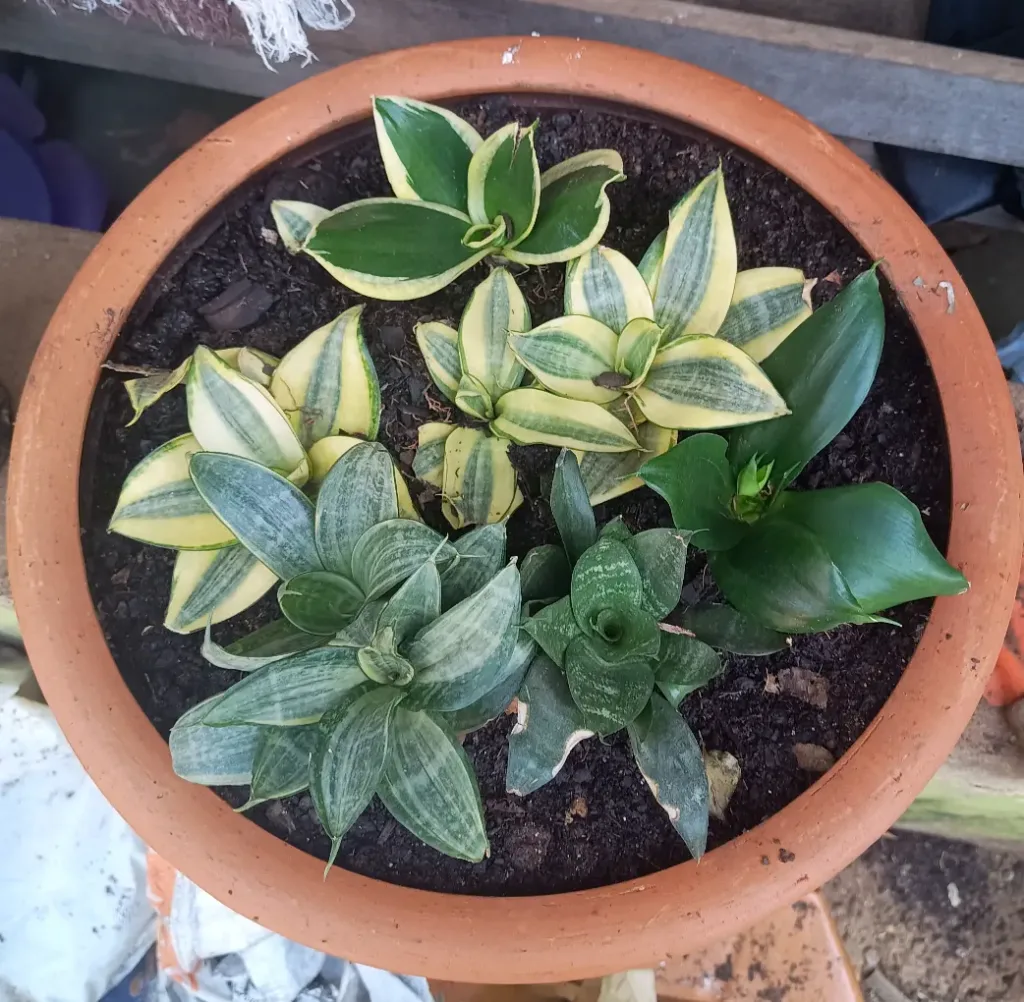
If your snake plant is happy, it will often send up small new shoots, called pups, right next to the base of the main plant, connected by their own rhizome. I noticed my first pup appear almost by surprise, poking up a couple of inches from the mother plant about a year after I’d repotted it. Once a pup has a few inches of growth and looks sturdy, you can separate it from the parent rhizome with a clean cut and pot it on its own.
This has consistently been my most reliable method, mostly because the pup is already a functioning small plant with its own roots by the time you separate it — there’s very little risk involved compared to starting from a bare leaf cutting.
A Mistake I Made More Than Once
Overwatering soil-propagated cuttings was, without question, my most repeated mistake. It’s tempting to treat a fresh cutting like a needy seedling, but snake plants are the opposite — they want to be left mostly alone. I lost two cuttings early on from keeping the soil consistently damp, thinking I was helping them along. Once I switched to watering only when the top two inches of soil were completely dry, my success rate improved noticeably.
Variegated Snake Plants and a Genuine Disappointment
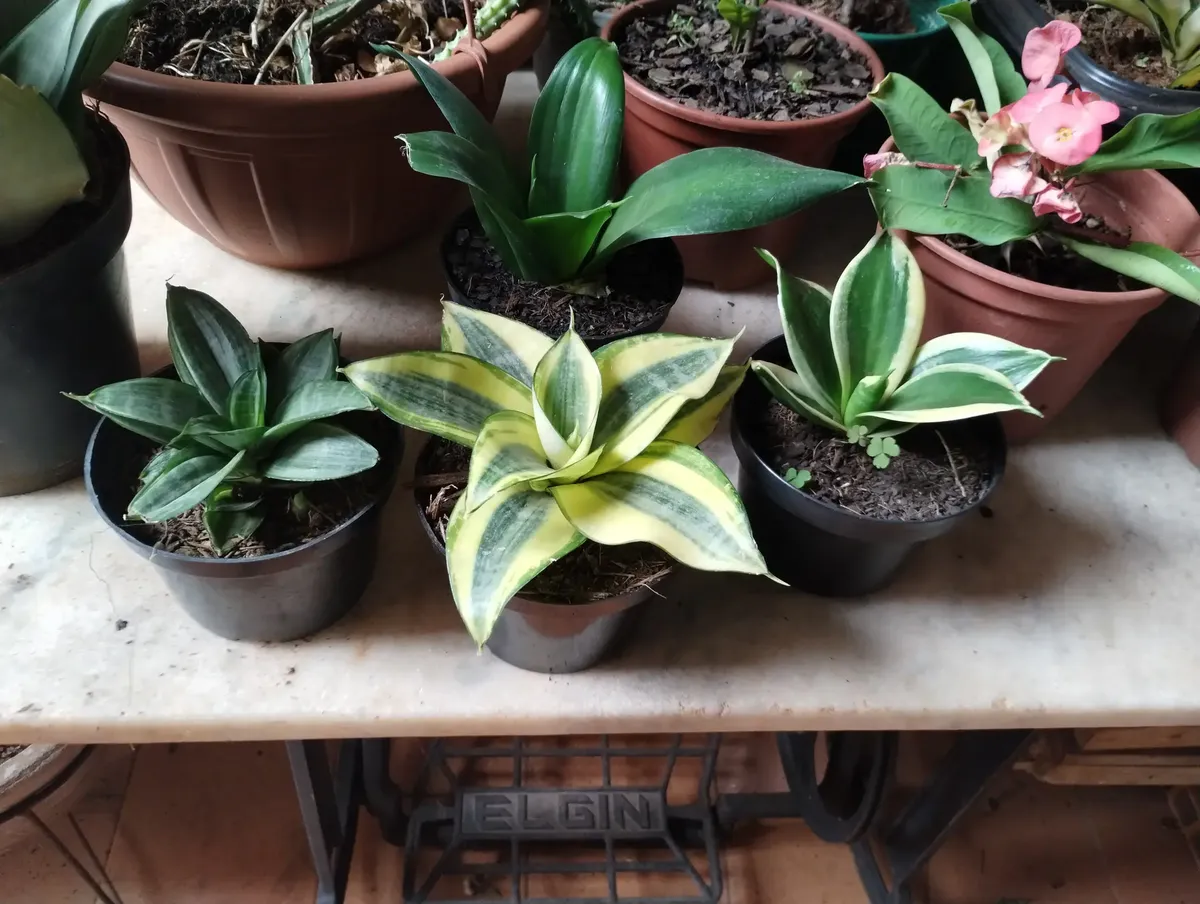
If you have a variegated variety, like the yellow-edged ‘Laurentii,’ there’s something worth knowing before you cut into it: leaf cutting propagation very often produces a plant that reverts to solid green, losing the variegation entirely. I learned this the hard way after propagating several leaf cuttings from my variegated plant and ending up with a windowsill of perfectly healthy, completely plain green snake plants. If keeping the variegation matters to you, division or separating pups is the more reliable route, since those new plants come from the same genetic material as the parent rather than regenerating from a cut leaf.
How Long It Actually Takes
I want to be honest about timelines because I think a lot of guides undersell how slow this process can be. For water and soil leaf cuttings, expect anywhere from 5 weeks to a few months just to see initial roots, and often another couple of months beyond that before you see real new growth at the top. Division and pups are dramatically faster since you’re starting with an already-established root system rather than growing one from scratch.
Troubleshooting: If Nothing Seems to Be Happening
If a cutting has sat for more than 3 months with zero signs of roots, I’d check a few things based on what’s gone wrong for me in the past: make sure the cutting isn’t upside down (it happens more often than you’d think, since it’s not always obvious which end was the base), confirm it actually calloused properly before going into water or soil, and check that it’s getting bright, indirect light rather than a dark corner. In my experience, a cutting placed in low light took noticeably longer than ones I moved to a brighter spot, even though snake plants tolerate low light just fine as mature plants.
Frequently Asked Questions
Which method is fastest for snake plant propagation? In my experience, separating an existing pup or dividing rhizomes is by far the fastest, since you’re starting with a plant that already has roots and leaves rather than growing them from nothing.
Do I need rooting hormone? No, snake plants root fine without it — I’ve had success both ways. It seemed to slightly speed up soil propagation in my case, but water propagation worked just as well without any hormone at all.
Why did my cutting rot instead of rooting? For me, this almost always traced back to skipping the callousing step or keeping too much of the cutting submerged in water. Letting the cut end dry out for a couple of days first made a consistent difference.
Will a leaf cutting from a variegated snake plant stay variegated? Usually not. Most of my leaf cuttings from variegated plants reverted to solid green. Division or pups are the more reliable way to preserve variegation.

Gardening Writer & Plant Enthusiast
Sarah Mitchell is a passionate gardening writer dedicated to helping people bring more nature into their homes. She loves exploring indoor plants, flowers, and sustainable gardening practices, sharing simple and practical tips that make plant care easier for everyone.