
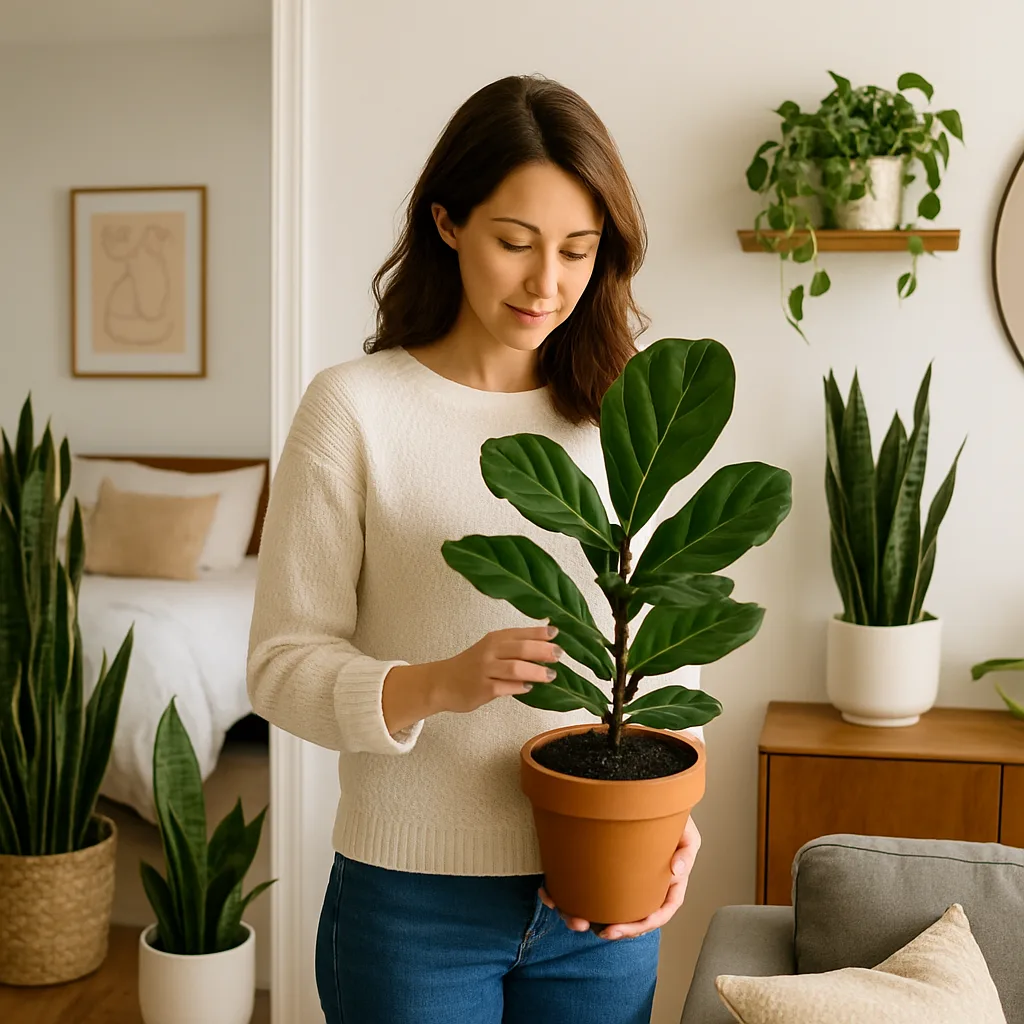
Bringing indoor plants into your home can dramatically transform any space, creating a sense of calm and connection to nature. One plant stands out for its beauty and relative ease of care: the Fiddle Leaf Fig (Ficus lyrata). But caring for this magnificent plant is not without its challenges. Let me take you through my journey of caring for a Fiddle Leaf Fig in my apartment, including a few lessons learned the hard way.
Understanding the Fiddle Leaf Fig
The Fiddle Leaf Fig is renowned for its large, leathery leaves that can reach up to 18 inches in length. It’s a striking addition to any room, but it does require attention to thrive. Native to the tropical regions of Africa, this plant enjoys bright, filtered light, high humidity, and consistent temperatures.
Light: A Fine Balance
Initially, I placed my Fiddle Leaf Fig near a window that received direct sunlight for several hours a day. Within a week, I noticed brown spots developing on the leaves. It turns out that direct sunlight can scorch the leaves, particularly at midday. I moved the plant to a spot where it receives bright, indirect light for about 6-8 hours a day. This change helped the leaves regain their vibrant green color.
Watering Woes
Watering seemed straightforward, but I quickly learned that overwatering is a common mistake. The Fiddle Leaf Fig prefers to dry out slightly between waterings. I use a moisture meter now to ensure the top inch of soil is dry before watering, usually once a week. This tool has saved my plant from root rot, a risk that lurks with overzealous watering.
Humidity and Temperature: Tropical Touch
Living in an apartment, maintaining high humidity levels can be challenging, especially during winter when indoor air tends to be dry. I bought a simple humidifier and set it near my Fiddle Leaf Fig, keeping the humidity between 40-60%. Additionally, I keep the plant away from drafty windows and doors to avoid temperature fluctuations, which can stress the plant.
Feeding and Fertilization
Initially, I fed my Fiddle Leaf Fig a general-purpose fertilizer every month. However, I noticed that growth had stagnated. After some research, I switched to a balanced 3-1-2 NPK fertilizer every 6-8 weeks during the growing season (spring and summer). The plant responded with new growth and healthier leaves.
Pruning and Relocation
Pruning was another learning curve. I hesitated to trim my Fiddle Leaf Fig, fearing I might harm it. However, pruning can encourage bushier growth and remove unhealthy leaves. I use clean, sharp scissors to trim yellowing leaves or those with spots. I also learned that this plant enjoys stability, so frequent moving can lead to leaf drop.
Conclusion
Transforming your space with a Fiddle Leaf Fig can be incredibly rewarding, but it requires understanding and patience. Each mistake I’ve made taught me a valuable lesson in creating the right environment for this plant. The right balance of light, water, and care can turn your plant into a thriving centerpiece.
What would I do differently? I’d invest in a moisture meter and a humidifier from the start. These tools have been game-changers in providing the best care for my Fiddle Leaf Fig. If you’re considering adding this plant to your home, remember that it’s the attention to detail that allows it to flourish. Enjoy the journey, and don’t be afraid to adjust your care routine as you learn what works best for your plant in your unique environment.

Gardening Writer & Plant Enthusiast
Sarah Mitchell is a passionate gardening writer dedicated to helping people bring more nature into their homes. She loves exploring indoor plants, flowers, and sustainable gardening practices, sharing simple and practical tips that make plant care easier for everyone.