
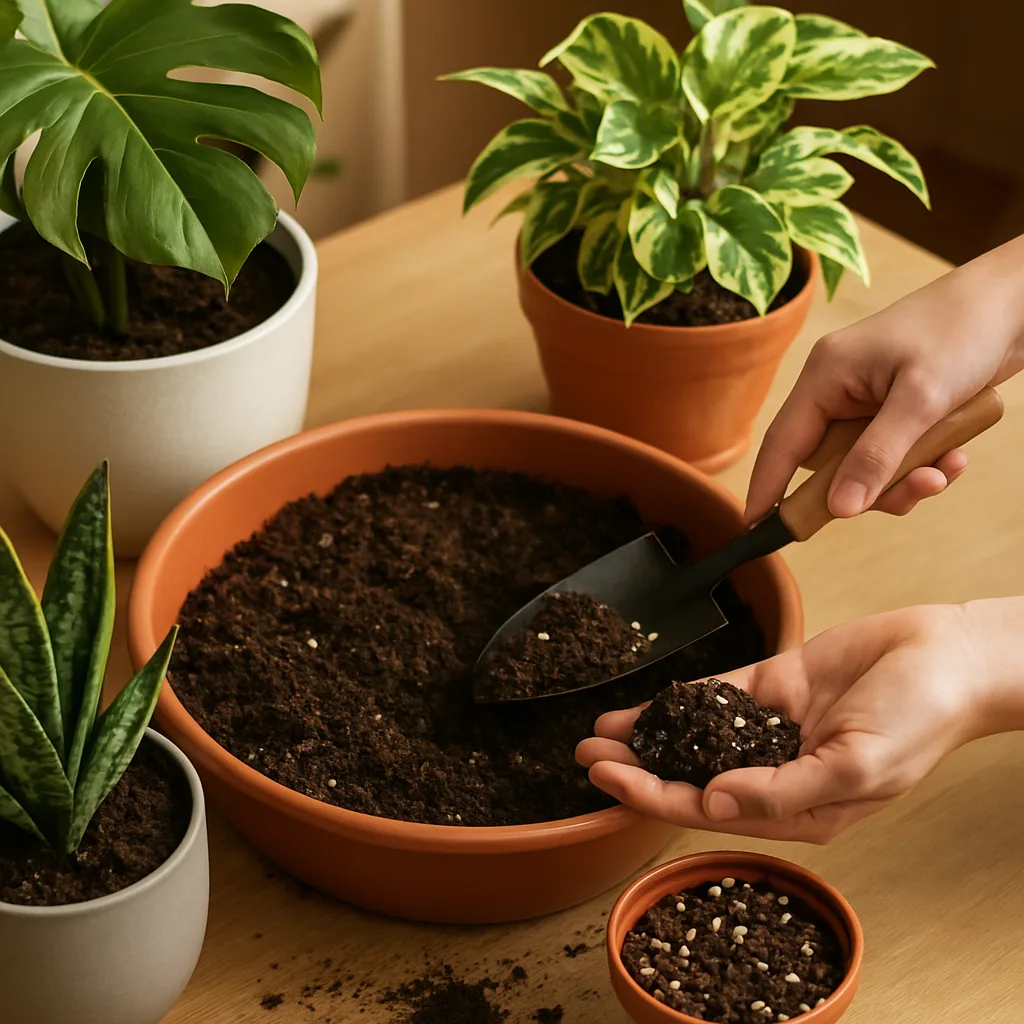
Bringing greenery indoors can transform any living space into a serene oasis. Among the most captivating indoor plants is the Calathea, known for its stunning foliage and dynamic leaf patterns. However, caring for these beauties isn’t always straightforward. Allow me to take you through my personal journey of trial and error with the Calathea and how finding the right potting mix became a game-changer for my plant’s health and vibrancy.
Understanding Calathea’s Natural Habitat
To provide the best care for a Calathea, it’s important to understand its origins. Native to the tropical rainforests of South America, Calatheas thrive in warm, humid conditions with indirect light. They naturally grow in the understory of the forest, where the soil is rich in organic matter and drains well. Mimicking these conditions indoors is crucial for their health.
The Wrong Potting Mix: My Initial Mistake
When I first brought home my Calathea, I used a standard potting mix, thinking it would suffice for any houseplant. However, I quickly noticed yellowing leaves and stunted growth. After some research, I realized that the soil was retaining too much water, leading to root rot. It was a rookie mistake that taught me the importance of choosing the right potting mix.
Crafting the Perfect Potting Mix
Determined to revive my Calathea, I experimented with different soil mixtures. The winning combination turned out to be a mix of peat, perlite, and orchid bark in a 2:1:1 ratio. This blend offers excellent drainage while retaining enough moisture, mimicking the Calathea’s natural environment. Additionally, the addition of orchid bark provides structure and breaks up the soil, improving aeration.
Adjusting Watering Practices
Once I had the right soil in place, my next focus was water management. With the improved drainage of my new potting mix, I adjusted my watering schedule to once a week, ensuring the top inch of soil dried out between waterings. This adjustment prevented waterlogging while still providing adequate moisture, crucial for the Calathea’s health.
Lighting and Location: A Vital Component
After correcting the potting mix and watering practices, I evaluated my plant’s location. Initially placed near a south-facing window, my Calathea was receiving too much direct sunlight, which can scorch its leaves. Relocating it to an east-facing window provided the perfect balance of bright, indirect light during the morning hours, which has been ideal for its growth.
Humidity and Temperature Control
Calatheas thrive in humid conditions, similar to their natural habitat. I started using a small humidifier in the room and occasionally misted the leaves to mimic this environment. Keeping the temperature between 65-80°F (18-27°C) has also been beneficial, as Calatheas are sensitive to cold drafts and sudden temperature changes.
Conclusion
My journey with the Calathea has been one of learning and adaptation. Discovering the importance of the right potting mix was pivotal in turning around my plant’s health. By creating a more suitable growing environment, I watched my Calathea transform from a struggling plant to a thriving, vibrant feature of my indoor garden.
For anyone considering bringing a Calathea into their home, remember that understanding its unique needs is key. Pay close attention to the potting mix, as it forms the foundation of your plant’s wellbeing. Don’t be afraid to experiment, and always listen to what your plant is telling you through its growth and appearance.
In retrospect, the missteps I took provided invaluable lessons. Today, my Calathea is a testament to how small adjustments in care can lead to significant improvements. If you find yourself in a similar situation, take heart: with the right care and conditions, your Calathea can thrive and bring lush greenery to your indoor space.

Gardening Writer & Plant Enthusiast
Sarah Mitchell is a passionate gardening writer dedicated to helping people bring more nature into their homes. She loves exploring indoor plants, flowers, and sustainable gardening practices, sharing simple and practical tips that make plant care easier for everyone.